
Pearl powder is real pearl material processed into a fine powder, but high-quality pearl powder is not made by simply crushing random pearls. The quality depends on the pearls selected, how they are cleaned and dried, how finely they are ground and sieved, and whether the final stages are handled in a controlled, hygienic production environment.
As someone who works with pearls first as a jewelry material, I find pearl powder especially interesting because it shows another side of the pearl industry.
In jewelry, we judge a pearl by luster, surface, shape, color, and how beautifully it can be worn. In pearl powder production, the priorities shift: material selection, cleanliness, particle fineness, processing control, and intended-use standards become much more important.


What is pearl powder?
Pearl powder is finely processed powder made from pearl material. At a basic material level, pearls are organic gems made mainly of calcium carbonate with organic binding material and water. That is why people often connect pearls with traditional pearl powder. But this does not mean a jewelry pearl and a pearl powder product are the same thing.
The more useful answer is this: pearl powder is a processed pearl product, while a pearl necklace, ring, or earring is a finished gem product. They may begin with the same family of material, but they are judged, processed, labeled, and used very differently.
If you are new to pearl materials, you may also enjoy our guide to the physical and chemical properties of pearls. For gem-quality pearl evaluation, the GIA Pearl Quality Factors are also a useful reference because they explain why luster, surface, nacre, shape, and matching matter so much in jewelry.
Where pearl powder begins: pearl material selection
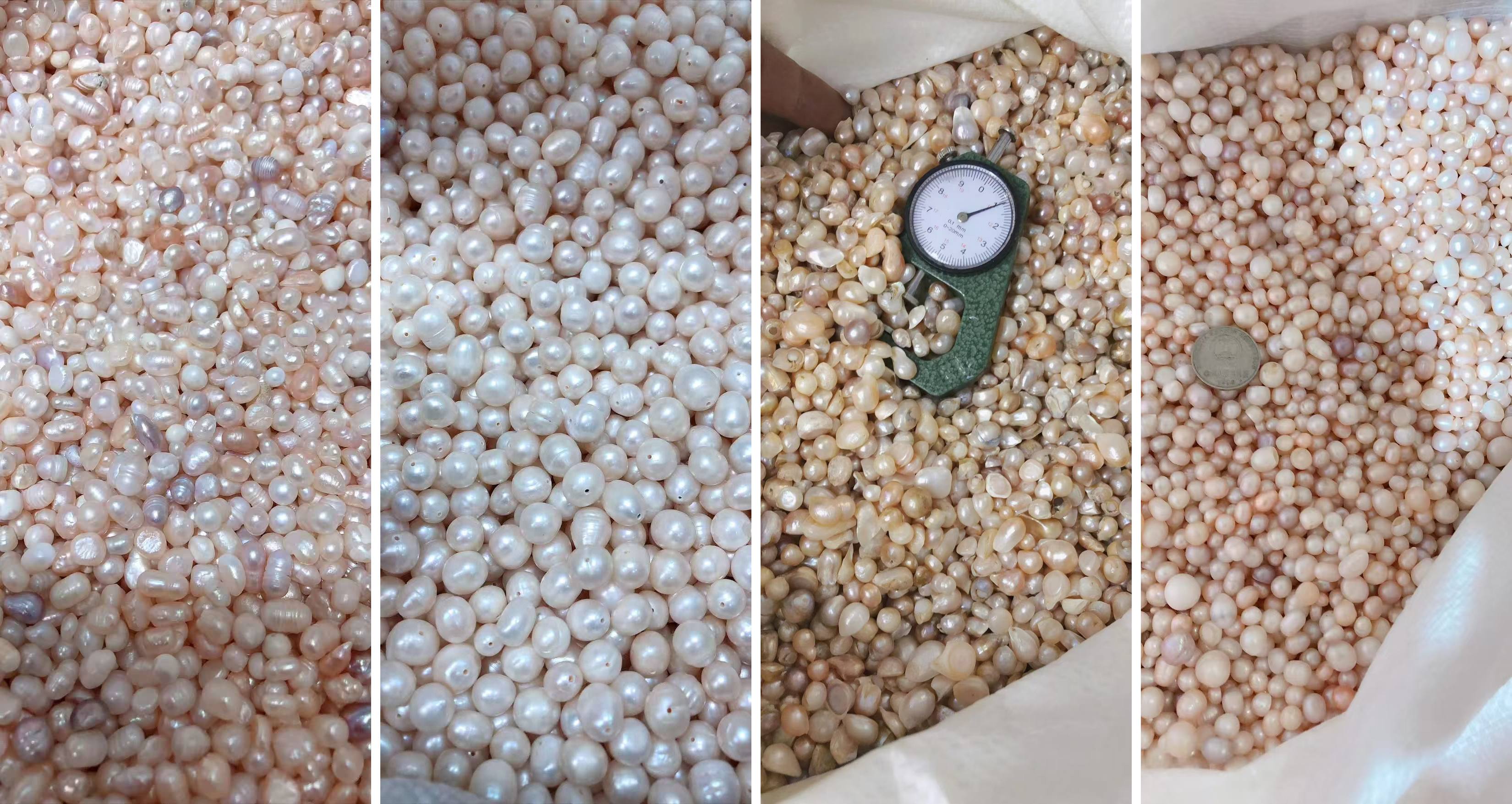
A good pearl powder process begins before the grinding machines turn on. It starts with sorting. In the video, the first step shown is a comparison between lower-quality pearls and higher-quality pearl material. The selected material is described as non-bead-nucleated freshwater pearls, meaning there is no bead core inside the pearl material used for grinding.
This point matters for readers searching questions like “what makes pearls” or “where does a pearl come from.” Most pearls used in modern jewelry and pearl-related production are cultured pearls, grown through human-assisted cultivation inside mollusks. Freshwater pearls are usually cultured in mussels, while saltwater pearls such as Akoya, Tahitian, and South Sea pearls come from oysters.
In English, I prefer to say “non-bead-nucleated freshwater pearls” rather than simply “natural pearls” for this context. In the pearl trade, “natural pearl” often means a wild pearl formed without human intervention. A cultured freshwater pearl can be completely real, but it is not the same category as a wild natural pearl. This distinction is important for both jewelry buyers and pearl education content.

How pearl powder is made
The video shows pearl powder as a controlled, multi-step process rather than a quick crushing job. The exact standards may vary by producer and by intended use, but the process shown gives a clear manufacturing example.
1. Cleaning and initial drying
First, the selected pearls are cleaned. The video shows bubble washing and tumbling to remove surface residue before the pearls move into initial drying. The drying stage uses a three-layer tunnel oven, with the pearls traveling through the chamber in an S-shaped path. The goal is to dry the pearls thoroughly before grinding.
From a jewelry perspective, this is already a big difference from how we handle pearls for necklaces or earrings. Jewelry pearls are protected as finished gems; powder material must be prepared for mechanical processing. Clean handling at this stage affects everything that follows.
2. Coarse crushing and ultrafine grinding
After cleaning and drying, the pearls enter coarse crushing. This breaks down the pearl material so it can move into a finer grinding stage. The next step is ultrafine grinding, which brings the material to 200-mesh pearl powder in the process shown.
Mesh size is a practical way of describing particle fineness. In the video, 200 mesh is described as a common market particle size, with a sieve opening of about 0.075 mm. For many consumers, “fine powder” sounds like one simple category. In production, however, particle size is a measurable quality detail.
3. Jet milling and 400-mesh refinement
The process does not stop at 200 mesh. The video then shows jet milling, also called airflow pulverization, which refines the powder further. The powder is processed toward a finer 400-mesh level, with the video describing a 400-mesh sieve opening of about 0.025 mm.
This is one of the reasons a serious pearl powder process can look much closer to a technical manufacturing line than to a simple jewelry workshop. When powder is protected from direct air exposure and moved through controlled equipment, the goal is consistency, fineness, and cleaner handling.

4. Water levigation and centrifugation
One of the most important parts of the video is water levigation. Levigation is a traditional method that uses water to help grind solid material finer. In the process shown, 400-mesh pearl powder enters a large levigation tank and circulates through a nano-ceramic grinding system.
After levigation, the powder moves through centrifugation to remove water. This step matters because producing fine powder is not only about making particles smaller. It is also about controlling moisture, handling consistency, and preparing the material for drying and final processing.
5. Drying, final pulverization, and packaging
After centrifugation, the powder is dried. The video describes a drying stage at about 100°C, with stirring every 15 hours and a total process of around 48 hours before the powder moves to a resting area. The final pulverization and filling take place in a GMP-grade sterile environment, followed by packaging as the finished product.
This final stage is where buyers should pay close attention to wording. Some pearl powder products are sold for cosmetic use, some for external use, and some for oral use depending on the market and labeling. These are not interchangeable claims. A product should be manufactured, labeled, and used according to its intended purpose and local regulations.
What quality signals matter in pearl powder?
When people ask “what is pearl powder,” they often want a quick definition. But the better buyer question is: what makes one pearl powder different from another?
| Quality signal | Why it matters |
|---|---|
| Pearl material | The raw material affects the trustworthiness of the product story. Non-bead freshwater pearl material is different from random shell or mixed mineral material. |
| Cleaning and drying | Good preparation reduces surface residue and prepares the pearls for consistent grinding. |
| Particle fineness | Mesh size gives a practical way to compare fineness, such as 200 mesh, 300 mesh, or 400 mesh. |
| Processing depth | Jet milling, levigation, centrifugation, and final drying suggest a more controlled process than simple crushing. |
| Intended use | Cosmetic, external-use, and oral-use products should be manufactured and labeled for their specific purpose. |
I would be cautious about any pearl powder described only with vague words like “premium” or “ancient beauty secret” without explaining the material and process. A more trustworthy page should explain what kind of pearl material is used, how it is processed, what fineness standard is claimed, and what the product is intended for.
Pearl powder vs. pearl jewelry: the expert difference
This is where my experience as a pearl jewelry designer matters most. A pearl that is excellent for jewelry is not judged by the same standard as a pearl selected for powder production.
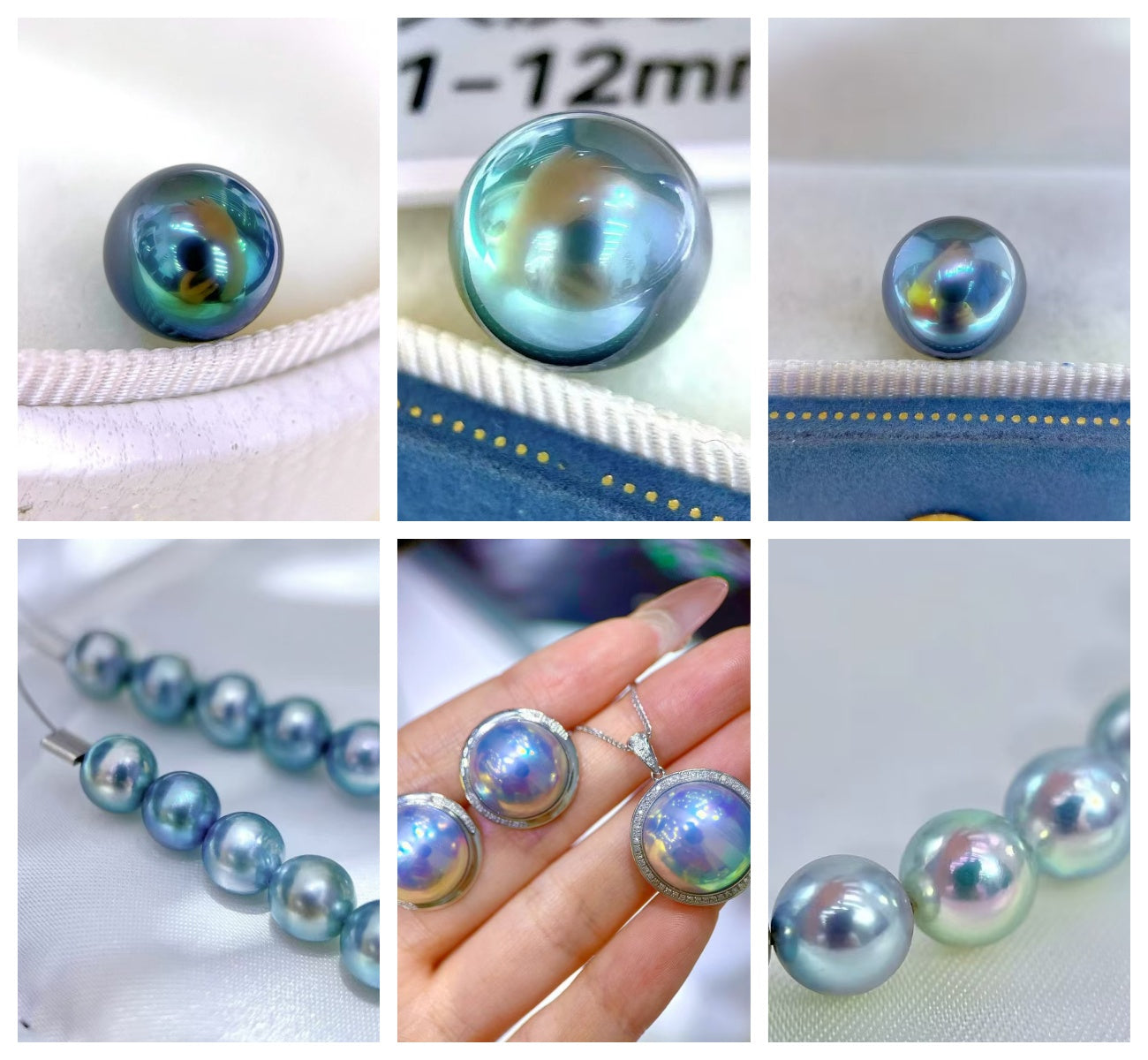
For jewelry, I look first at luster. A pearl with sharp reflection, clean surface, attractive color, and good matching can become a beautiful necklace, pendant, bracelet, or pair of earrings. A blue freshwater pearl with a soft metallic glow, for example, may be far more valuable as a design element than as powder material.
For pearl powder, the conversation changes. The pearl’s final surface beauty is no longer the main point because the pearl will be ground. Instead, the key questions become: Is the material real pearl? Is the production process controlled? Is the powder fine and consistent? Is the final product labeled for its intended use?
This is also why jewelry pearls should not be treated as edible objects. A pearl used in a necklace or ring is a gemstone product, not a food or supplement product. Even if pearls and pearl powder share a material origin, the manufacturing route and labeling logic are different. For general consumer guidance, the FDA’s dietary supplement Q&A is a useful reminder that supplement products are regulated differently from ordinary jewelry products.

The pearl powder process at a glance
Based on the production sequence shown in the video, the process can be summarized like this:
- Pearl selection: lower-quality material is separated from selected pearl material.
- Cleaning: pearls are cleaned through bubble washing and tumbling.
- Initial drying: pearls are dried before mechanical processing.
- Coarse crushing: dried pearls are broken down into rough material.
- Ultrafine grinding: the crushed material reaches 200-mesh pearl powder.
- Jet milling: powder is refined toward 400-mesh fineness.
- Water levigation: water helps grind the solid material finer through circulation.
- Centrifugation: water is removed after levigation.
- Drying and resting: the powder is dried and allowed to settle.
- Final pulverization and packaging: the final stages are completed in a controlled environment.
The main takeaway is simple: better pearl powder is not just about the pearl itself. It is about the whole process from raw material to final packaging.
What should buyers remember?
If you are buying pearl powder, do not judge only by romantic wording. Look for clear information about material, fineness, production process, intended use, and labeling. If a product is meant for skincare, it should be described as such. If it is meant for oral use, it should be manufactured and labeled for that purpose. If it is simply a jewelry pearl, it should be worn and cared for as a gemstone.
If you are buying pearl jewelry, the standard is different. You should pay attention to luster, surface, color, shape, size, nacre quality, and matching. A pearl does not become more valuable as jewelry because it could theoretically be ground into powder. It becomes valuable because it is beautiful, wearable, well matched, and well designed.
For more pearl education, visit the MJ Pearls Pearl Academy. If you want to understand pearl structure more deeply, read our guide to what pearls are made of.
FAQ about pearl powder
What is pearl powder?
Pearl powder is finely processed powder made from pearl material. It may be produced through cleaning, drying, crushing, grinding, sieving, levigation, drying, and controlled packaging, depending on the manufacturer and intended use.
Is pearl powder made from real pearls?
It can be, but buyers should look for clear material disclosure. The process shown in the video uses selected freshwater pearl material. A trustworthy product should explain what pearl material is used and how it is processed.
What does 200 mesh or 400 mesh mean in pearl powder?
Mesh describes particle fineness by sieve size. In the video, 200 mesh is shown as a common market particle size, while 400 mesh represents a finer stage after additional processing.
Is pearl powder the same as jewelry pearls?
No. Jewelry pearls are finished gem materials judged by luster, shape, surface, color, nacre, and matching. Pearl powder is a processed material product judged more by raw material, fineness, cleanliness, production control, and intended use.
Can I eat a jewelry pearl?
No. A jewelry pearl should be treated as a gemstone, not as food. If a pearl powder product is intended for oral use, it should be manufactured, labeled, and sold for that purpose. This article is for pearl material education, not medical or supplement advice.


Leave a comment
This site is protected by hCaptcha and the hCaptcha Privacy Policy and Terms of Service apply.