
Written by Alya Liu — pearl farmer & jeweler.
Yes — teal pearls are real, and natural blue or blue-green pearls do exist. But “blue pearl” is not one single category.
A teal pearl may be a natural blue-green Tahitian pearl, a rare blue-gray Akoya pearl, an emerging natural-color freshwater pearl, an irradiated pearl, or a dyed freshwater pearl. The value depends on pearl type, size, luster, surface quality, whether the color is natural or treated, and how clearly the seller discloses it.

Blue is one of the hardest natural color families to find in pearls, which is why collectors often ask: why is blue pearl so expensive? In this guide, I’ll explain where blue and teal pearls come from, which ones are naturally colored, which ones are treated, and how much blue pearls are worth in real jewelry sourcing.
We carry blue, teal, and peacock green pearls in limited quantities. For current inventory, follow @alyapearls on Instagram or email me at alya@margaretjewelry.com for custom pearl jewelry.

Quick Answer: Are Teal Pearls Real?
Yes, teal pearls can be real. The important question is not whether the pearl itself is real, but whether the color is natural, treated, or dyed.
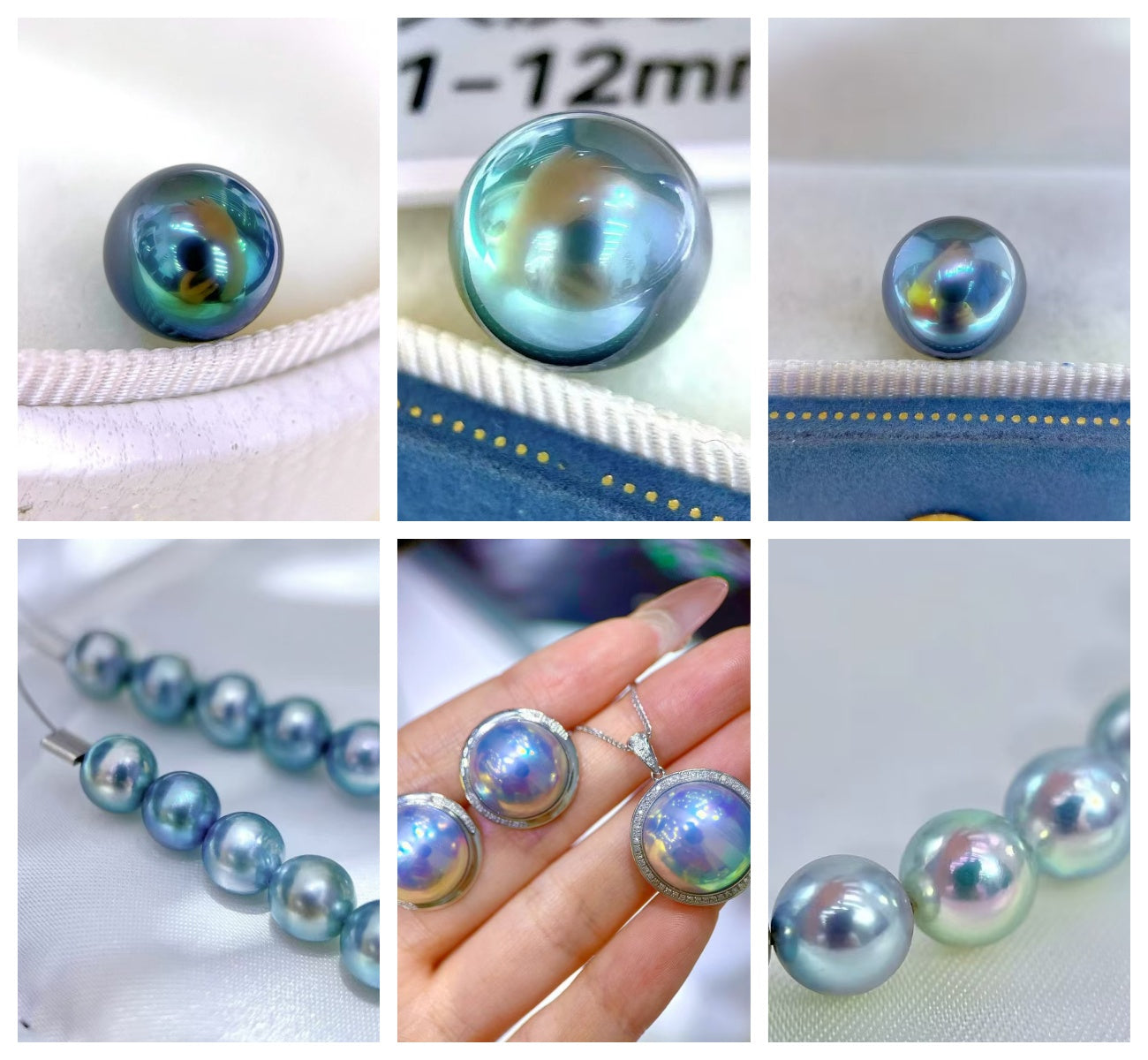
A natural teal pearl usually appears as a mix of blue and green overtone over a darker body color. The most common place to see this is in Tahitian pearls, especially those described as peacock green pearl, blue-green, or peacock blue. These pearls are not usually pure blue. Instead, they glow in layers: dark body color underneath, then green, blue, purple, or rose overtones moving across the surface.
Blue pearls can also appear in Akoya pearls, especially the rare gray-blue category often discussed in the market as natural blue-gray Akoya or Madama-style Akoya. And now, in freshwater pearl farming, small-batch experiments are beginning to produce more unusual natural-color pearls, including green, blue, teal, and light gold.
But buyers should be careful: many inexpensive blue pearls are dyed freshwater pearls. Dyed pearls can still be real pearls, but they should not be priced or described as naturally colored Tahitian or Akoya pearls.

Why Is Blue Pearl So Expensive?
A blue pearl is expensive when the color is natural, attractive, stable, and combined with strong luster, clean surface, good shape, and desirable size. Pearl value is never based on color alone. GIA’s pearl value factors include size, shape, color, luster, surface quality, nacre quality, and matching — and blue pearls still need to be judged through all of those factors.
In real buying, the most valuable blue or teal pearls usually have three things:
- Color movement: the pearl shows blue, green, peacock, or purple overtones from several angles, not just one perfect photo angle.
- High luster: reflections are bright and clean, so the color feels alive instead of flat.
- Rarity in size: larger high-quality blue pearls are much harder to source than small ones.
This is why a 9mm blue-toned Tahitian pearl and a 13–14mm high-quality blue-green Tahitian pearl can sit in very different price ranges. Size, color intensity, surface, and matching all change the final value.

Type 1: Blue and Peacock Green Tahitian Pearls
Tahitian pearls are the most common source for dramatic blue, teal, and peacock green pearls. Their body color is usually dark — black, charcoal, dark green, or gray-green — while the blue or teal effect appears as overtone and orient created by light interacting with the nacre layers.
In other words, most Tahitian blue pearls are not flat, simple blue. They are usually blue-green, green-blue, peacock, or blue-purple. That layered color is exactly what makes them so beautiful.
A peacock green pearl is especially loved because it combines green body color or green hue with strong overtone or orient. Some peacock pearls show rose, purple, blue, or gold flashes. Under sunlight, the pearl can shift as you move it, almost like an oil painting on water.

In my current sourcing, a beautiful 9mm blue-toned Tahitian pearl may be around $150 as a loose or single pearl example, while a high-quality 13–14mm blue-green Tahitian pearl can reach around $700 or more depending on luster, roundness, surface, and color strength. These are current Alya Pearls sourcing examples, not universal market quotes.
For available Tahitian blue and teal pearl jewelry, you can follow @alyapearls or contact alya@margaretjewelry.com for custom pieces.
Type 2: Blue Akoya / Madama-Style Pearls
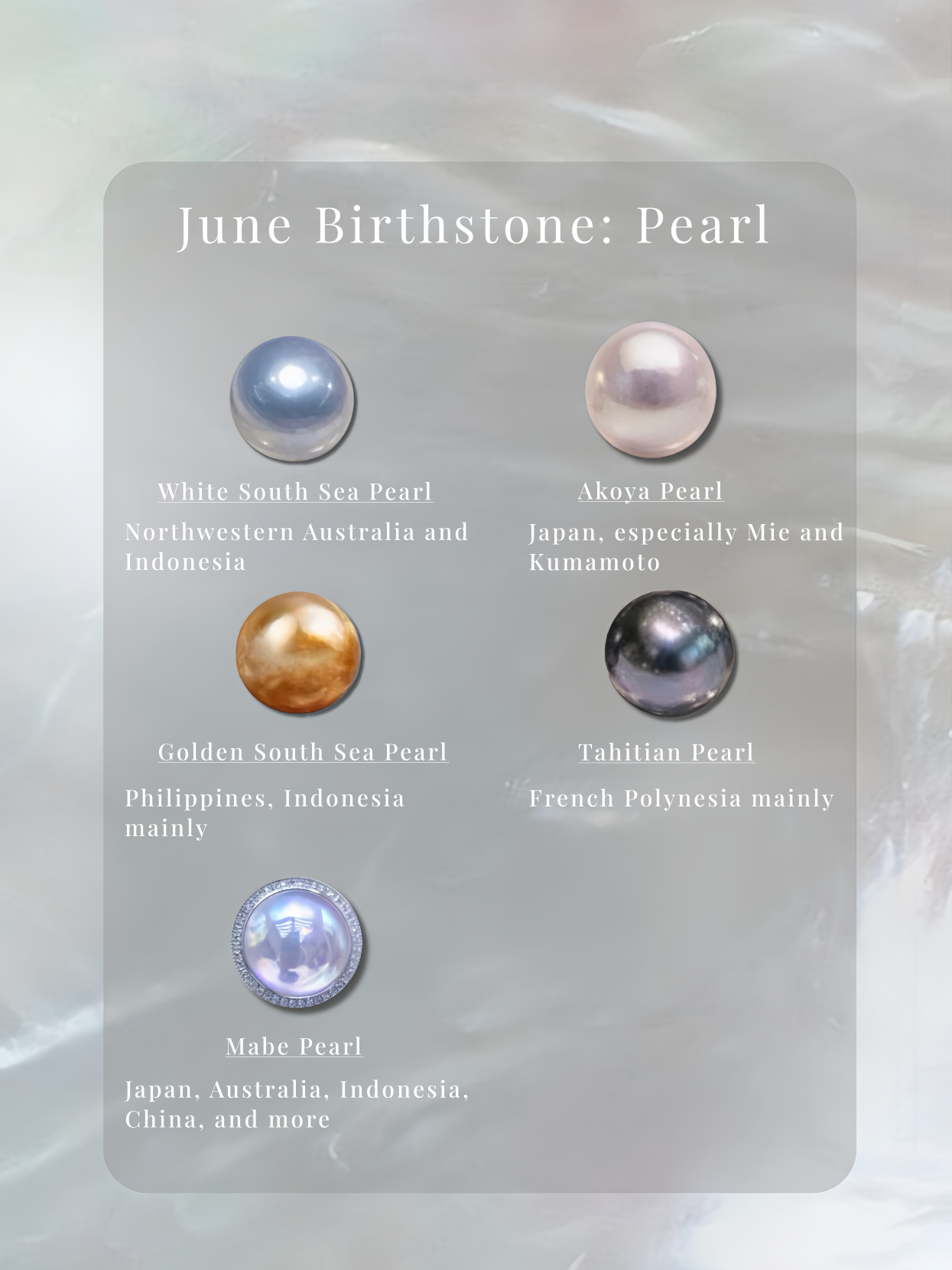
The second important category is blue-gray Akoya pearls. In the Japanese pearl market, some gray-blue Akoya pearls are described with special trade names, and many buyers call them “blue Akoya” or Madama-style pearls.
Natural blue-gray Akoya is rare. It can form when something unusual happens during pearl growth — stress, metabolic disturbance, organic material, or internal irregularity affecting the way light travels through the pearl. The result can be a soft silver-blue or gray-blue color that feels very different from a standard white Akoya pearl.
However, many blue-gray Akoya pearls in today’s market are treated. Irradiation can darken the bead nucleus inside a bead-nucleated pearl, creating a stronger gray-blue appearance when light passes through the nacre. This is not the same as surface dyeing. Irradiation is a physical treatment that mainly changes internal color appearance, and it should still be disclosed clearly.
In my 2026 sourcing channels, treated or irradiated blue-gray Akoya appears to be the majority of blue Akoya offered to buyers — roughly three quarters of what I see. That is my market observation, not a formal lab statistic. Because of this, I recommend asking for treatment disclosure or a report from a respected lab when purchasing high-value blue Akoya.

A matched pair of 7–8mm high-grade blue-gray Akoya pearl studs may be around $300–$400 in my current sourcing examples. A full blue-gray Akoya necklace can range broadly — from about $400 to $3,000 depending on size, matching, luster, and whether the color is natural or treated.
Bonus Type: Amami Oshima Mabe Pearls with Blue and Pink Iridescence
There is one more blue-toned pearl category I would add to this guide: Amami Oshima Mabe pearls. These pearls are often not pure blue in the same way people imagine a sapphire-blue gem. Instead, they show a dreamy surface glow — blue, violet, pink, green, and sometimes golden flashes moving across the dome.
Mabe pearls are different from round pearls. They are cultured against the inside of the shell, so they form a broad dome with a flat back. Because the visible nacre surface is wide and curved, light can travel across it like a small moonlit screen. This is why a fine Mabe pearl can look almost magical: the body color may be pale silver, lavender, or soft cream, while the surface flashes blue, pink, green, and rainbow-like orient as the pearl moves.

The color comes from a combination of factors: the species of mollusk, the nacre structure, the thickness and smoothness of the nacre layers, and the way light reflects and interferes across the dome. In Japanese Amami Oshima Mabe pearls, this can create the “aurora” effect collectors love — not a flat dyed color, but a shifting skin of light.
When buying a blue or pink iridescent Mabe pearl, I look first for luster and surface movement. A good Mabe should not look dull or cloudy. It should show a clean glow from the front, with color that changes as you tilt it. Because Mabe pearls are assembled and backed after harvest, I also recommend checking the setting quality, backing, and whether the seller clearly discloses the pearl type.

Type 3: New Blue and Teal Freshwater Pearls
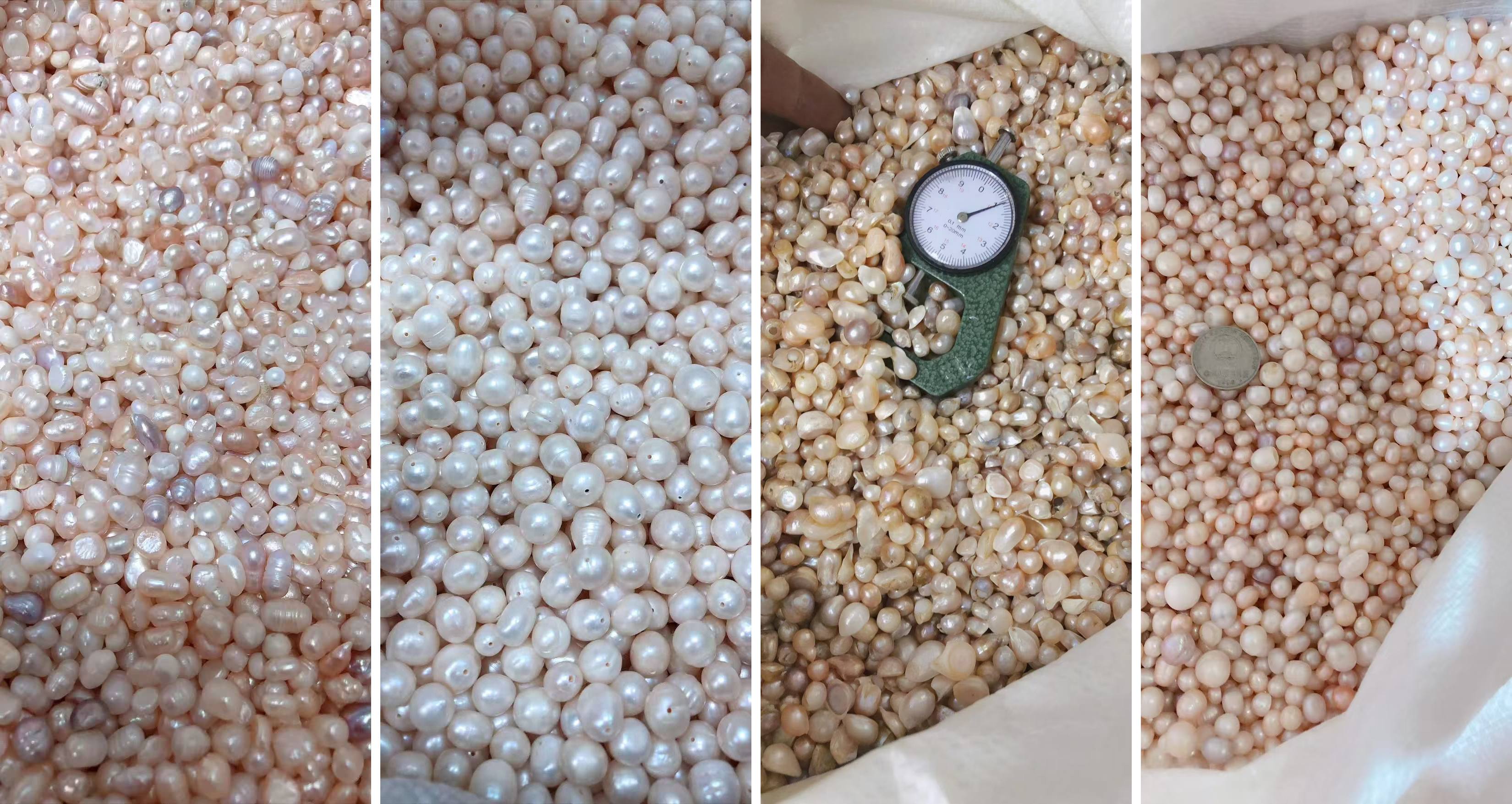
The newest category is what excites me most as a pearl farmer: experimental natural-color freshwater pearls. Since around 2024, in core freshwater pearl farming areas, some farms have been experimenting with newer grafting and tissue-selection techniques to encourage colors that were once rare in freshwater pearls — including green, blue, teal, and light gold.
In our current farming observations, production is still very small. The quality is not yet stable enough for large commercial release, but the direction is promising. If the technology continues to improve, I expect that within the next three years we may see a much stronger supply of high-quality colored freshwater pearls, including blue and blue-green top-grade pearls.
For buyers, this is important because freshwater pearls may become a more accessible way to enjoy blue and teal tones in the future. But right now, high-quality natural-color blue freshwater pearls are still not common. If a seller offers very cheap bright blue freshwater pearls, they are very likely dyed or color-treated.

Natural, Irradiated, or Dyed: How to Tell the Difference
The biggest risk when buying blue or teal pearls is confusing natural color with dyed color. Dyed freshwater pearls can look bright, flat, or overly even. Natural blue-green Tahitian pearls usually have depth, dark body color, and layered overtone. Blue-gray Akoya pearls may look soft and silvery when natural, while irradiated examples can look darker, more uniform, or more strongly gray-blue.
Here are the practical checks I recommend:
- Ask what type of pearl it is. Tahitian, Akoya, freshwater, and South Sea pearls have different natural color possibilities.
- Ask whether the color is natural, irradiated, dyed, or otherwise treated. Treated does not always mean bad, but it must be disclosed.
- Look at the drill hole. Dye often concentrates near cracks, pits, drill holes, or surface-reaching features.
- Check whether the color looks too flat. Natural blue and teal pearls usually show depth and movement, not one solid paint-like color.
- For expensive pearls, ask for a lab report. GIA, PSL, GUILD, GRC, and other respected labs can help identify origin and treatment.

How Much Are Blue Pearls Worth?
Blue pearl prices vary widely because “blue pearl” can mean several different things. The table below gives a practical buyer’s view based on my current sourcing experience and common market patterns.
| Blue / Teal Pearl Type | Typical Look | Example Price Range | Buyer Notes |
|---|---|---|---|
| Blue-green Tahitian pearl | Dark body color with blue, green, peacock, or purple overtone | Around $150 for a beautiful 9mm example; around $700+ for high-quality 13–14mm examples | Color movement, luster, surface, and size matter most. |
| Blue-gray Akoya pair | Soft silver-blue to gray-blue, high luster | Around $300–$400 for 7–8mm high-grade matched studs in my sourcing examples | Ask whether natural-color or irradiated. |
| Blue-gray Akoya necklace | Matched strand, often 4–9mm | About $400–$3,000 depending on size, matching, and treatment disclosure | Matching color across a full strand raises price. |
| Dyed blue freshwater pearl | Bright, flat, or very even blue | Usually much lower than natural-color Tahitian or Akoya | Can be pretty, but should be disclosed as dyed. |
| Experimental natural-color freshwater blue/teal | Green, blue, teal, or light gold tones in small batches | Not yet stable as a broad market category | Interesting for collectors; ask about origin and treatment. |
The short answer: if a blue pearl is large, naturally colored, high-luster, clean, and well-matched, it will be expensive. If the blue color is dyed or the pearl is lower quality, the price should be much lower.
How I Choose Blue and Teal Pearls for Jewelry
When I choose a blue or teal pearl, I do not start with the word “blue.” I start with luster. A pearl must glow first. Then I rotate it under light and check whether the color moves beautifully from different angles.
For a ring, I like bolder blue-green Tahitian pearls because the hand moves and catches light. For earrings, matching matters more — two pearls should feel like sisters, not strangers. For a pendant, one strong pearl is enough. If the color is rare and the luster is sharp, the design should stay clean and let the pearl lead.
If you want a custom blue pearl piece, follow @alyapearls or email alya@margaretjewelry.com. I can help you choose between Tahitian, blue Akoya, and freshwater options based on budget, color preference, and design style.
Watch: Rare Blue Akoya Pearls
This video is a useful visual reference for anyone curious about rare blue Akoya pearls and how different they look from standard white Akoya pearls.
FAQ
Are teal pearls real?
Yes. Teal pearls can be real, especially in Tahitian pearls where blue-green or peacock overtones appear naturally. But some teal pearls are dyed freshwater pearls, so treatment disclosure matters.
Why is blue pearl so expensive?
Natural blue and blue-green pearl colors are rare. When rare color combines with strong luster, clean surface, larger size, and good shape, the price rises quickly.
How much are blue pearls worth?
It depends on type and quality. In my sourcing examples, a 9mm blue-toned Tahitian pearl may be around $150, while a high-quality 13–14mm blue-green Tahitian pearl may reach around $700 or more. Blue Akoya jewelry can range from a few hundred dollars for studs to several thousand for matched strands.
Is a peacock green pearl natural?
A peacock green pearl is usually a Tahitian pearl with a green body hue and strong overtone or orient. It can be natural, but buyers should still ask about treatment and origin.
Are blue Akoya pearls dyed?
Some are naturally gray-blue, while many in the market are irradiated or otherwise treated. Irradiation is not the same as dyeing, but it is still a treatment and should be disclosed.


Leave a comment
This site is protected by hCaptcha and the hCaptcha Privacy Policy and Terms of Service apply.