
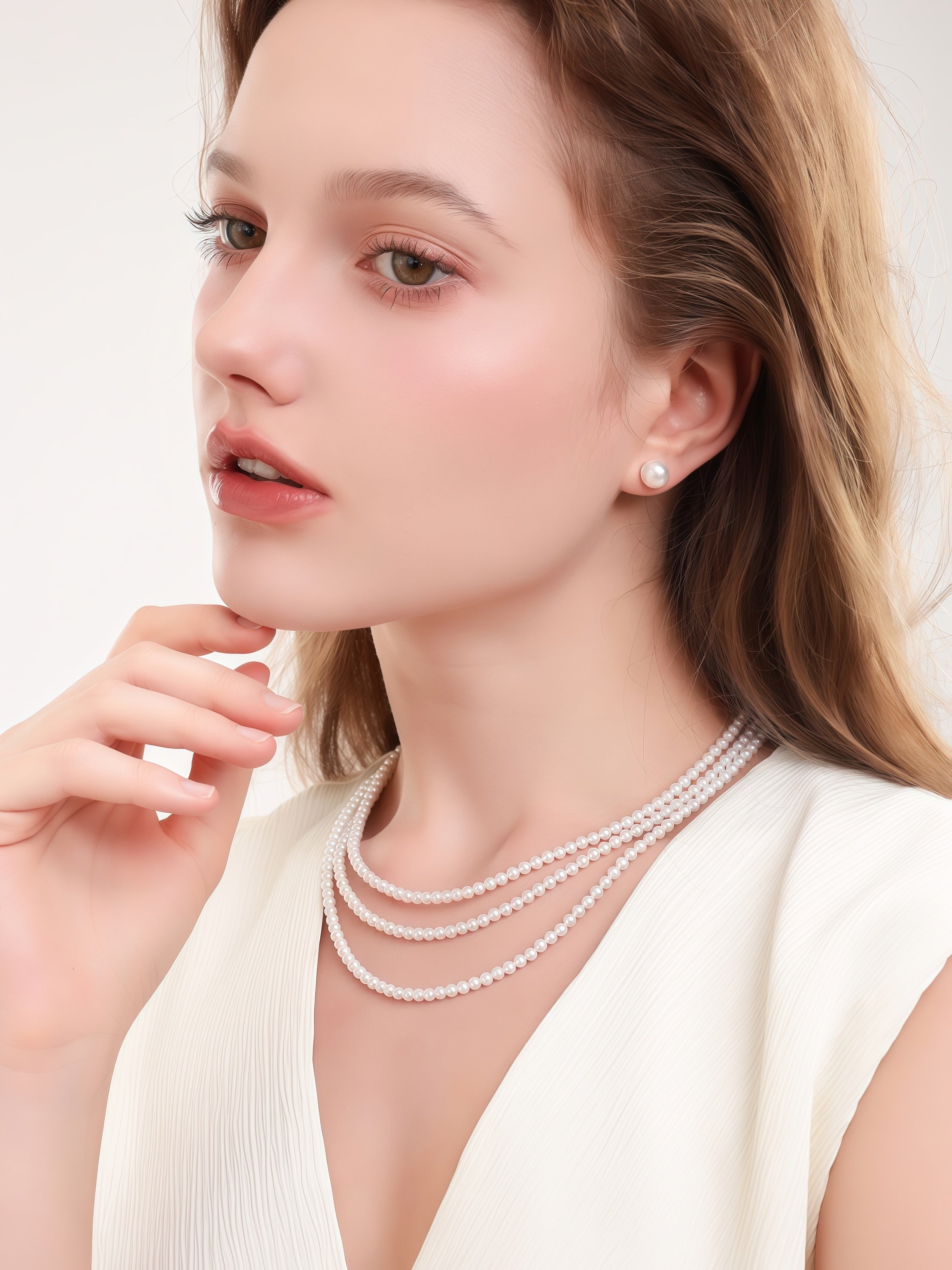
Pearl Necklace Price Guide 2026: Complete Cost Breakdown
How Much Do Pearls Cost? A 2026 Price Guide to Pearl Necklaces
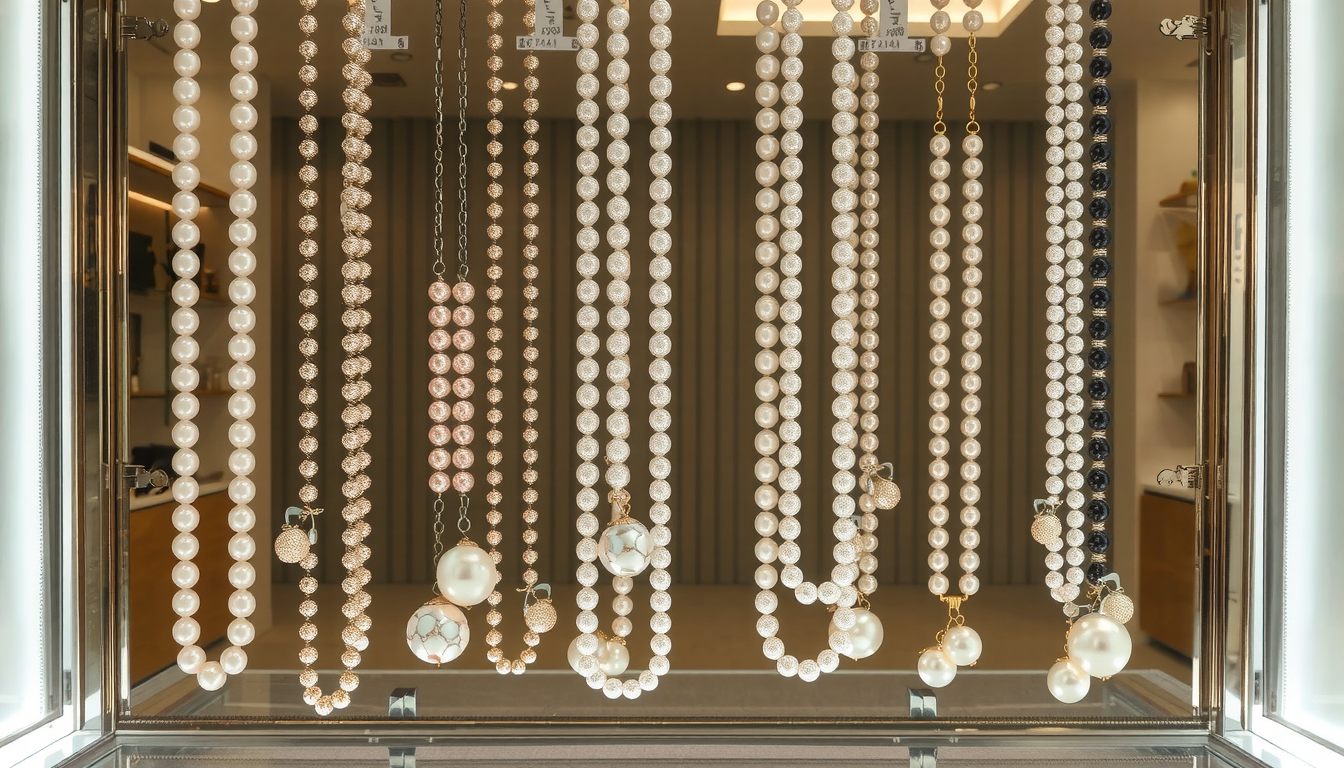
Searching for a pearl necklace is like finding a needle in a haystack. You look at pricing from triple-digit zeros to a sum of a few cars. Also, the pairs of virtually the same pearls on the net show totally different prices. This printable list will no longer confuse you. We will outline what a pearl string must cost in the year 2026. Further, we will show the basis for these respective prices depending on the final material used, and how you should shop for the best offer.
Key Takeaways
- In 2026, a piece of fine pearl jewelry will cost you between $200 and $4,000. This, however, is just a part of the price spectrum considering that the price could go as low as $100 and over $10,000 also. These differences are based on several factors.
- The value of a pearl depends on 7 factors: Size, Shape, Color, Luster, Surface Quality, Nacre Quality, and Matching.
- The type of pearl is the biggest cost driver. Freshwater, Akoya, or South Sea pearls are more important than quality grades like "5A."
- High-quality freshwater pearls provide the same size and beauty as South Sea pearls, but they are much cheaper.
Understanding Pearl Necklace Prices in 2026
Understanding pearl necklace prices requires a mutual agreement on what we are comparing. This article is targeted at people who want to make a good investment.
What We Mean by a "Pearl Necklace"
To be clear, when we talk about the prices of pearl necklaces, we are referring to a standard strand of pearls. This indicates:
- The pearls are generally of the same quality. They are matched as a set.
- The necklace is of a general length of 40 cm (about 15.7 inches). It is more often referred to as a princess length.
The General Price Range for Fine Pearl Jewelry
In 2026, despite the general troubles in the economy, you will find high-quality, fine pearl jewelry from around $200 to $4,000 on the market. The ultimate price will be determined by the pearl type, its size, the designer of the jewelry, and other quality factors.
The 7 Factors That Determine Pearl Value
Jewelry professionals use a standardized method to assess pearls. As the Gemological Institute of America (GIA) mentions the seven pearl value factors, the price tag of a pearl entails its Size, Shape, Color, Luster, Surface Quality, Nacre Quality, and Matching. Thus, two of the important factors are Surface Quality and Luster (the quality of light reflection).
Why You See Prices from $100 to Over $10,000
The price of a pearl necklace varies significantly.
- In 2026, a necklace of approximately $100 can already give you an entry-level 3–4mm freshwater pearl necklace. It's a real pearl necklace, but with smaller pearls and humble quality.
- At the bottom of the scale, however, you are looking at top-notch necklaces from high-profile brands like Mikimoto or Paspaley, which are priced above $10,000.
The Source of Confusion: Why "5A" Isn't Everything
This is where confusion hits many customers. Seeing the initial cost of two pearls of similar size and both bearing a prestigious grade like "5A," you might ascertain they are almost equal. The difference in price is because the pearl type has got the utmost significance.
For example:
- An 11–12 mm 5A freshwater pearl necklace might be about $1,000.
- A similar-sized Australian top-tier South Sea pearl necklace from Paspaley must be $6,000 or more.
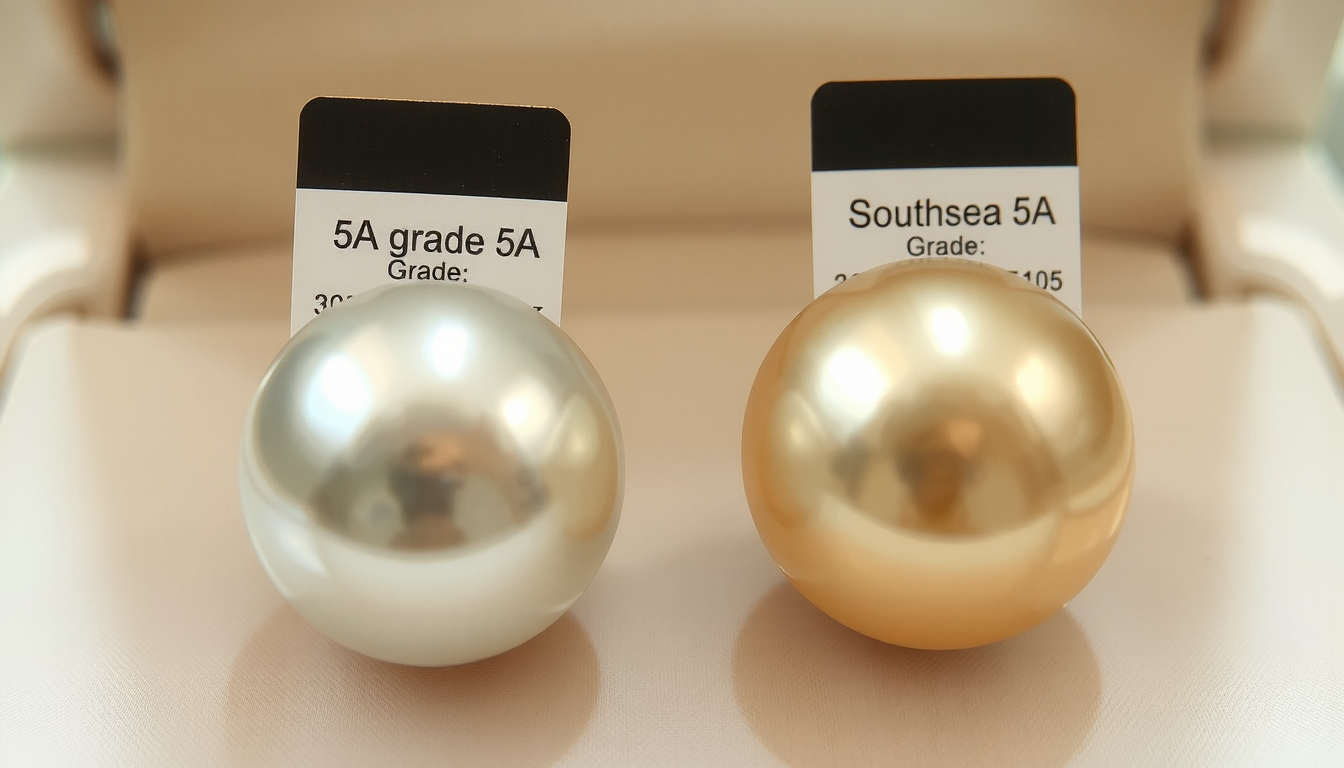
What brings about this discrepancy? What actually are the differences between these pearls? This guide takes it step by step and presents it clearly. We will examine three widely known white pearl varieties: Freshwater, Japanese Akoya, and Australian South Sea pearls.
Pearl Necklace Price Ranges at a Glance
A brief overview of the price of a standard 15.7-inch pearl necklace in 2026 is available below.
- Entry-Level Freshwater Pearls (3-6 mm): $100 – $300
- High-Quality Freshwater Pearls (7-12 mm): $300 – $1,500+
- Japanese Akoya Pearls (7-9 mm): $1,000 – $4,000+
- Australian South Sea Pearls (10-14 mm): $3,000 – $10,000+
Disclaimer: These are 2026 market estimates. Different sellers offer different prices based on the 7 quality factors and the seller.
What's the Difference? Freshwater vs. Akoya vs. South Sea Pearls
To understand the difference between the three main types of pearls, you must first get used to their characteristics. Each has its own personality, size, and luminosity.
Freshwater Pearls: The Versatile Choice
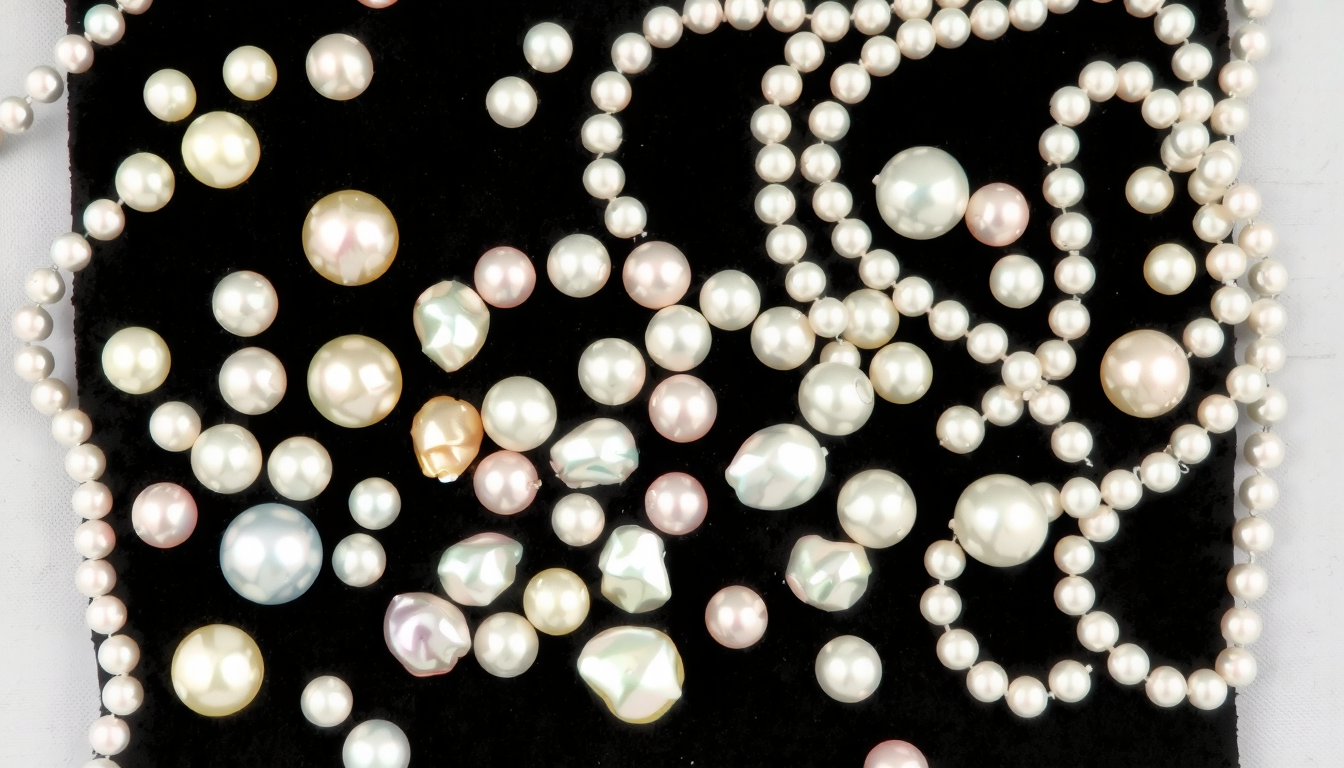
Freshwater pearls are the most colorful and versatile choices. They come in a plethora of shapes, sizes, and colors.
- Typical Sizes: They are usually found in sizes from 3 mm to 12 mm. A special type called Edison freshwater pearls can grow even larger. They are often comparable to South Sea pearls in size.
- Luster & Overtone: Freshwater pearl necklaces are the classic that have a soft, beautiful and gentle glow. They are less reflective but more satin. While high-quality Edison pearls might have a bright metallic luster with extraordinary green and pink overtone.
Japanese Akoya Pearls: The Classic Icon
When you imagine a classic, perfectly round white pearl necklace, you probably think of Akoya pearls. These are the symbols of timeless style.
- Typical Sizes: The most common and classy sizes are between 6 mm and 9 mm. However, Akoya pearls of more than 9 mm are rare. Their price increases sharply.
- Luster & Overtone: Akoya pearls are well-known for their sharp, "ball-bearing" luster. The reflections on their surface are bright and clear. They are often adorned with rosy pink overtone, which is prized and referred to as "sakura" glow. A few may appear cooler, having a silver-grayish hue.
Australian South Sea Pearls: The Ultimate Luxury
South Sea pearls are the biggest and the rarest. They are sought after for their extraordinary size and unique reflections.
- Typical Sizes: These are the biggest of all pearl species. They typically measure between 9 mm and 16 mm. There are instances of even larger ones.
- Luster & Overtone: The pearls have a very deep, silky, unique, and internal shining luster that is less reflective. It is a softer, shinier, more satiny reflection compared to the Akoya pearl's. Their color is commonly a pure white that is rustic and free of any overtones, although some there are some with faint silver overtones.
Beyond the Pearl: Why Craftsmanship & Cultivation Drive the Cost
The differences in price go beyond just the pearl's appearance. The "behind-the-scenes" processes of cultivation and finishing are major factors in the final cost of a South Sea or Akoya vs freshwater price.
The Freshwater Approach: Perfecting the Surface
Freshwater pearls are developed in mussels in lakes and rivers. Because of this, some tiny, natural pits might be found which the pearl can develop, since this environment is not as controlled as the saltwater farms.
To create a perfectly smooth surface that reflects light evenly, high-quality freshwater pearls are often polished. Such polishing involves the gentle use of materials like beeswax and amber resin/wax that fill in minor flaws. This way, the surface becomes perfectly clean and the luster is beautiful.

The Akoya Approach: Enhancing Natural Beauty
The Akoya pearl industry has perfected a process to bring out the best in every pearl. This is a standard practice for nearly all Akoya pearls on the market.
This process often involves color adjustment or toning to ensure a uniform look across the entire necklace. Radiation sometimes is a safe and permanent treatment used to improve the brightness of the pearl and enhance the desirable rosy overtones.

The South Sea Approach: The Primacy of Farming
For Australian South Sea pearls, the biggest cost factor is the farming, which happens long before the pearl is even harvested. The high value comes from the farming technique.
The Pinctada maxima oyster is a delicate creature, requiring a remote location with pristine ocean water to thrive. The cultivation process is long, often taking 2-4 years to produce one pearl, and the focus is on creating perfect conditions in the ocean to grow a pearl that needs little treatment after harvest. This difficult, expensive, long-term farming process is the primary reason for their high price.

Pearl Necklace Price Comparison: How to Get the Best Value
Now that we understand the differences, let's examine a direct price comparison. This will help to highlight where you can get the best value, especially if you are a fan of large pearls.
Comparing Apples to Apples: A Look at 11-12 mm White Pearl Necklaces
Here is a table with the typical market prices of a large, high-quality white pearl necklace from various suppliers.
| Brand / Pearl Type | Pearl Focus | Typical Price (11-12 mm Necklace) | Key Feature |
|---|---|---|---|
| Paspaley | Australian South Sea | $6,000 - $20,000+ | The peak of natural, silky luster and luxury. The cost reflects intensive ocean farming. |
| Mikimoto | Japanese Akoya | N/A (Rarely reach this size) | The global standard for classic, round pearls with sharp luster, but typically in smaller sizes. |
| Alya Pearl (Vivace) | 5A Freshwater | ~$1,000 | Offers a similar large size and high-quality luster at a far more accessible price point. |
Our Value: Luxury-Sized Pearls Without the Luxury Price Tag
As the table shows, an Australian South Sea necklace pearl is the embodiment of luxury and status. The price of this ornament is affected by many factors that are quite beyond your visual perception. However, modern, high-grade freshwater pearls offer the same breathtaking picture at a significantly lower price.
Our 11–12 mm 5A freshwater pearls supply you with the size and luster that so many are looking for these days. Thus, you can afford that luxe touch. Choosing your first pearl necklace is an opportunity to be excited instead of discouraged.
If you are the type that loves to wear elegant and large necklaces, we invite you to check our collection that is not only of high quality but also value for your money.
Explore the Alya Pearl Vivace Collection.
Frequently Asked Questions (FAQ)
What is a good price for a real pearl necklace?
A good price for a real pearl necklace depends on the type of pearl used. In 2026, a quality "first" pearl necklace will cost around $200-$500 for a beautiful freshwater strand or $1,000+ for a classic Akoya strand. However, it is difficult to find items below $100 that are not of very small or low quality or not made from genuine cultured pearls.
Are freshwater pearl necklaces worth it?
Yes, of course! The latest freshwater pearls are the best choice with regard to the financial aspect. With consistent advancements made in the cultivation, a high-quality freshwater pearl necklace can look as stunning as saltwater pearls in size and luster. This makes them a brilliant and durable choice.
Why are Akoya pearls so much more expensive than freshwater pearls?
The cultivation process is where the main price difference arises. Only one or two pearls are produced at a time by Akoya oysters, which makes them rare. They are cultivated in such a way that they become nearly perfect in round shape and sharp luster. The result is fewer pearls produced and more expensive ones thus raising costs.
How can I tell if a pearl necklace is good quality?
Assess the luster (sharpness and brightness of the reflections), the surface (the number of blemishes), and the matching (the uniformity of pearls in size, shape, and color). An authentic high-quality necklace will possess shiny luster, a clean surface, and the pearls will be in the form of a matched set. The beauty of quality is visible in various designs, many of which are pearl necklace styles.
What is the most expensive type of pearl necklace?
South Sea pearl necklaces are generally the costliest. Their size, thick nacre, and beautiful satiny luster, combined with the labor-intensive and costly cultivation of them in the secluded, flake-free ocean waters of Australia and Indonesia, all contribute to their premium South Sea pearl necklace price.
If you are interesting with other style of freshwater pearl necklace please check our necklace collection.


1 comment
How much can shipping of pearls to Uganda cost
Mara
Leave a comment
This site is protected by hCaptcha and the hCaptcha Privacy Policy and Terms of Service apply.