
Written by Alya Liu — pearl farmer & jeweler.
Pearl blemishes are unavoidable in the pearl world. A pearl is an organic gem grown layer by layer inside a living mollusk, so almost no pearl is truly perfect. The real question is not whether a pearl has a blemish, but whether that blemish affects beauty, durability, price, or how the pearl looks when worn.

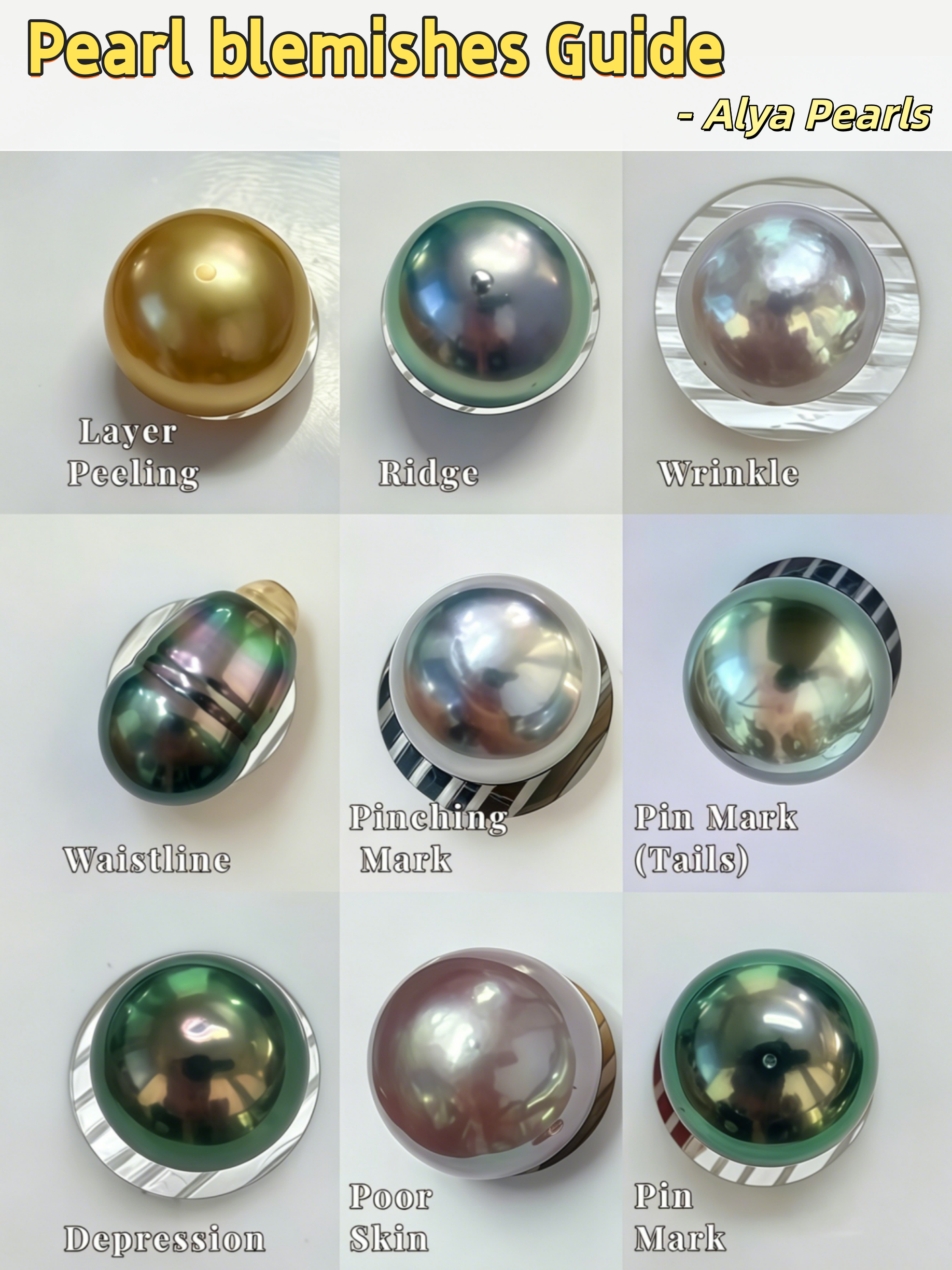
Image 1: Pearl blemishes overview. This guide image shows several common pearl surface features, from acceptable natural growth marks to more serious defects.
In this guide, I will classify common pearl blemishes using real pearl photos, explain which flaws are usually acceptable, which ones can be hidden by drilling or jewelry settings, and which blemishes seriously affect overall quality. For buyers, my simplest advice is this: inspect pearl jewelry from about 20 cm away in bright natural light, ideally soft morning light. This distance is close enough to see details, but still practical for how jewelry is actually viewed.

If you are buying online, ask for clear close-up photos and, for higher-value pearls, check reports from respected laboratories such as GIA, PSL, GUILD, or GRC. In most cases, I recommend choosing pearls described as very slightly blemished. Slightly blemished pearls can still be beautiful when the luster is excellent, because strong luster can make small surface marks less noticeable.
What Are Pearl Blemishes?
Pearl blemishes are visible surface features that interrupt the smoothness, reflection, or color harmony of a pearl. They may appear as small pinholes, shallow dips, wrinkles, raised ridges, growth rings, peeling nacre, or uneven skin.
Some blemishes form naturally during pearl growth. When the mollusk deposits nacre unevenly, the pearl may develop a ridge, wrinkle, depression, pin mark, or growth pattern. Other damage may happen later during drilling, setting, storage, or wear. This is why a pearl expert does not only ask, “Is there a blemish?” We ask: what type is it, where is it, how deep is it, and can it be hidden in jewelry?
For pearl jewelry, location is everything. A tiny pin mark near the drill hole may disappear under a cap, bail, or prong. A similar mark placed in the center front of a pendant may be much more visible. A small back-side blemish on a ring or pendant may not matter to the wearer at all, while a front-facing blemish on a pearl stud earring can be much harder to accept.
Common Pearl Blemishes Explained
Pin Mark: A Tiny Point-Like Blemish
A pin mark is a tiny pit-like blemish, almost like a small pinhole. For buyers with higher tolerance for natural marks, it is usually not a major concern if it is small, shallow, and hard to notice at normal social distance.
In jewelry making, pin marks are often manageable. If the mark sits close to the drill point, I can sometimes position the hole to hide it. If it is near the edge of a pearl pendant setting, a metal cap or decorative detail may cover it naturally.

Pin Mark with Tail: When a Small Mark Spreads
A pin mark with tail looks like a tiny pit followed by a fine line, almost like a comet tail. This type of blemish matters more than a simple pin mark because it covers a larger area. The length, depth, and placement of the tail determine how much it affects pearl value.
If the tail is faint and the pearl has strong luster, it may still be usable in a pendant, ring, or one-of-a-kind design. But if the tail crosses the brightest reflection zone, it becomes much more visible.
Depression: A Smooth, Shallow Dip
A depression is a shallow sunken area on the pearl surface. It is usually softer and smoother than a sharp pit. The tricky part is that depressions can hide under reflection, so buyers need to rotate the pearl slowly under light.
A small depression on the back or side may be acceptable. A large depression on the front of a pearl pendant will reduce visual harmony, especially if it distorts the pearl’s main reflection.

Ridge: A Raised Growth Mark
A ridge is a raised growth mark, the opposite of a pit or depression. It disturbs the smooth surface like a small bump on skin. A tiny ridge may be acceptable in a baroque pearl because the whole shape already has movement, but on a round pearl it can look more distracting.
In design, a ridge can sometimes be placed near the setting or turned toward the back. However, if the ridge sits in the center of the pearl’s visible face, it will affect both beauty and price.
Wrinkle: Fine Texture on the Pearl Surface
Wrinkles are fine, wrinkle-like textures on the pearl surface. They may appear similar to lines on skin. This type of surface feature is often seen in freshwater pearls and Akoya pearls.
Very fine wrinkles can add natural character, especially when the pearl has strong orient or beautiful color. But heavy wrinkling makes the pearl look less smooth and may reduce the clean, luxurious feeling buyers expect from fine pearl jewelry.

Waistline: A Ring-Like Growth Line
A waistline is a spiral or ring-like surface line often seen in baroque pearls. In some pearls, it creates a distinctive, sculptural look. In others, it breaks the pearl’s visual harmony.
I do not always reject waistlines. For artistic baroque jewelry, a waistline can make the pearl look more natural and expressive. But for classic pearl studs or minimalist pendants, a strong waistline may feel too distracting.
Pinching Mark: A Horizontal Sunken Line
A pinching mark is a type of growth mark that looks like a horizontal sunken line. It usually feels shallower to the touch than it appears in photos. From a jeweler’s perspective, the key is whether the line cuts across the main visual area.
A faint pinching mark on the side can often be acceptable, especially on a pearl with excellent luster. A deep pinching mark across the center of the pearl will reduce value more clearly.

Layer Peeling: A Serious Surface Problem
Layer peeling happens when the outer nacre layer lifts, flakes, or exposes a different inner layer. This is not just a small visual mark. It can affect durability and long-term wear.
In my studio, I treat nacre peeling as a serious defect. If it is tiny and near the drill area, it may sometimes be removed or hidden during setting. But if the peeling is on the visible front surface, I would not recommend it for fine jewelry.

Poor Skin: When the Whole Surface Looks Uneven
Poor skin is not just one blemish. It describes an overall surface problem. The pearl may look cloudy, uneven, rough, patchy, or lacking in clean reflection. This often reduces the pearl’s beauty more than one small hidden pin mark.
A pearl with one small blemish can still be valuable if the luster is excellent. But a pearl with poor skin loses that refined, glowing appearance. For buyers, this is one of the most important differences to understand.
Which Pearl Blemishes Are Acceptable?
Acceptable blemishes are usually small, shallow, isolated, and placed away from the main viewing area. A tiny pin mark, faint growth pattern, mild wrinkle, or small side depression may be perfectly acceptable if the pearl has beautiful luster and color.
The most acceptable blemishes are the ones a jeweler can hide. For example, a tiny pit near the top of a pendant pearl can sometimes be covered by a gold cap. A small side mark may be placed toward the back. A blemish near the drill point may disappear after drilling. This is why pearl selection for jewelry is different from judging a loose pearl on a tray.
Serious blemishes include nacre peeling, bead exposure, cracks, deep pits, large front-facing depressions, and poor skin that affects the whole pearl. These problems are harder to hide and may reduce durability or visual quality. Even if the pearl has a beautiful color, I would be careful with these defects.
My personal rule is simple: luster first, color second, shape third, and blemishes last — unless the blemish affects durability or sits directly on the visible front. A small natural mark does not always ruin a pearl. But a serious surface problem can change the entire quality level.
How Buyers Should Check Pearl Jewelry Before Purchase
Check in Natural Light
Look at the pearl in bright but soft natural light. Morning light is excellent because it shows both luster and surface details without being too harsh. Hold the pearl about 20 cm from your eyes and rotate it slowly.
Look at the Front, Side, and Back
For pendants and rings, the front view matters most. For earrings, both pearls should be checked from the angle people will see when worn. A back-side blemish may be acceptable if it never shows during wear.
Ask Whether the Blemish Can Be Hidden
This is especially important for custom pearl jewelry. Ask the seller or jeweler whether a small pit, pin mark, or depression can be covered by drilling, a cap, a bail, a prong, or another design element.
Choose Very Slightly Blemished When Possible
For most buyers, very slightly blemished pearls offer the best balance of beauty and value. If the pearl has exceptional luster, a slightly blemished pearl can also be a smart choice, especially when the blemish is hidden or not noticeable at social distance.
Use Certificates for Higher-Value Pearls
When buying expensive pearls, especially high-end Akoya, South Sea, Tahitian, or rare freshwater pearls, a trusted report can help confirm identity and quality information. Reports are not a price tag, but they give buyers more confidence.
Watch: Understanding Pearl Quality and Surface Factors
For a more formal explanation of pearl grading and value factors, this GIA video is a helpful educational reference.
Final Advice from Alya
Pearl blemishes are not always bad. They are part of how pearls grow. What matters is whether the blemish damages the pearl, distracts the eye, or can be hidden through thoughtful jewelry design.
As a pearl jeweler, I enjoy working with pearls that have small natural marks but beautiful luster. Sometimes a tiny hidden blemish allows a customer to get a more affordable piece with the color and glow they truly love. That is a good balance between beauty and value.
But I am strict about serious damage. Peeling, cracks, bead exposure, and poor skin are not just small imperfections. They affect how the pearl wears, how it reflects light, and how long the jewelry will remain beautiful.
Follow @alyapearls on Instagram and join our jewelry channel for daily updates on our newest handmade pearl pieces.


Leave a comment
This site is protected by hCaptcha and the hCaptcha Privacy Policy and Terms of Service apply.