
Written by Alya Liu — pearl farmer & jeweler.
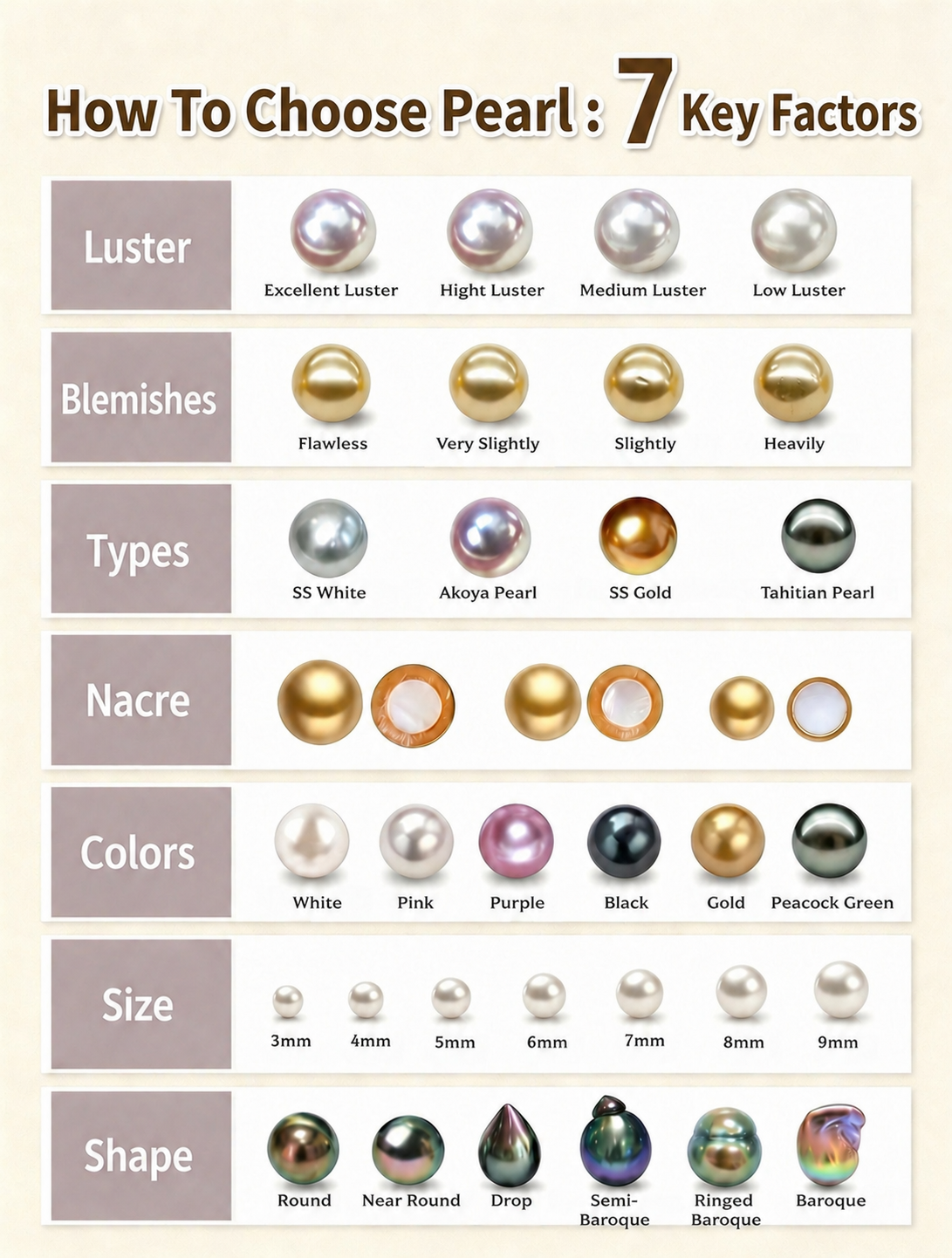
Pearl value is decided by many factors, including luster, blemishes, pearl type, nacre thickness, color, size, shape, overtone, and more. In this blog, we’ll focus on 7 key factors that help determine the value of a pearl.
In this guide, I’ll show you how to read these details with a jeweler’s eye, so you can better understand how to choose pearls and how much pearls are really worth.
My simple rule is: step back first. If a pearl still glows beautifully on the body, a tiny natural mark may not matter as much as you think.
Follow @alyapearls on Instagram and join our jewelry channel for daily updates on our newest handmade pearl pieces.

A Real Example From My Pearl Sorting Table
Before I talk about the 7 key factors, I want to share how I actually start choosing pearls on my own sorting table.
When a new wholesale lot arrives, the first thing we usually do is sort the pearls by size. For example, if a fresh batch of Tahitian pearls has just arrived in front of me, I will first use pearl sieves to separate them millimeter by millimeter. Once the sizes are sorted, I begin a quick luster check. I usually divide them into three simple groups: strong luster, medium luster, and weak luster. Only after this first sorting step can we move into more detailed grading, matching, and jewelry design.
One question people always ask me is: which factor matters most when choosing pearls? My answer is almost always the same — luster. Luster is the reason a pearl can feel like a gemstone. Even if a pearl has an irregular baroque shape, bright reflection can make it beautiful, lively, and full of character. So when you choose pearls, always look at the luster first. A pearl with strong luster will catch your eye before anything else.
Pearl Factors I Check Before Buying Jewelry
1. Luster: The First Thing Your Eye Notices
Luster is always my first priority. A pearl’s beauty begins with how it reflects light. When the nacre surface is dense, smooth, and well-formed, the pearl can show a bright, mirror-like glow. When the nacre structure is weaker or the surface is dull, the pearl may look flat, chalky, or lifeless.
In simple terms, your eyes naturally go toward the brighter pearl. That instinct is usually correct. High luster gives a pearl depth, spirit, and jewelry presence. For earrings, pendants, and rings, luster is especially important because the pearl sits close to the face or hand, where people notice light first.

2. Nacre: The Hidden Layer That Affects Durability
Nacre is the pearl’s outer pearl layer. For bead-nucleated pearls, nacre forms over the implanted nucleus. In general, thicker nacre gives better durability and a more lasting surface. Thin nacre may look beautiful at first, but it can wear down more easily over time.
The challenge is that nacre thickness is difficult to judge with the naked eye. For high-value pearls, especially South Sea, Tahitian, or high-end Akoya pearls, a laboratory report from a trusted pearl testing institution can give extra confidence. This is why professional buyers do not rely only on beauty photos.

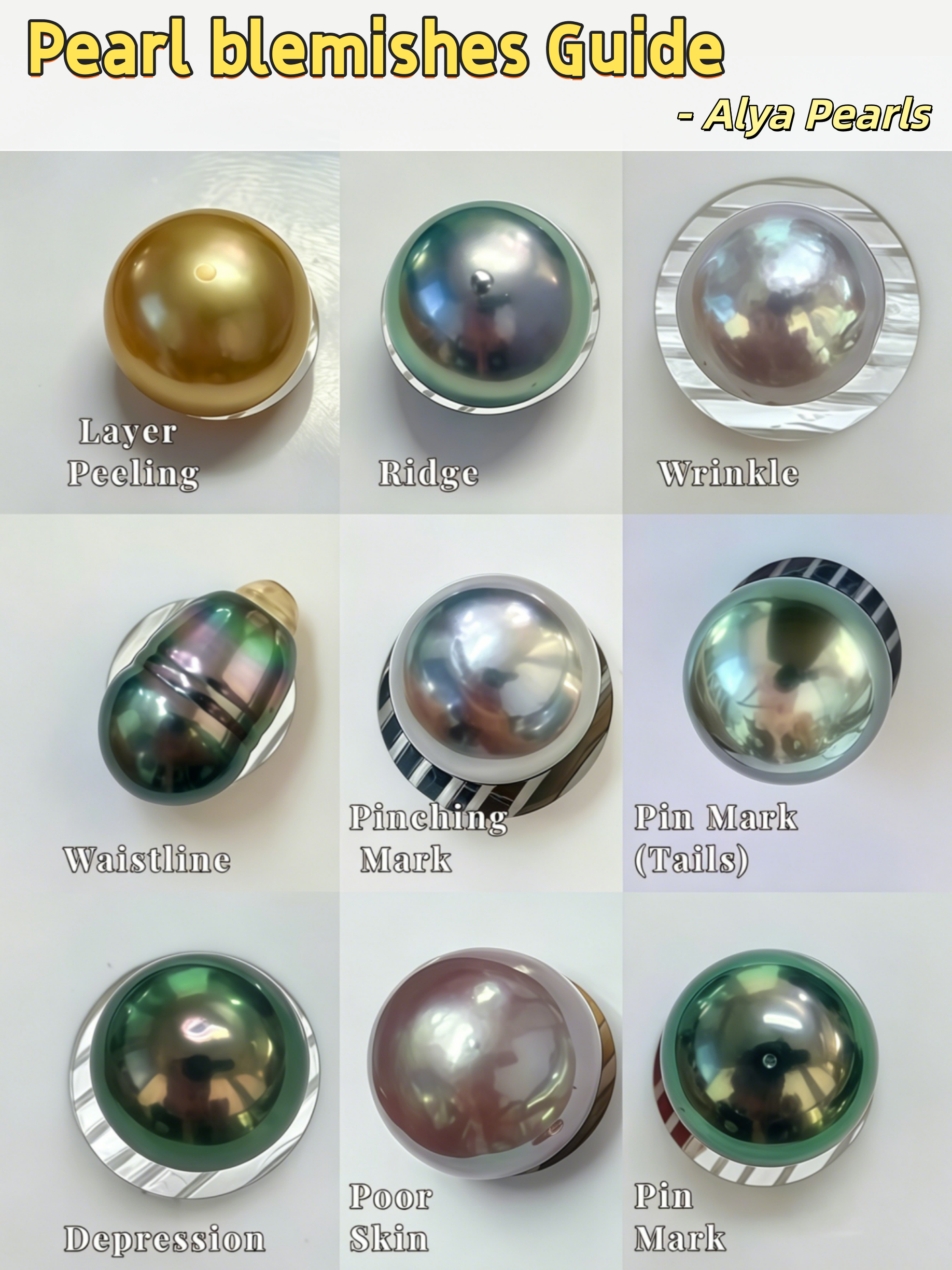
3. Blemishes: Tiny Marks Can Change the Price
Every natural pearl has its own tiny imperfections. In the pearl market, “flawless” usually does not mean absolutely perfect under a microscope. It usually means no obvious blemishes are visible to the naked eye from a normal viewing distance.
Small blemishes are not always deal breakers. If a tiny pit is placed near the drilling point, it may be hidden by the setting. If a small mark sits on the back of a pendant, it may not affect the beauty when worn. But if blemishes are clustered on the front, or if the pearl has poor skin, cracks, peeling, or bead exposure, the value can drop sharply.

4. Type: Different Pearls Have Different Market Values
Pearl type has a major influence on price. In the fine jewelry market, South Sea white pearls are often among the most expensive because of their large size, silky glow, and limited production. South Sea gold pearls are also highly valued, especially when the gold tone is deep and natural. Tahitian pearls are loved for their dark body color and dramatic overtones such as peacock green, purple, and ocean blue.
Akoya pearls are famous for their crisp, classic luster and are often used in traditional pearl strands and studs. Their price can vary widely depending on luster, surface, size, and nacre.
Freshwater pearls are usually the most accessible and versatile, which is why they are so popular in modern pearl jewelry, especially for everyday wear.

5. Color: Choose What You Love, But Watch for Treatments
Pearl color includes body color, overtone, and orient. Some people love classic white. Others prefer pink, purple, black, gold, or peacock green. I always tell customers to choose the color that looks best on their skin tone and feels right emotionally.
But color is also where buyers need to be careful. Because high-quality Tahitian pearls and South Sea gold pearls can be expensive, dyed freshwater pearls are sometimes used as imitations. Very small dark or gold pearls under about 8mm should be checked carefully, because natural South Sea or Tahitian pearls are not commonly seen in very tiny sizes.

6. Size: Bigger Usually Means Rarer
Pearl size is measured in millimeters. In most cases, larger pearls are rarer and more expensive, especially when quality is high. Pearls under 6mm are often used as small accent pearls. The 7–9mm range is popular for everyday pearl jewelry because it feels wearable and balanced. Around 10mm, high-quality pearls become harder to find. Pearls over 11mm are more often seen in South Sea and Tahitian categories.
There is one interesting exception: when pearls become extremely small, especially under 3mm in strand form, they can sometimes become more expensive because matching, drilling, and sorting tiny pearls require extra work.
7. Shape: Round Is Valuable, But Not Always More Beautiful
In traditional market pricing, round pearls are usually valued higher when all other quality factors are similar. Roundness is rare, especially in high-quality pearls. Near-round pearls are often a practical choice because they can look round when worn but cost less than perfectly round pearls.
Personally, I am very open to non-round shapes. Drop pearls, baroque pearls, circled pearls, and semi-baroque pearls can have wonderful character. For me, luster, color, and overtone often matter more than perfect symmetry. A beautiful baroque pearl with strong glow can feel much more artistic than a dull round pearl.

How to Compare Pearls at the Same Price
If two pearls are offered at the same price, I recommend checking them in this order: luster first, surface second, color third, then size and shape. This is how you get a better pearl with the same budget.
For example, if you are choosing a freshwater pearl necklace, do not only ask for the largest size. A slightly smaller pearl with stronger luster and cleaner skin may look much more expensive when worn. If you are choosing a pendant, ask where the blemish is. A pearl with a small hidden mark near the setting may offer excellent value.
In fine pearl jewelry, true bargains are rare. If a pearl is far below normal market value, there is usually a reason: weak luster, heavy blemishes, thin nacre, dyed color, poor matching, or unclear origin. A trustworthy seller should be able to explain why one pearl costs more than another.

Watch: How Pearls Are Graded
If you want to understand pearl quality more visually, this GIA pearl grading video playlist is a useful educational reference.
FAQ
How much are pearls worth?
Pearls can range from very affordable to highly valuable depending on type, size, luster, surface, nacre, color, shape, and matching. A freshwater pearl, Akoya pearl, Tahitian pearl, and South Sea pearl can all have very different price ranges.
What is the most important factor when choosing pearls?
For me, luster comes first. A pearl with strong luster looks alive and elegant even if it is not perfectly round. After luster, I check surface quality, color, nacre, size, and shape.
Are freshwater pearls a good choice?
Yes. Freshwater pearls are one of the best choices for everyday pearl jewelry because they offer beautiful variety, good value, and many modern shapes. High-quality freshwater pearls can be very beautiful, especially when they have strong luster and clean surfaces.
Are round pearls always better than baroque pearls?
Not always. Round pearls are usually more valuable in traditional grading, but baroque pearls can be more artistic and unique. If you love character, movement, and natural shape, baroque pearls may be the better choice for your personal style.


Leave a comment
This site is protected by hCaptcha and the hCaptcha Privacy Policy and Terms of Service apply.