
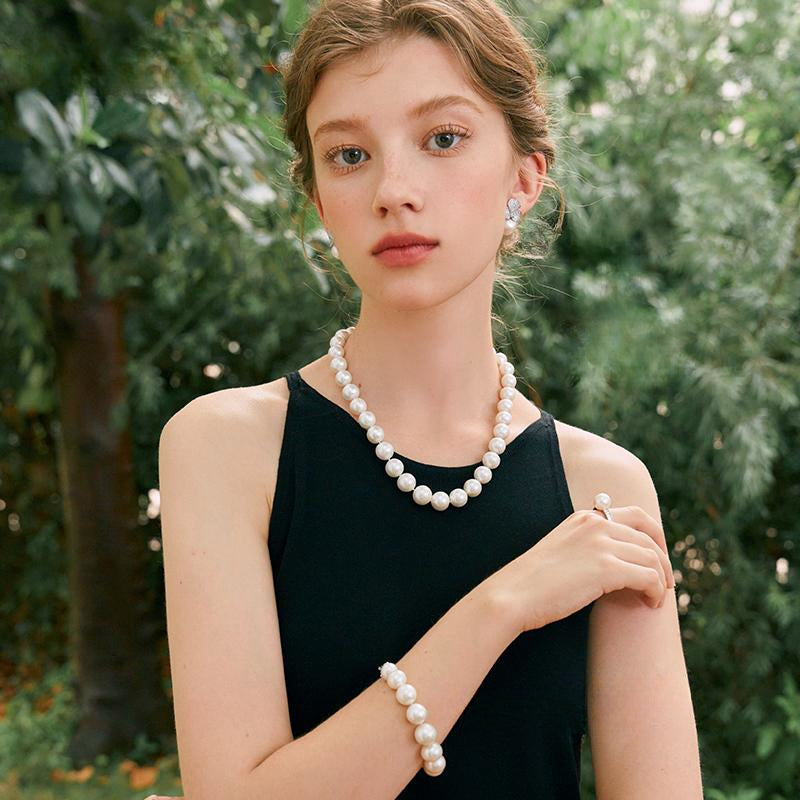
How Much Are Pearls Worth? 2026 Price Guide & Values
The answer to the question of how much are real pearls worth covers a wide range of prices. In 2026, the price for a real pearl necklace will be from $100 and up to several hundred thousand dollars. As a freshwater strand is usually cheaper than that, a simple variant can be less than $100. A rare South Sea pearl necklace can cost more than $100,000.

Paspaley CEO at the Hong Kong Gems Show

A tip tier quality pearl necklace - Southern Sea pearls
The value of a pearl is not only in its price. It's in its birthplace, its luster, and the story it tells. This guide will provide you with an insight into the real pearl price for today's top types. They include Tahitian, South Sea, Akoya, and Freshwater pearls.
We have 20+ years of experience in this field. Our family's pearl farms are connected directly to our design studio. We have witnessed the process ourselves and what the set standards are. In this guide, you will read our insider view which we share with you to ensure a better understanding of what you are paying for.
Key Takeaways
- Wide Price Range: Real pearl necklaces can cost from under $100 to over $100,000. The type of pearl and its quality dictate this.
- Saltwater vs. Freshwater: Saltwater pearls such as Akoya, Tahitian, and South Sea are generally the most expensive.
- Freshwater's Rise: High-quality Freshwater pearls can now beat saltwater pearls in terms of shine and size, but much better value is offered.
- Key Value Factors: A pearl's worth comes from 7 main factors. They are shine, size, shape, surface, color, nacre, and matching.
- Best Choice: The best option for those who want luxurious quality without high cost is the gem-grade Freshwater pearls in 2026.
Quick Pearl Necklace Price Information for 2026
These are our professional estimates concerning the prices of an 18-inch pearl necklace from the following most popular brands in 2026. These ranges show the varied quality that each pearl type covers.
| Pearl Type | Typical Size | Average 18-inch Necklace Price Range |
|---|---|---|
| Freshwater | 7-12mm | $150 - $2,500+ |
| Akoya | 7-9.5mm | $1,000 - $10,000+ |
| Tahitian | 9-14mm | $2,000 - $25,000+ |
| White South Sea (Australian) | 10-16mm | $3,000 - $50,000+ |
| Golden South Sea | 10-16mm | $4,000 - $100,000+ |
The Luxury Level: Recognizing Prices of Saltwater Pearl Necklaces
Saltwater pearls are a traditional symbol of wealth. Their high prices are due to their being hard to find. They also tend to grow in specific, often difficult, conditions. Therefore, learning about their price can give you an insight into the highest end of the market.
Tahitian Black Pearls: The "Queen of Pearls"
Tahitian pearls have been the talk of the town because of their eye-catching, naturally dark colors. They are not entirely black. They show colors ranging from charcoal gray to peacock green and deep purple.
- Price Factors: The topgrade memorable Tahitian pearls have deep and rich colors that are associated with strong overtones. They are mostly without surface flaws.
- Typical Necklace Price: A strand can cost anywhere from about $2,000 to over $25,000.

Golden & White South Sea Pearls: The Best of Size and Lustre
The largest cultured pearls in the world are South Sea pearls. They are the most valuable of course too. They are recognized for their soft shine, with a satin finish.
White South Sea pearls often come from Australia. They are prized for their bright, silvery-white color. Golden South Sea pearls are rather worn for their very beautiful deep, warm, 24k-like gold colors.
- Price Factors: The primary reason for value is a large size. Then, a deep glowing shine and a perfect surface also add to that.
- Typical Necklace Price: White South Sea pearls often start at around $3,000. The highest quality Golden South Sea strands can easily exceed $100,000.
Japanese Akoya Pearls: The Traditional Choice
Akoya pearls are the original "classic" cultured pearls. They are adored for their perfect round shape. They have a sharp, highly reflective light which is like a mirror.
- Price Factors: An Akoya pearl necklace's price is determined by its near-perfect round shape and very high shine.
- Typical Necklace Price: These strands generally range from $1,000 to over $10,000.
Freshwater Pearls Have Made Their Ascendance: Saltwater Quality, The Untouchable Price
For years, the luxury market with saltwater pearls has been a talk among people. But in the recent past, a change has been occurring in the background. The competition of modern-day high-quality freshwater pearls is progressing rapidly, and that is our statement as experts in the field with a 60-year history of working with pearls.
What is the price of a quality Freshwater pearl necklace?
Basic freshwater pearl strands from under $200 are within your reach. But that's only a narrow view of the offer. A string of freshwater pearls that are fabulous, gem-quality are the top-grade pieces. The market value of this is $500 to over $2,500 depending on the size, shape, and quality of the piece.
Instead of $10,000 for the Akoya necklace, get a $2,500 gem-quality Freshwater necklace. Or compare it to a $25,000 South Sea necklace of similar appearance. Thusly, you comprehend the wonderful value you are being offered.
Trendy Change: Quality of Lustre now Rivals Saltwater Pearls

That’s exactly why I love freshwater pearls — those beautiful purple tones only occur in freshwater pearls.
Based on the examination of tens of thousands of hand-sorted pearls, we have come to a conclusion. As of now, the best Freshwater pearls offered in 2026 are equal to high-quality saltwater pearls. They are the same in terms of luster and size. No longer is the difference in quality; it is just the texture of that luster.
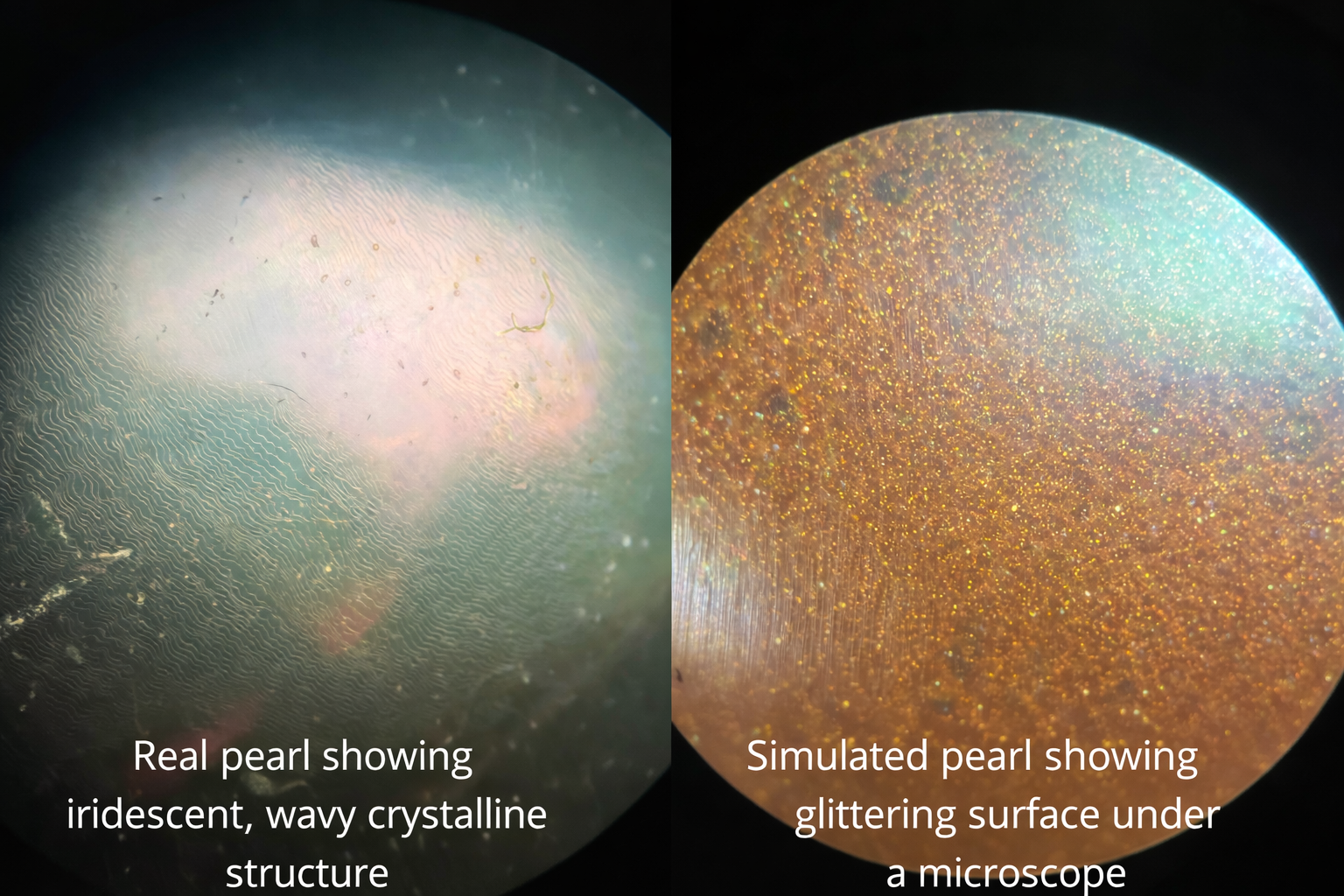
This lovely difference is due to layer upon layer of crystal structure in nacre. Nacre is the pearl's surface layers. Most of the time it is a detail that only an expert can interpret. But it gives a special beauty in every type.
-
Saltwater Pearls (for example, Australian White South Sea): Their nacre plates are arranged extremely tightly with a very uniform pattern. This causes a bright, reflective, and sharp reflection. People usually identify it as a "metallic" or "silky" shine.
-
Top-Grade Freshwater Pearls (like Edison pearls): Here the plate structure is somewhat different. This arrangement produces a softer, deeper glow that seems to come from within the pearl. It also creates beautiful, complex overtones, like the exceptional rainbow hue or pinkish light that makes these pearls so captivating.
This is not a flaw; it is a distinct and beautiful characteristic. It means you can go for the type of shine that suits your taste. You are assured that the quality is not a compromise.
Why are Freshwater Pearls the Fine Value?
The primary strength of Freshwater pearls is the way they are harvested. When it comes to saltwater ones, a single oyster produces just a pearl at a time. As opposed to that, a freshwater mussel can yield multiple pearls with one harvest. This peculiarity is the core reason behind the lower prices.
At Alya Pearls, our "From Pearl Farm to Finished Jewelry" strategy kicks the value up a notch. We control everything from the harvest to the design studio. This cuts out middlemen. This allows for selecting only the top percentage of the harvest. We supply pearls of saltwater quality at a fraction of the price.
7 Key Factors That Make a Real Pearl Worth It
Knowing what makes a pearl valuable forms a solid base for you as a buyer. There are many factors that come into play for determining how much pearls are worth. But gemologists use seven main criteria to evaluate a pearl's quality and value.
-
Shine: The most significant aspect is the shine. This is the quality and amount of light that reflects from a pearl's surface and its inner layers. A commendable pearl will have a brilliant, sharp, and profound glow.
-
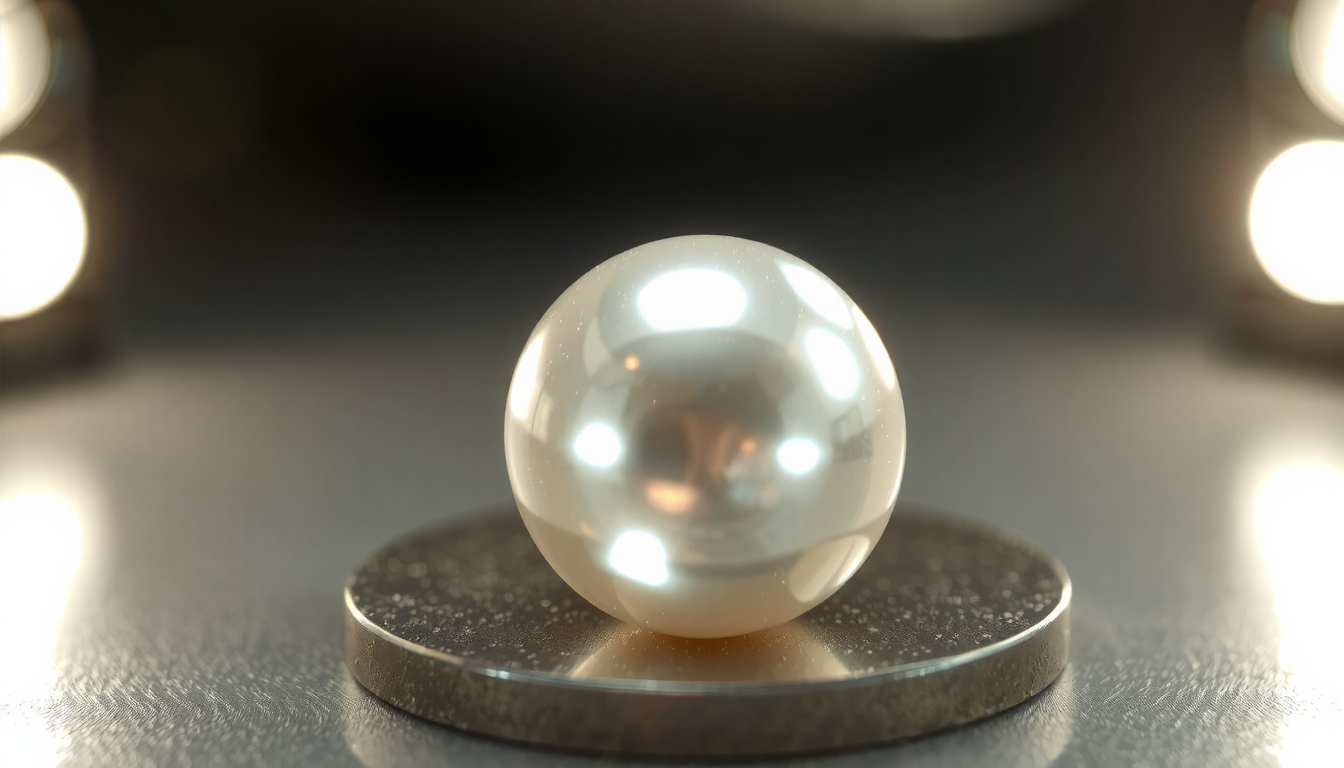
Size: In millimeters (mm), the size of the pearl is an important factor in determining price. For any type of pearl, the bigger ones are very rare. Hence, they have a higher value.
-
Shape: The most common shape is the perfect round pearl, which is the most classical. They tend to be the most expensive type. However, bizarre, uneven shapes called baroque pearls are also quite popular. They are desired by collectors and designers for being unique.
-
Surface Quality: A pearl's surface should be clean and smooth. The fewer flaws (like pits, spots, or bumps) it has, the more valuable the pearl will be.
-
Color: This includes the pearl's main body color (like white, cream, black, gold) which is secondary to its overtone. The overtone is the subtle secondary color that appears on the surface; for example, rose, green, or blue.
-
Nacre Quality: Nacre is the beautiful, rainbow-like substance that creates the pearl. Thicker nacre generally results in better shine and a more durable pearl.
-
Matching: Matching is needed for jewelry that has multiple pearls, like a necklace or earrings. The pearls must match in all the other six factors. This is crucial to the look and value of the final piece.
Discover Your Ultimate Pearl Necklace with Alya Pearls
Finding your way through the maze of real pearls goes to a much happier conclusion. If you want a beautiful high-quality pearl necklace, you don't have to choose the one that costs the most. The secret lies in selecting the best quality at an affordable price.
Alya Liu, our founder, who is a GIA-certified Pearl Specialist and designer, is the one who selects our collection. We are concentrating on Freshwater pearls that are top grade. These are the ones that offer the same beauty, size, and shine that only saltwater gems had. Our "From Pearl Farm to Finished Jewelry" model ensures one key thing. Every necklace we offer provides great quality. It rivals options that cost thousands more. Each piece is testimony to our family's 60+ years of pearl heritage and our commitment to affordable luxury.
Take a look at our collection of Pearl Necklaces | Freshwater, Baroque, Choker & Pendant | Alya Pearls. You will find all sorts of pearls starting with the basic white strands and going to the most modern baroque pendants. As a gesture of our welcome to the family, you can get 20% Off with code LOVE20. We also provide you with a free pair of pearl studs for orders over $99. You also get an additional $15 off for orders over $300, thus making it more affordable to own the timeless style.
Conclusion: What Will Real Pearls Be Worth to You?
In 2026, the question of how much do pearls cost is going to get more exciting than ever. The sales of South Sea pearls in five- and six-figure amounts are still the ones that mark the top part of the market. However, the lesson is that the price for luxurious items has been declining.
Freshwaters turned the game around. Thanks to the incredible advances made in the freshwater growing industry, gem-quality pearls with outstanding luster are now affordable to many people. Cutting-edge design ensures that today's Freshwater pearls are stunning, durable, and incredibly good value for money.
The actual worth of a pearl is the joy and self-confidence that it gives you. Hence, equipped with this knowledge, you will be able to choose a piece that you will love to wear. You will also pass it down as a beautiful heirloom for a lifetime.
Frequently Asked Questions (FAQ)
1. Are real pearls expensive?
Not necessarily! Although the rare South Sea pearls can indeed be very pricey, the affordable necklaces made of beautiful and high-quality real Freshwater pearls are available starting at 150 dollars. The price depends only on the type, size, and quality of the pearl.
2. How can I know if my pearls are real or not?
A simple but reliable technique is "the tooth test". Softly scratch the edge of your tooth with pearls rubbing against it. The real pearls will, due to their nacre structure, feel a little gritty or sandy, while the fake pearls will just feel smooth. Always ask for a professional evaluation from a certified gemologist, if it comes to deciding on valuable pieces.
3. What is the priciest type of pearl?
Typically, South Sea pearls come in at the top bracket regarding price. Their large size, thick nacre, and rarity are the main contributors. A large, perfect strand of gem-quality South Sea golden or white pearls is worth more than a hundred thousand dollars.
4. Are pearl necklaces a viable investment?
Considering some rare natural pearls can appreciate in value, the bulk of cultured pearl jewelry is better seen as a personal style and heirloom investment. A classic, high-quality pearl necklace will never go out of style and can be passed down for generations.
5. Why choose Freshwater pearls over Akoya pearls?
While both are beautiful, top-quality Freshwater pearls now offer comparable shine and larger sizes than many Akoyas for a significantly better price. They also come in a wider range of natural colors and shapes, offering more variety and value for modern jewelry lovers.


6 comments
How much is the pearl worth
Justine Cargill
I would like to know which type of pearl necklace I own and it’s approximated value. I have had it for about years.
Susan Barbin
As a collector I feel like pearls have some value
Lowrider719x
Marjorie Beidelschies
I would like to find out about my perls Nickles with gold want to do an exchange …please contact and advice .
Thabisile Precious Buthelezi
If I send you a picture of the pearls, can you give me a an appraisal?
Lisa Naumu
Leave a comment
This site is protected by hCaptcha and the hCaptcha Privacy Policy and Terms of Service apply.