
Written by Alya — jeweler and pearl grower. I select pearls for luster, surface, structure, and long-term wear.

Most people start with: “how much are pearls worth?” But the question underneath is usually: Will these pearls still look beautiful after years of wear? That’s where nacre thickness (and nacre quality) becomes more than a technical detail — it’s a durability clue.
In this guide, I’ll show you how professionals think about nacre and longevity, what you can realistically judge at home, and when it’s worth using a pearl identification lab. We’ll use real cut samples (South Sea + Tahitian) and two grading displays (nacre + shape) to make the concepts visual and practical.
Quick Answers: What Is Nacre, and Why Does It Affect Price?
Nacre is the layered material that gives pearls their glow. It’s also the “wear layer” that protects a pearl over time. Thicker, well-formed nacre generally supports better long-term durability — especially for pieces worn weekly (strands, bracelets, rings).
From a market standpoint, nacre thickness can also reflect farming time: more time in the water often means more nacre, more cost, and more risk. That’s why pearls with stronger nacre standards tend to price higher — not because “thick = pretty,” but because thick nacre is usually harder to produce consistently.
If you like official frameworks, GIA breaks pearl value into a set of factors (including nacre). See: GIA — 7 Pearl Value Factors.
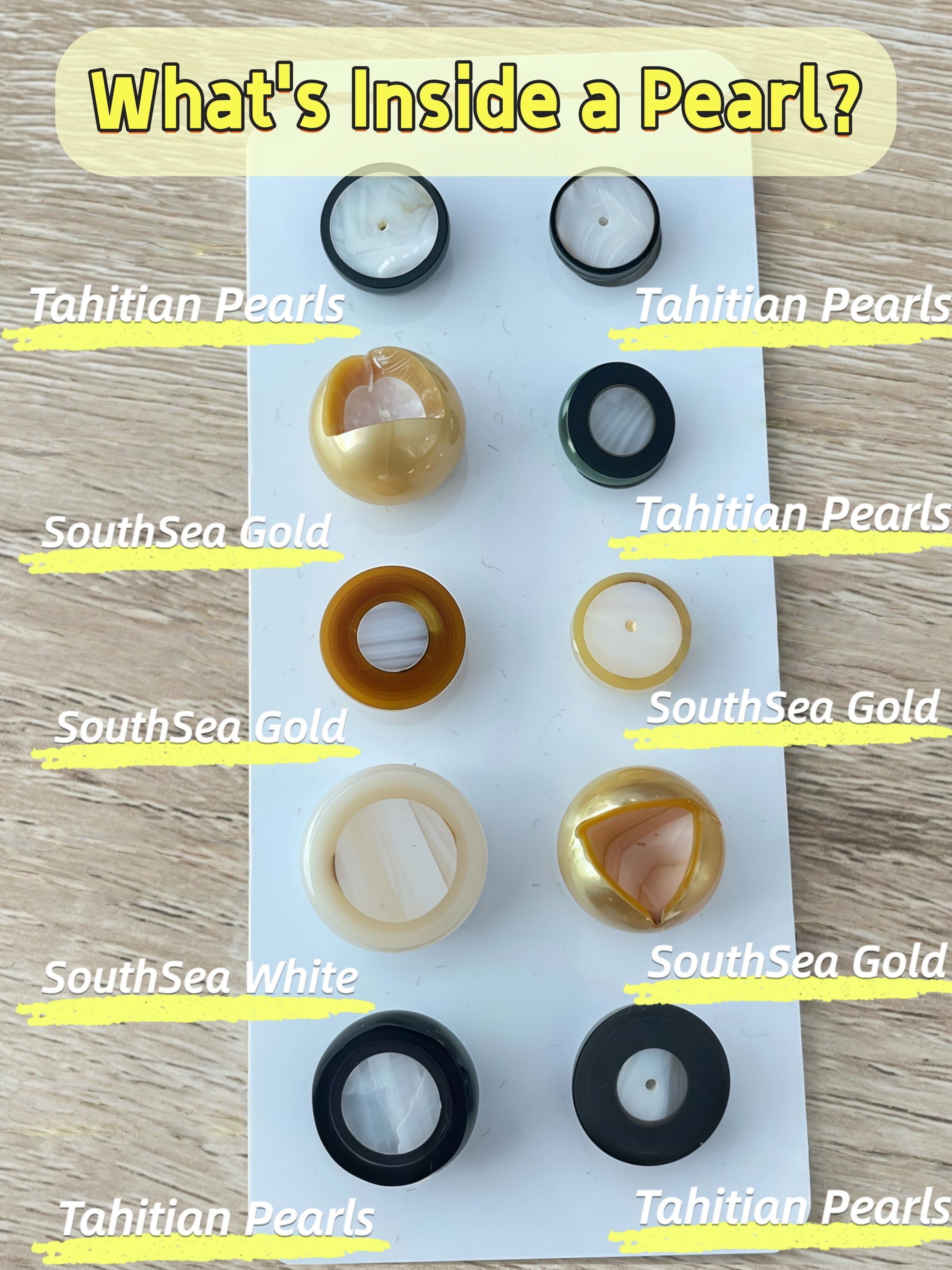
What You’re Seeing Inside the Cut Pearls (Bead + Nacre)

These are classic saltwater cultured pearls (South Sea and Tahitian). Most have a bead nucleus placed inside the oyster, then nacre builds around it during grow-out. The visible ring thickness is the nacre “buffer” — the part that takes wear over time.
When people say “thin nacre,” they often mean the nacre ring is narrow relative to the bead. Thin nacre can still look beautiful, but it can be less forgiving if the pearl is worn hard, rubbed against metal, or cleaned aggressively. If you’re buying a real pearl necklace as an heirloom, nacre is part of the long-game.

As a buyer, you usually won’t have cut samples. But the concept is still useful: it explains why two pearls that look “similar” at first glance can be priced very differently.
Durability Checklist: What You Can Judge Without a Lab
Here’s the truth: you can’t reliably measure nacre thickness at home on an intact pearl. But you can judge durability risk with a structured checklist. Think of this as the buyer version of “pearl grading.”
1) Start with use-case (this decides how strict you should be)
- Daily wear strand: prioritize durability and surface stability.
- Occasional wear: you can prioritize beauty and matching more than “tank-level durability.”
- Bracelets & rings: higher abrasion zones → nacre durability matters a lot.
2) Read the luster depth (not just “shiny”)
High luster isn’t only brightness — it’s also clarity and depth. A pearl with strong nacre structure often shows a cleaner, more continuous highlight under a single light source. This isn’t a perfect nacre gauge, but it is a meaningful quality signal.
3) Inspect the drill hole (when applicable)
For drilled pearls, the drill hole is one of the few “windows” you get. Look for clean edges (not crumbling), and consistent surface around the hole. You may sometimes see hints of layer structure — but don’t over-interpret; it’s a clue, not proof.
4) Separate “shape preference” from “quality problem”
Many buyers accidentally treat baroque as “lower quality.” That’s not always true. Roundness is rarer and often priced higher, but baroque pearls can have excellent luster and durability. The key is whether the shape looks intentional and beautiful — not whether it’s perfectly round.
5) Ask for the right photos
The best sellers can provide close-ups under neutral light, multiple angles, and a short video sweep. If a seller can’t show you luster movement, you’re shopping blind — and nacre risk becomes harder to assess.
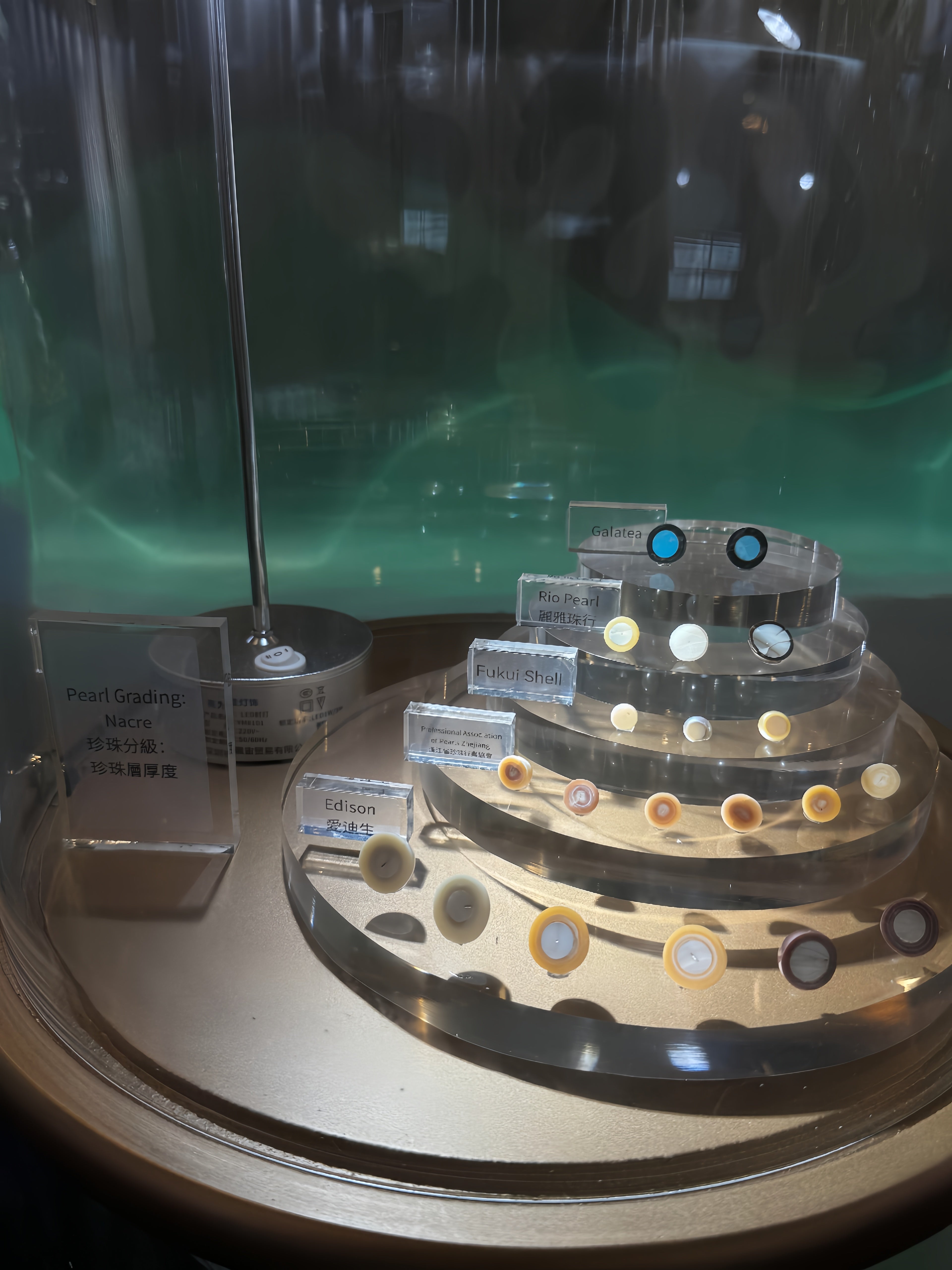
What “Nacre Grading” Looks Like in Real Life (Your Museum Display Photos)
Your two new images are exactly what I love to see in education content: real objects, labeled for learning, showing that pearl grading isn’t a buzzword — it’s a system. If you’re trying to build EEAT (expertise + trust), this is the kind of visual evidence that works.

When I grade pearls, nacre isn’t judged alone. It’s considered alongside luster and surface, because nacre quality supports durability, but surface quality controls what your eye sees first. This is why lab frameworks (like GIA’s value factors) treat nacre as part of a full system, not a single metric.

A quick jeweler example: if a client wants a “classic graduation strand,” we chase round/near-round matching. If the client wants a signature piece — something no one else has — a baroque pearl with strong luster is often the smarter choice. Different goals, different grading priorities.
Nacre & Durability by Pearl Type (What Buyers Should Expect)
Your cut samples highlight two tropical saltwater categories — South Sea pearls and Tahitian pearls. To make this a complete buyer guide, we also need the two major temperate categories: Akoya pearls and freshwater pearls.
South Sea pearls (white & golden)
South Sea pearls are famous for large size and a satiny, luxurious glow. In the market, South Sea is often associated with strong nacre standards because farms aim for durability and “deep glow.” If your goal is an heirloom pendant or statement studs, South Sea is a top-tier durability direction.
Tahitian pearls
Tahitian pearls are prized for complex dark overtones (peacock/green/graphite). Durability-wise, buyers should prioritize surface cleanliness and luster depth. When Tahitian pearls are worn frequently, nacre quality helps maintain that “depth” feeling over years.
Akoya pearls
Akoya is the benchmark for crisp, mirror-like luster in a smaller size range. Many commercial Akoya lots are discussed as having thinner nacre compared with South Sea, which is why it’s smart to buy from reputable sellers with clear standards. If you love Akoya’s look, ask for close-up videos and avoid sellers who can’t explain their grading.
Freshwater pearls (Edison vs beadless)
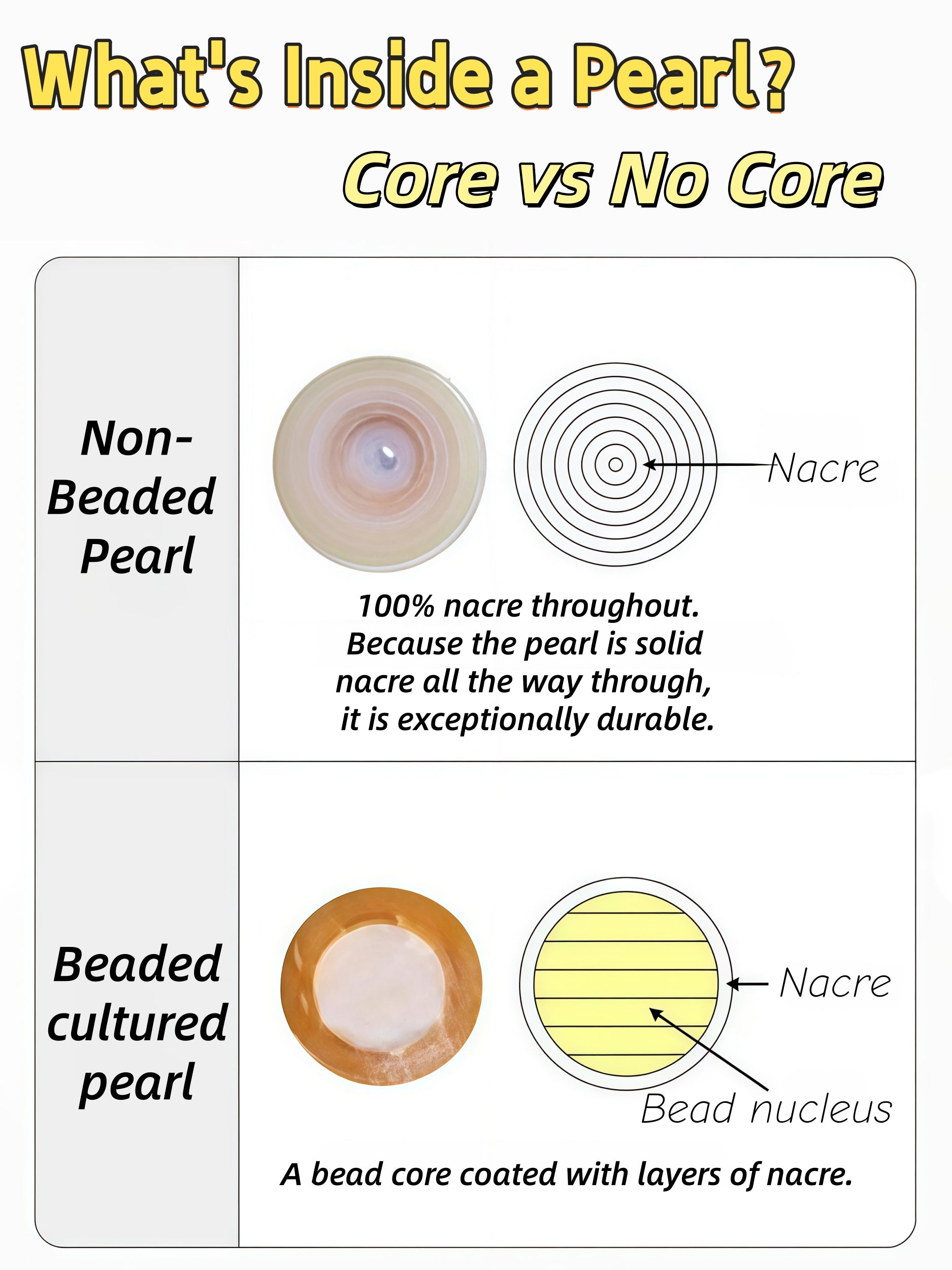
Freshwater pearls are the versatility champions: round, oval, baroque, and many specialty shapes — often ideal for a freshwater pearl necklace you can wear daily. Freshwater programs can be bead-nucleated (Edison-style) or beadless/tissue-nucleated. Many beadless freshwater pearls are essentially “nacre-forward” by structure (no large bead nucleus), which supports good wear life with normal care.

When to Use a Pearl Identification Lab (and What Labs Can Actually Tell You)
If you’re buying high-value pearls — or anything claimed as natural, rare, or untreated — lab testing can reduce risk. Labs don’t just “grade.” They identify, classify, and can detect certain treatments using imaging and analytical methods. For buyers, the point is clarity: what exactly is this pearl, and does the documentation match the claim?
What lab reports are useful for
- Natural vs cultured: especially important for high-price claims.
- Treatment detection: certain enhancements can be detected depending on the pearl type and lab methods.
- Species / structure notes: helpful for unusual pearls and collector purchases.
Trusted non-product references (labs & standards)
- GIA — Pearl Reports & Services
- GIA — 7 Pearl Value Factors (includes nacre)
- SSEF — Pearl Testing
- Gübelin Gem Lab — Services
- CIBJO — Blue Books (trade standards)
Watch: GIA on pearl value factors (nacre included)
The Exact Questions to Ask a Seller (If You Care About Durability)
You don’t need to sound like a gemologist. You just need to ask questions that reveal whether the seller has standards. Here are my go-to questions — especially if you’re shopping a cultured pearl necklace online.
- What pearl type is this (South Sea, Tahitian, Akoya, freshwater)?
- What grading system do you use for luster and surface?
- Are there any treatments or enhancements disclosed?
- Can you share close-up photos and a short video under neutral light?
- For strands: how do you grade matching (size, color, overtone, luster consistency)?
- What’s your return/exchange policy?
- If the price is high: is a lab report available (or can you recommend a lab route)?
The honest red flag is not “no lab report.” It’s a seller who can’t explain their pearls at all. A trustworthy seller should be able to describe quality in plain English and show you evidence (photos, video, standards).
FAQ
Can I tell nacre thickness without cutting or X-raying a pearl?
Not reliably. You can use proxies (luster depth, surface stability, drill-hole inspection, seller transparency), but true thickness measurement usually requires cut samples or lab imaging.
Does thicker nacre always mean a better pearl?
No. Thicker nacre often supports durability and depth, but beauty still depends on luster, surface, color, and matching. Think: nacre supports longevity; luster and surface decide first impression.
Why do some pearls look brighter even if nacre is thinner?
Luster is influenced by nacre structure and surface quality. Akoya is famous for crisp, bright reflections, which is why it can look “mirror-like.” Durability is a separate question — and that’s where strong standards matter.
When should I pay for a lab report?
When the price is high, the claim is unusual (natural/rare/untreated), or you’re buying a collector piece. For everyday jewelry, strong seller transparency and clear grading evidence are often enough.


Leave a comment
This site is protected by hCaptcha and the hCaptcha Privacy Policy and Terms of Service apply.