
Written by Alya — jeweler and pearl grower. I work hands-on with pearl selection, grading, and sourcing.
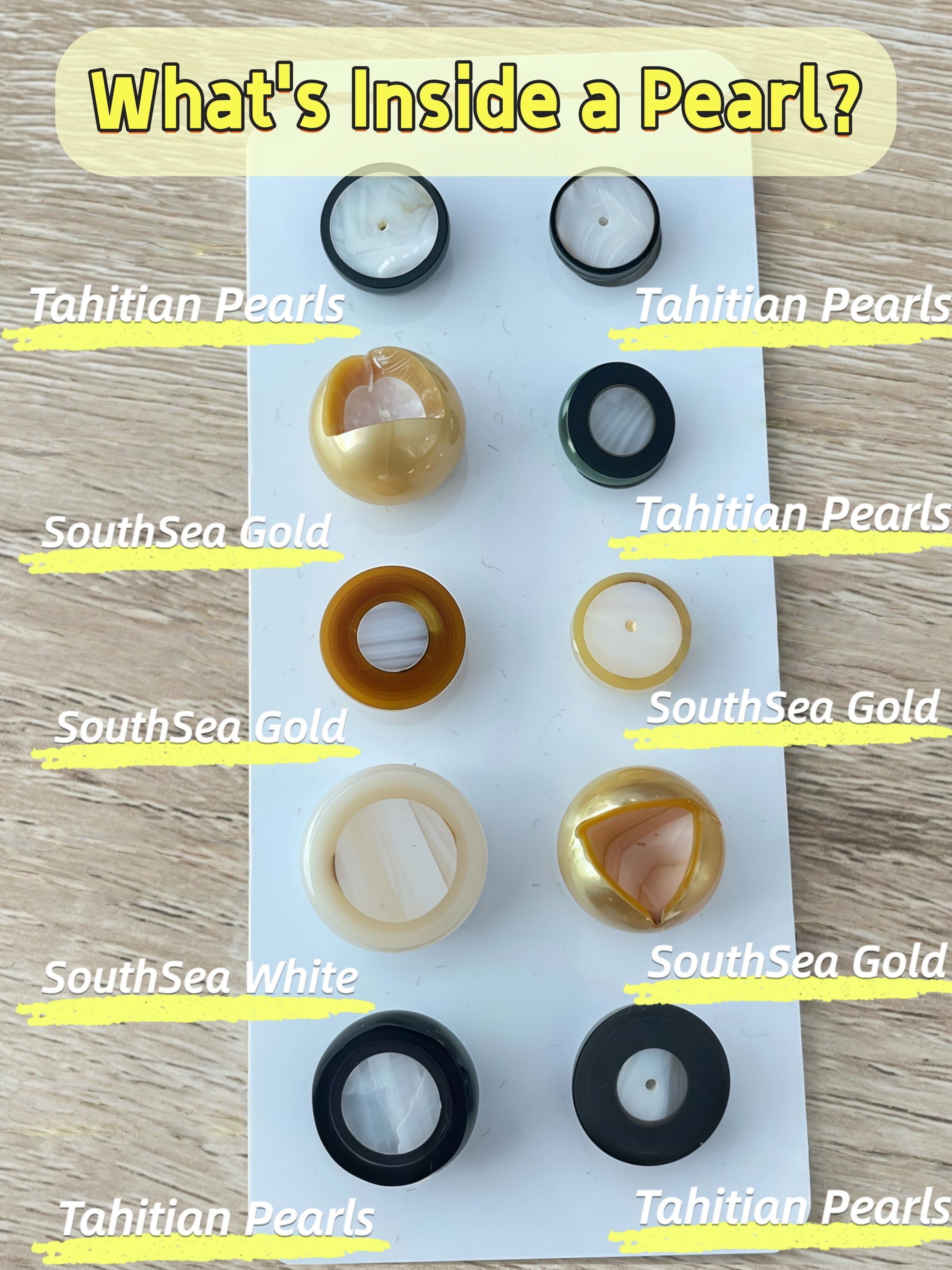
If you’ve ever asked how much are pearls worth, you’re really asking a deeper question: what are you paying for inside the pearl? When we cut a pearl in half, the story becomes visible—especially for South Sea pearls and Tahitian pearls.
The short version: in many saltwater cultured pearls, you’re buying a balance of two things— a bead nucleus and the thickness of the nacre built around it. And nacre thickness is directly tied to time, farm risk, and yield.

These cut pearls show the anatomy of a cultured pearl: a round bead nucleus inside, and a nacre layer outside. Nacre is what gives pearls their glow and durability—so the question becomes: how much nacre is there? This is why nacre is one of the factors within the GIA pearl value framework. [S1]

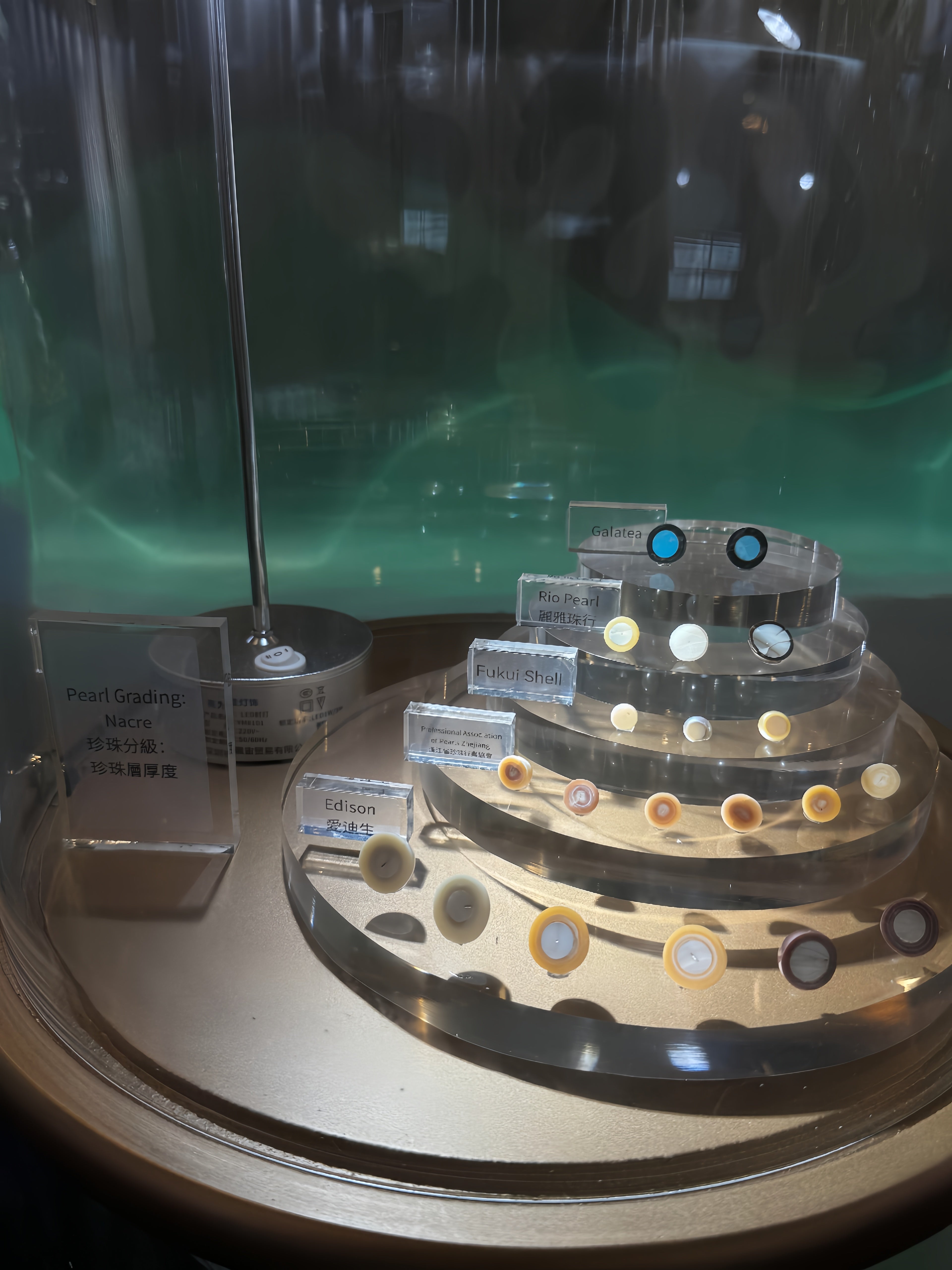
In real-world buying, most customers can’t measure nacre at home. But as a jeweler, this is exactly why I’m careful about pearl type, farm standards, and seller transparency—because thin nacre can look beautiful today and wear poorly over time. [S2]
Why Thicker Nacre Costs More: Time, Risk, and Cashflow
From a business standpoint, nacre thickness is a clock. The longer a pearl stays in the water, the more opportunity it has to build nacre—yet the farm also takes on more risk and delays revenue. This is the core reason why “shorter grow-out + larger bead” is tempting in modern pearl farming: it improves cashflow and predictability.
The trade-off farms live with
- Time: More nacre usually means more time in the water—more labor, more overhead, slower turnaround.
- Risk: Longer cycles face weather events, disease pressure, predation, and loss rates.
- Yield: Not every oyster produces a top-quality pearl; “keep it longer” doesn’t guarantee a perfect gem.
- Opportunity cost: A farm that holds inventory longer ties up capital.
That’s why thick-nacre pearls often command a premium: you’re paying for the extra time and the probability of survival all the way to harvest, plus the stricter selection afterward.
Nacre Thickness by Pearl Type (and What It Means for Price)
Below is a practical comparison chart. It’s not meant to be a lab report—think of it as a buyer’s “range map.” Exact thickness varies by farm, harvest decisions, and grade.
| Pearl type | Typical nacre notes | What the luster often looks like | Price impact (simple version) |
|---|---|---|---|
| South Sea (White & Golden) | Often among the thickest saltwater cultured pearls; published ranges commonly cited around ~0.5–4.0 mm, with many fine South Sea pearls in the multi-mm range. [S3][S4] | Satiny, “silk glow,” luxurious depth | Thick nacre + large size + low yield = top-tier pricing |
| Tahitian | Often discussed with a historical minimum around ~0.8 mm for export quality; thickness still matters heavily for durability. [S5][S6] | High luster with complex dark overtones | Thicker nacre helps support long-term wear and premium grades |
| Akoya | Typically thinner than South Sea; GIA publications note a typical range around ~0.15–0.50 mm, with exceptional examples thicker than that. [S2] | Crisp, bright “mirror” reflections | Thin nacre can lower longevity; top grades price higher |
| Freshwater (bead-nucleated, e.g., Edison-style) | Can vary widely by program; some bead-nucleated freshwater pearls can build substantial nacre when grown longer. (Range varies by farm and harvest decisions.) | From bright to softly glowing, depending on surface and structure | Longer grow-out and clean surfaces raise price rapidly |
| Freshwater (beadless / tissue-nucleated) | Often described as “solid nacre” (no large bead nucleus), which is one reason many freshwater pearls age well with normal care. [S6] | Soft glow to bright luster (tech and selection matter) | Value comes from luster, surface, matching, and design versatility |
Important: “thicker nacre” does not automatically mean “most beautiful.” Luster also depends on nacre structure, surface quality, and how the pearl is finished and matched. [S1][S7]


How to Shop When You Can’t X-ray a Pearl
Most buyers can’t measure nacre thickness on finished jewelry—so you shop by signals. Here’s my jeweler-friendly approach:
- Start with pearl type: South Sea and Tahitian are typically thicker-nacre saltwater categories than Akoya. [S2][S3]
- Ask the right question: “What’s the expected nacre quality standard for this strand?” A reputable seller should answer clearly.
- Use surface + luster as hints: very thin nacre can sometimes look slightly “hollow” or less deep under strong light, but it’s not foolproof. [S1]
- Buy for the use-case: if you wear a piece weekly, durability matters more than if you wear it twice a year.
If you’re searching real pearl necklace online, this is where EEAT matters: look for sellers who teach you how they grade pearls, not just sellers who use pretty photos.
Freshwater Pearls: Edison vs Beadless (and What We’re Improving as Growers)
Your photos focus on tropical saltwater pearls (South Sea and Tahitian), which makes sense—those are the clearest “bead + nacre” examples. But if we zoom out to the market, two major categories live in cooler, temperate regions of the Northern Hemisphere: Akoya pearls and freshwater pearls.
Akoya is famous for sharp luster even when nacre is relatively thin compared with South Sea, which is one reason Akoya remains a benchmark “classic” look. [S2] Freshwater pearls, meanwhile, are the versatility champions: bead-nucleated (Edison-style) programs and beadless/tissue-nucleated pearls can produce everything from clean rounds to baroque shapes.
As a freshwater grower, the honest truth is that the industry is still pushing toward better consistency at scale: stronger luster, cleaner surfaces, and more stable production across seasons. The progress is real—but so is the work behind it.

(Insert your internal links here)
Explore: freshwater pearl necklace • freshwater pearl earrings
Watch: Seeing Nacre in the Real World
This is a strong “bridge” video for readers who want to understand why nacre thickness influences value and longevity.
FAQ
Does thicker nacre always mean a better pearl?
Not always. Thick nacre supports durability, and it often contributes to depth of luster, but beauty still depends on surface quality, luster sharpness, and matching. [S1][S7]
Can I tell nacre thickness without cutting or X-raying?
You can sometimes spot warning signs under strong light, but it’s not reliable. That’s why buying from a transparent seller (and choosing the right pearl type) matters. [S1]
Why do some farms harvest earlier?
Because farming is economics: shorter cycles reduce risk and bring faster cashflow. Thick-nacre pearls cost more because they usually require more time and higher survival probability to harvest.
Which pearl types tend to have the thickest nacre?
Published references commonly describe South Sea pearls as among the thickest nacre saltwater pearls, with Tahitian discussed with a historical minimum around 0.8 mm, and Akoya typically thinner.


Leave a comment
This site is protected by hCaptcha and the hCaptcha Privacy Policy and Terms of Service apply.