
Written by Alya Liu — pearl farmer & jeweler.
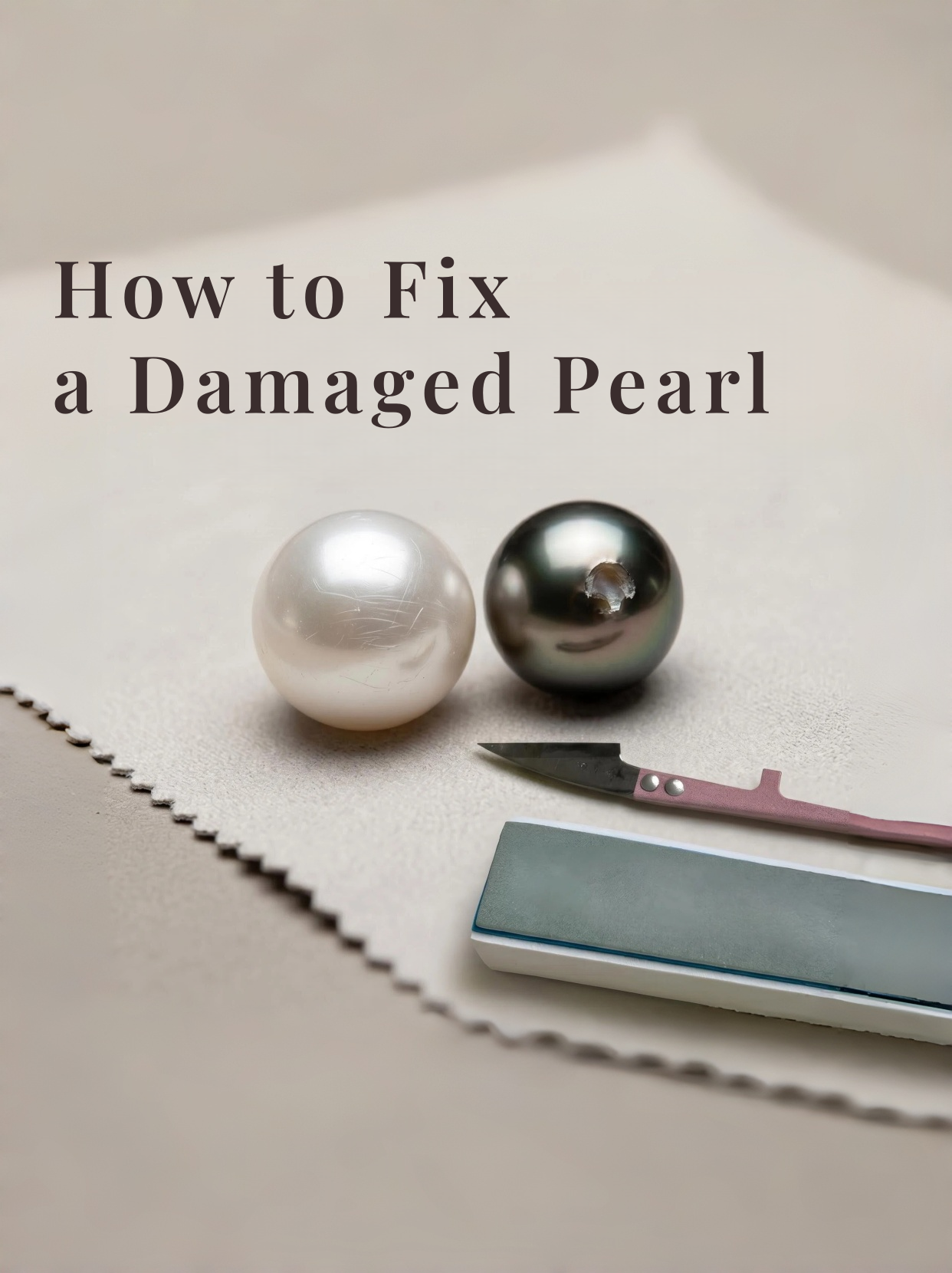
A damaged pearl can sometimes be repaired, but not every pearl should be polished, sanded, or “fixed.” Light surface scratches and shallow nacre marks may be improved by careful pearl repair, while deep cracks, peeling nacre, exposed bead nuclei, and old yellowing may be irreversible. Before touching a pearl with any tool, you need to judge the damage, the pearl type, the nacre thickness, and whether the pearl is valuable or sentimental.
This guide explains how I think about pearl repair as a pearl farmer and jewelry maker: when a damaged pearl can be restored, when it should be reset to hide the flaw, and when it is better to leave it alone. The goal is not to make every pearl perfect again. The goal is to protect the pearl’s remaining beauty without causing deeper, permanent damage.

Quick Answer: Can a Damaged Pearl Be Fixed?
Yes, but only sometimes. A pearl with light scratches, shallow surface abrasion, or a small damaged area may be improved by controlled polishing. A pearl with deep cracking, peeling nacre, bead exposure, or very thin nacre may not be safe to repair.
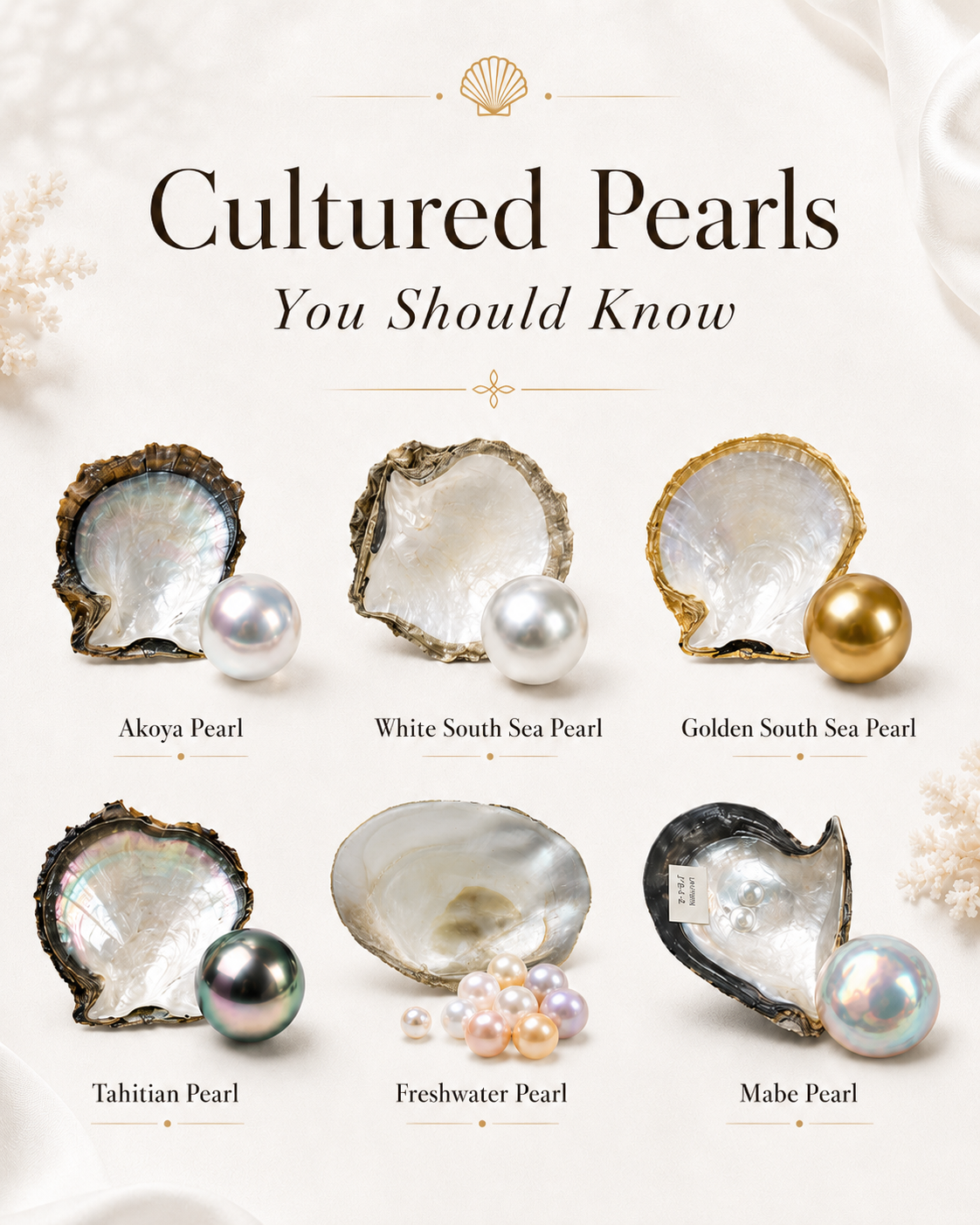
The most important rule is this: pearl repair removes material. Even a gentle polish takes away a tiny amount of nacre. If the pearl has thick nacre, that may be acceptable. If the pearl has thin nacre — for example, some small Akoya pearls — polishing can make the problem worse.
If the pearl is valuable, antique, sentimental, or set in fine jewelry, I recommend asking a professional jeweler before attempting repair. If you want to practice, use low-value pearls first. Pearl repair is a skill of control, not force.

Before Pearl Repair: Identify the Damage First
Before I repair a pearl, I separate damage into three categories.
1. Light surface scratches
These are the easiest to improve. They may come from storage against metal, a cat scratch, rough handling, or rubbing against other jewelry. If the scratches are shallow and the pearl has enough nacre, polishing can reduce the white, broken-looking marks and restore a smoother reflection.
2. Nacre damage, pits, or impact marks
These are more serious. If the damage has created a small crater, chipped area, or broken nacre edge, simple polishing may not be enough. The damaged area may first need to be leveled very carefully before polishing. This is the part that surprises people: sometimes the first step in fixing a damaged pearl is to damage it in a controlled way — removing the rough edge so the surface can become smooth again.
3. Cracks, peeling, bead exposure, and severe damage
These may not be safely repairable. If nacre is lifting, if the bead nucleus is exposed, or if the pearl has a deep crack, polishing may only make the damaged area larger. In those cases, pearl jewelry repair may mean resetting the pearl to hide the flaw, replacing the pearl, or turning it into a different design.
My Pearl Repair Method: Level, Sand, Polish
This is the general process I use for repairable pearls. I am describing it for education, not as a recommendation for valuable pearls at home. If you are new to pearl repair, practice on low-value pearls first.

Step 1: Level the damaged area
If the damaged area has raised edges, flaky nacre, or a jagged scratch, I first level the surface very gently. This may be done with mini snips, a fine blade, or a small file depending on the damage. The goal is not to cut deeply. The goal is to remove the unstable raised edge so the surface can later be polished evenly.
This step is risky. Too much pressure can create a flat spot or expose deeper nacre. I only do this when the damage is already bad enough that leaving the rough surface would be more visible than carefully leveling it.
Step 2: Start with lower-grit polishing
After leveling, I begin polishing from a lower grit and gradually move upward. The lower grit blends the damaged zone into the surrounding nacre. You must keep the motion smooth and avoid staying too long in one place.
The most common beginner mistake is trying to erase the scratch in one aggressive pass. That can create heat, flatten the surface, or remove too much nacre. Pearl polishing should be slow, controlled, and cool.
Step 3: Move gradually to higher grit
After the surface begins to look even, I move to finer and finer polishing. For visible shine, I like working up to very high grit — often 5000 grit or higher — until the surface reflection becomes continuous again.
You are not trying to create a new pearl surface. You are trying to make the damaged area stop interrupting the light.

Step 4: Final polish and inspection
The final polish should restore a clean reflection. I rotate the pearl under light and check whether the repaired area still catches the eye. Sometimes the pearl will not become perfect, but it can become wearable and beautiful again.

Repairing Dark Pearls and Tahitian Pearls
Dark pearls, especially Tahitian pearls, need extra care because any flat spot or dull area can show clearly in the reflection. The good news is that many Tahitian pearls have thicker nacre than thin-nacre bead-nucleated pearls, so minor surface repair may be possible when done carefully.
If the damage is a small crater or nacre chip, I first clean and level the rough edge. Then I polish gradually. The repaired area may not become invisible, but it can become smoother and less distracting.
For a ring or pendant, another option is jewelry repair rather than pearl repair: reset the pearl so the damaged area faces the back, sits under a cap, or is hidden near a prong. Sometimes the smartest repair is not polishing more — it is designing better.

How to Make a Pearl Shine Again
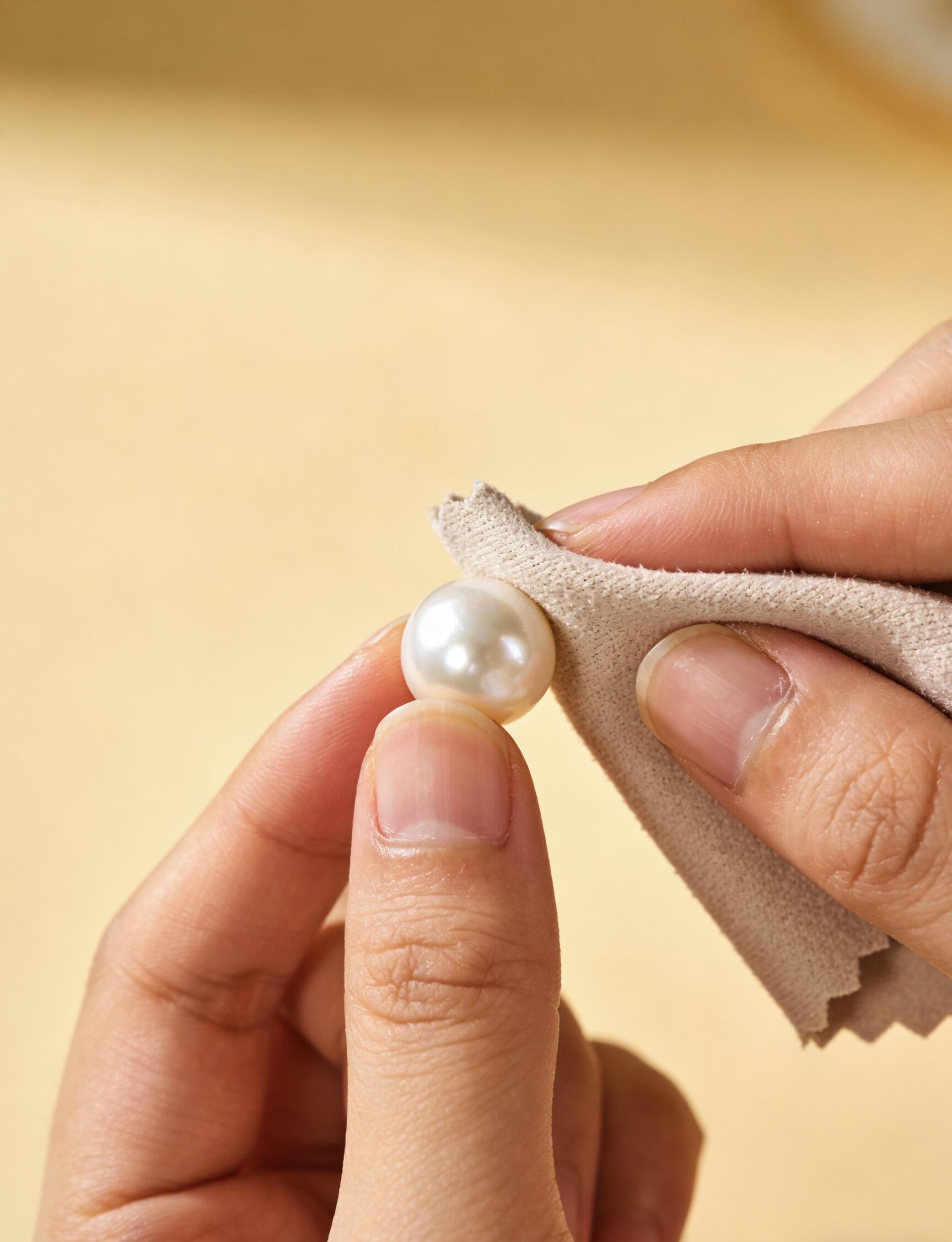
If your pearl has lost shine because of fingerprints, sweat, skincare, or makeup residue, cleaning may solve the problem. Wipe the pearl with a soft microfiber cloth first. If needed, use a slightly damp cloth and dry immediately.
If the pearl has lost shine because the surface nacre is scratched or chemically dulled, polishing may help only when the nacre is thick enough. A jewelry polishing block or pearl-safe polishing material can reduce dullness, but it must be used gently. For many pearls, especially smaller Akoya pearls, aggressive polishing is dangerous because the nacre may be only a very thin layer over the bead.
My rule is: clean first, polish only if necessary, and never polish a pearl if you do not understand its nacre thickness.
How Do You Make Pearls White Again?
Yellowed pearls are different from scratched pearls. A scratch is a surface problem. Yellowing is often an aging problem. Over time, pearls can yellow as the nacre loses moisture or changes internally. This kind of yellowing is usually difficult or impossible to reverse completely.
If the yellowing is only surface dirt, gentle cleaning can help. If the pearl itself has aged, I do not recommend aggressive whitening. Do not use bleach, peroxide, vinegar, baking soda, or whitening cleaners. These can damage nacre permanently.
Some traditional restoration methods involve brief rehydration in clean water, full drying, and gentle polishing with wax-based materials such as beeswax. I treat this as restoration work, not routine home care. It may improve the appearance of some old pearls, but it may also change the surface, especially if the pearl is fragile.
The best way to keep pearls white is prevention: avoid perfume, cosmetics, sweat, household chemicals, heat, and very dry storage. Wipe pearls after wearing and store them separately in a soft pouch or lined box.
When Not to Repair a Damaged Pearl
Do not attempt DIY pearl repair if:
- The pearl is antique or sentimental.
- The pearl is Akoya and may have thin nacre.
- The pearl has a deep crack.
- The bead nucleus is exposed.
- The nacre is peeling or lifting.
- The damage is on a high-value piece of jewelry.
- You have never polished pearls before.
In these cases, pearl jewelry repair may be a better choice than pearl surface repair. A jeweler can reset the pearl, replace the pearl, cover the damaged area with a cap or bail, or redesign the piece so the flaw is hidden.

Watch: Alya’s Hands-On Pearl Repair Demo
In this short repair demo, I show the real process of working on a damaged pearl surface: first judging the damage, then carefully reducing the rough area, and finally polishing the nacre step by step. This is the kind of pearl repair that should be done slowly and with control — especially when the pearl has enough nacre thickness to tolerate polishing.
Please treat this video as an educational reference. Do not practice on valuable, antique, thin-nacre, or sentimental pearls first. Pearl repair removes a tiny amount of nacre, so the safest way to learn is always on low-value practice pearls.
Video note: This practical demo shows surface-level pearl repair. Deep cracks, nacre peeling, exposed bead nuclei, or thin-nacre pearls should be evaluated by a jeweler before any polishing attempt.
FAQ
How to fix a damaged pearl?
First identify the damage. Light scratches may be improved by careful polishing. Deep cracks, peeling nacre, and exposed bead nuclei usually need professional evaluation or replacement.
Can scratched pearls be repaired?
Shallow scratches can sometimes be reduced with gentle high-grit polishing if the pearl has enough nacre. Thin-nacre pearls should not be aggressively polished.
How to make a pearl shine again?
Start by cleaning with a soft cloth to remove fingerprints and oils. If the dullness is from surface abrasion, professional polishing may help. If the nacre is damaged, shine may not fully return.
How do you make pearls white again?
If the yellowing is surface dirt, gentle cleaning may help. If the pearl has aged or dehydrated, the color change is often difficult to reverse. Avoid bleach, peroxide, vinegar, and whitening chemicals.
How to bring pearls back to life?
Wipe away residue, check for surface damage, and consider professional polishing only if the pearl has enough nacre. Sometimes restringing or resetting the pearl makes more difference than polishing.
How to clean tarnished pearls?
Pearls do not tarnish; metal parts do. Clean tarnished silver or gold-plated hardware separately while protecting the pearl. Do not soak the pearl in silver dip or harsh cleaners.
Is pearl repair worth it?
It depends on the pearl’s value, sentiment, and damage level. A valuable or sentimental pearl should go to a professional. A low-value pearl can be useful for practice.


Leave a comment
This site is protected by hCaptcha and the hCaptcha Privacy Policy and Terms of Service apply.