
Written by Alya Liu — pearl farmer & jeweler.
The safest way to clean pearls is to wipe them gently with a soft microfiber or jewelry polishing cloth after wearing, then use a barely damp cloth only when needed. Pearls are organic gems with low hardness, so they should not be cleaned like diamonds, sapphires, or gold jewelry. Avoid ultrasonic cleaners, steam, vinegar, baking soda, harsh detergents, bleach, and any “life hack” that treats pearls like metal.
When people ask me how do you clean pearls, they are usually asking one of three things: how to remove fingerprints, how to make pearls shine again, or how to clean tarnished metal parts without damaging the pearl. This guide explains all three from a working pearl jeweler’s point of view.

Quick Answer: The Safest Way to Clean Pearls
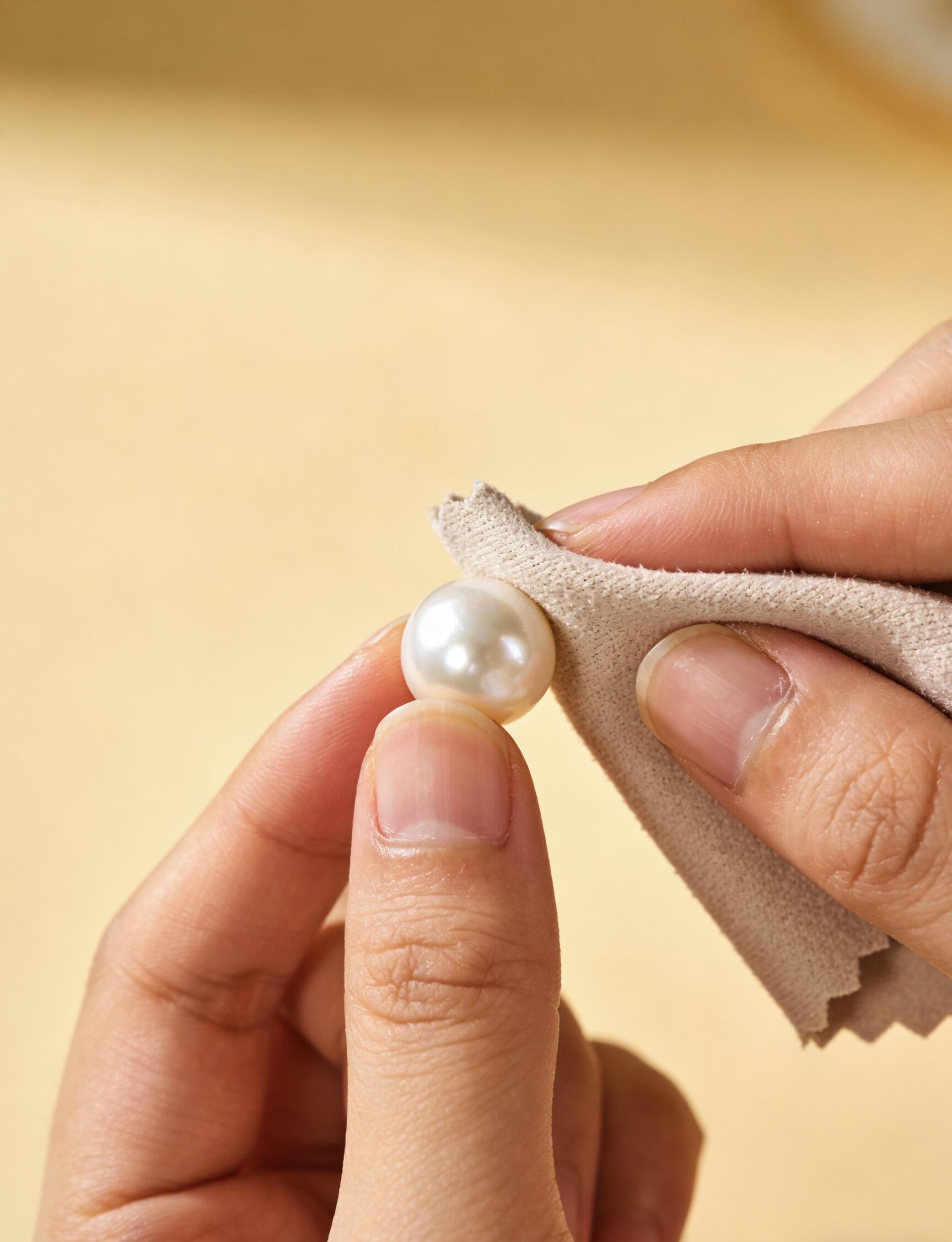
For daily care, use a clean microfiber cloth, eyeglass cloth, or the polishing cloth that comes with your jewelry. Hold the pearl gently and wipe the surface in small circles. This removes fingerprints, skin oil, light dust, and makeup residue.
This small step matters more than most people realize. Fingerprints and sweat leave a thin film on the pearl surface. That film breaks the continuity of the reflection, so the pearl looks less sharp and less luminous. Before I photograph pearl jewelry, I always polish the pearl surface first because even a fingerprint can make a beautiful pearl look dull in photos.
If the pearl still feels dirty, use a slightly damp soft cloth with clean lukewarm water. Wipe, then immediately dry with another soft cloth. For occasional deeper cleaning, a tiny amount of very mild soap in lukewarm water can be used, but I do not recommend routine soap cleaning because residue can remain around drill holes, knots, and settings if it is not removed carefully.
My practical home-care rule is simple: soft cloth first, water second, soap only when necessary.

Why Pearls Need Different Care Than Other Jewelry
Pearls are organic gems. They are built from layers of nacre, and that nacre is much softer than most gemstones. A cleaning method that is safe for a diamond ring may be too harsh for a pearl necklace.
Pearls are sensitive to acids, chemicals, heat, abrasion, and strong cleaning tools. Perfume, hairspray, cosmetics, sunscreen, sweat, vinegar, alcohol-heavy products, and household cleaners can all dull or damage the surface over time.
This is why I always recommend the “last on, first off” rule: put pearls on after skincare, perfume, makeup, and hairspray; take them off before showering, swimming, exercising, or sleeping.
My Studio Method Before Photographing or Wearing Pearls
In my studio, before I photograph a pearl, I inspect it under strong light and remove any fingerprint marks. I start with a dry microfiber cloth and apply slightly firm pressure — not scraping, just polishing the surface enough to remove the oily film.
Some jewelers use fast-evaporating cleaning steps in controlled studio situations, especially around metal parts, but for customers at home I recommend avoiding alcohol wipes directly on pearl nacre as a routine habit. Alcohol evaporates quickly, but pearls are still sensitive organic gems, and repeated chemical exposure is not worth the risk, especially for older pearls, dyed pearls, thin-nacre Akoya pearls, or sentimental jewelry.
If you want your pearls to look bright before leaving the house, you do not need anything complicated. A clean lens cloth and one minute of careful wiping is usually enough.
How to Clean Tarnished Pearl Jewelry Hardware
Pearls themselves do not tarnish. When people ask how to clean tarnished pearls, they usually mean the metal parts: silver clasps, gold-plated components, silver bails, jump rings, or pearl earring posts.
Sterling silver and silver-plated parts can oxidize over time, turning gray or black. This is normal. The key is to clean the metal without letting silver cleaner sit on the pearl.
Here is the safer method I use:
- Protect the pearl with plastic wrap, cotton, or a soft cloth if possible.
- Apply silver cleaner or silver polish only to the metal part, using a cotton swab, soft cloth, or very soft toothbrush.
- Gently work on the tarnished area for 30 seconds to one minute.
- Rinse the metal area carefully with clean water, keeping the pearl as dry as possible.
- Dry immediately with a soft cloth.
Do not soak the entire pearl jewelry piece in silver dip. Do not use vinegar, baking soda, toothpaste, or “DIY silver cleaning” mixtures on pearl jewelry. These may remove tarnish from metal, but they can also damage the pearl’s nacre.
 Image 3: Cleaning tarnished metal parts. Silver cleaner should touch the metal, not the pearl. Protect the pearl before working on clasps, bails, and earring posts.
How to Make Pearls Shine Again
If your pearls look dull, first ask what caused the dullness. If the surface is only covered with fingerprints, sweat, or makeup residue, a careful cloth cleaning can make the pearl shine again almost immediately.
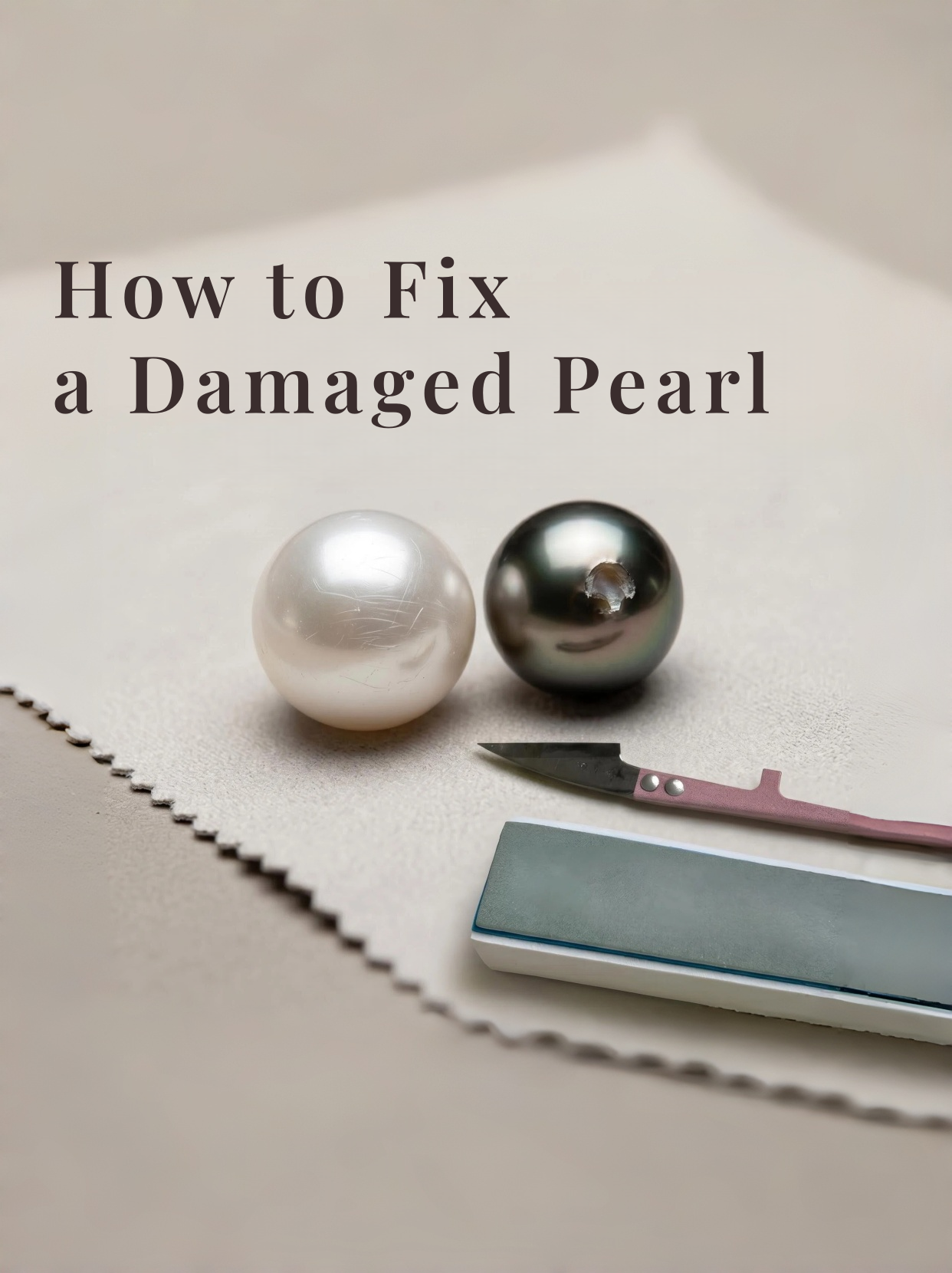
If the pearl surface has been lightly abraded or dulled by wear, a jeweler may be able to improve the appearance through very gentle professional polishing. This is not the same as polishing metal. Pearls require extreme caution because the nacre layer can be thin.
For thick-nacre pearls — for example, some South Sea, Tahitian, Mabe, or nacre-rich freshwater pearls — minor surface dullness may sometimes be improved with careful micro-polishing. But I would never recommend aggressive DIY polishing on thin-nacre Akoya pearls or small pearls. Some Akoya pearls may have very thin nacre, and once that layer is damaged, the pearl cannot simply be restored like a metal ring.
If you are not sure what type of pearl you have, do not polish it yourself. Ask a jeweler first.

Can You Make Yellowed Pearls White Again?
This is one of the most emotional questions in pearl care: how do you make pearls white again? The honest answer is that truly yellowed pearls are difficult to reverse.
Pearls can yellow with age, dehydration, chemical exposure, or long-term improper storage. Once the nacre itself has changed, cleaning the surface will not always bring the original whiteness back.
If the yellow tone is only surface dirt, gentle cleaning may help. If the pearl has aged internally, there is no guaranteed home method to make it white again. Bleach, hydrogen peroxide, vinegar, baking soda, and whitening cleaners can permanently damage pearls and should not be used.
Some traditional restoration methods involve rehydrating pearls briefly, drying them properly, and lightly buffing with wax or polishing materials. I would treat this as a restoration experiment, not routine care. It may improve the look of some old pearls, but it can also change the surface, especially if the nacre is thin or fragile.
Prevention is much better than rescue: store pearls away from chemicals, avoid excessive heat and dryness, and wear them occasionally. Pearls like gentle humidity and contact with normal air — they should not be forgotten for decades in a very dry box.

What Not to Use on Pearls
The fastest way to ruin pearls is to clean them with products meant for harder jewelry or household surfaces. Avoid:
- Ultrasonic cleaners
- Steam cleaners
- Vinegar
- Baking soda
- Toothpaste
- Bleach
- Ammonia
- Harsh dish detergents
- Jewelry dip unless it is explicitly pearl-safe
- Silver dip touching the pearl surface
- Alcohol wipes as a routine home pearl cleaner
Most of these “cleaning hacks” are designed for metal, glass, or hard stones. Pearls are different. With pearls, gentler is almost always better.
Watch: How to Clean Pearls Safely
This video gives a simple visual demonstration of pearl cleaning with soft cloth and warm soapy water. Use it as a general reference, and always be more cautious with old, dyed, thin-nacre, or sentimental pearls.
FAQ
How do you clean pearls at home?
Wipe them with a clean microfiber or jewelry cloth after wearing. If needed, use a slightly damp cloth with lukewarm water, then dry immediately. Use mild soap only occasionally and remove all residue carefully.
How to make a pearl shine again?
If the dullness is from fingerprints, sweat, or makeup, a microfiber cloth can restore shine quickly. If the nacre surface is damaged, professional evaluation is safer than DIY polishing.
How do you make pearls white again?
If the yellowing is surface dirt, gentle cleaning may help. If the nacre has aged or dehydrated, the change may be difficult or impossible to reverse. Do not use bleach or whitening chemicals.
How to bring pearls back to life?
Start with a soft cloth cleaning. If pearls still look dull, check whether the issue is residue, dryness, surface abrasion, or aging. For valuable pearls, ask a jeweler before attempting polishing or restoration.
How to clean tarnished pearls?
Pearls do not tarnish; metal parts tarnish. Clean silver or gold-plated hardware carefully with metal-safe polish while protecting the pearls. Do not soak the entire pearl jewelry piece in silver cleaner.
Can I use dish soap to clean pearls?
A tiny amount of mild soap in lukewarm water can be used occasionally, but routine soap cleaning is not my first choice because residue can remain near drill holes, knots, and settings. A soft cloth is safer for daily care.
Can I use alcohol wipes on pearls?
I do not recommend alcohol wipes as a routine home cleaner for pearls. Alcohol evaporates quickly, but pearls are organic gems and repeated chemical exposure can be risky, especially for older, dyed, or thin-nacre pearls.


Leave a comment
This site is protected by hCaptcha and the hCaptcha Privacy Policy and Terms of Service apply.