
Written by Alya — pearl farmer & jewelrer
When people ask, “how much is a pearl worth?” they often expect one simple answer based on size or type. But in real pearl buying, surface quality can change the price dramatically. A beautiful 13–14mm freshwater pearl with excellent luster and a clean surface may be suitable for a pair of stud earrings or a single pendant.
If it is nearly flawless, it may sell for a premium price. If it has blemishes, the value can drop sharply — sometimes only slightly, sometimes by half, and sometimes so much that the pearl is no longer worth setting into fine jewelry.
The key is not simply whether the pearl has a blemish. The real question is: Where is the blemish, how serious is it, and can jewelry design hide it?

Why Surface Quality Matters in Pearl Price
Pearl value is not decided by one factor. A pearl is usually judged by size, shape, color, luster, surface quality, nacre, and matching. Surface quality matters because it controls how clean the pearl looks to the eye. A small mark on the back of a pendant may be almost irrelevant. A crack across the front of a ring pearl may destroy the value.
For buyers, this is good news and bad news at the same time. The bad news: a pearl with serious visible damage should not be priced like a clean pearl. The good news: a pearl with a small hidden blemish can sometimes offer excellent value, especially in freshwater pearl jewelry.
In my own buying process, I never judge a pearl only by the word “flawless” or “5A.” I look at the pearl as a future piece of jewelry: Will the blemish face forward? Can it be covered by a setting? Will it weaken the pearl? This is where a jeweler’s eye becomes more useful than a simple grade label.
The Simple Price Rule: Can the Blemish Be Hidden?
If you only remember one idea from this guide, remember this: a blemish affects price most when it affects the visible beauty or durability of the finished jewelry.
1. Hidden by drilling or setting: small price impact
If a tiny pit is exactly where the pearl will be drilled, or if a small spot can be covered by a pendant cup or ring setting, the finished jewelry may still look clean from the front. In that case, the pearl may keep most of its value. Sometimes the price difference is very small because the customer will never see the blemish once the pearl is set.
2. Visible but acceptable: moderate price impact
If the pearl has more than one spot, or if the blemish sits in a visible area that cannot be fully hidden, the price usually drops more. The pearl may still be beautiful, but it is no longer “front-clean.” This is where many pearls may fall to around half of a clean pearl’s value, depending on luster, size, and color.
3. Too visible or structurally risky: major price impact
If the blemish covers a broad area, creates a poor skin texture, weakens the surface, or includes serious damage like cracks, nacre peeling, or bead exposure, the pearl may lose most of its value. In some cases, it is not worth using in fine jewelry at all.

Common Pearl Blemishes and Their Price Impact
Not every blemish has the same meaning. Some are natural growth features. Some are cosmetic marks. Some are serious durability problems. For buyers, the most useful way to understand pearl blemishes is to divide them into three groups.
Growth marks and texture: often acceptable if the pearl still looks beautiful
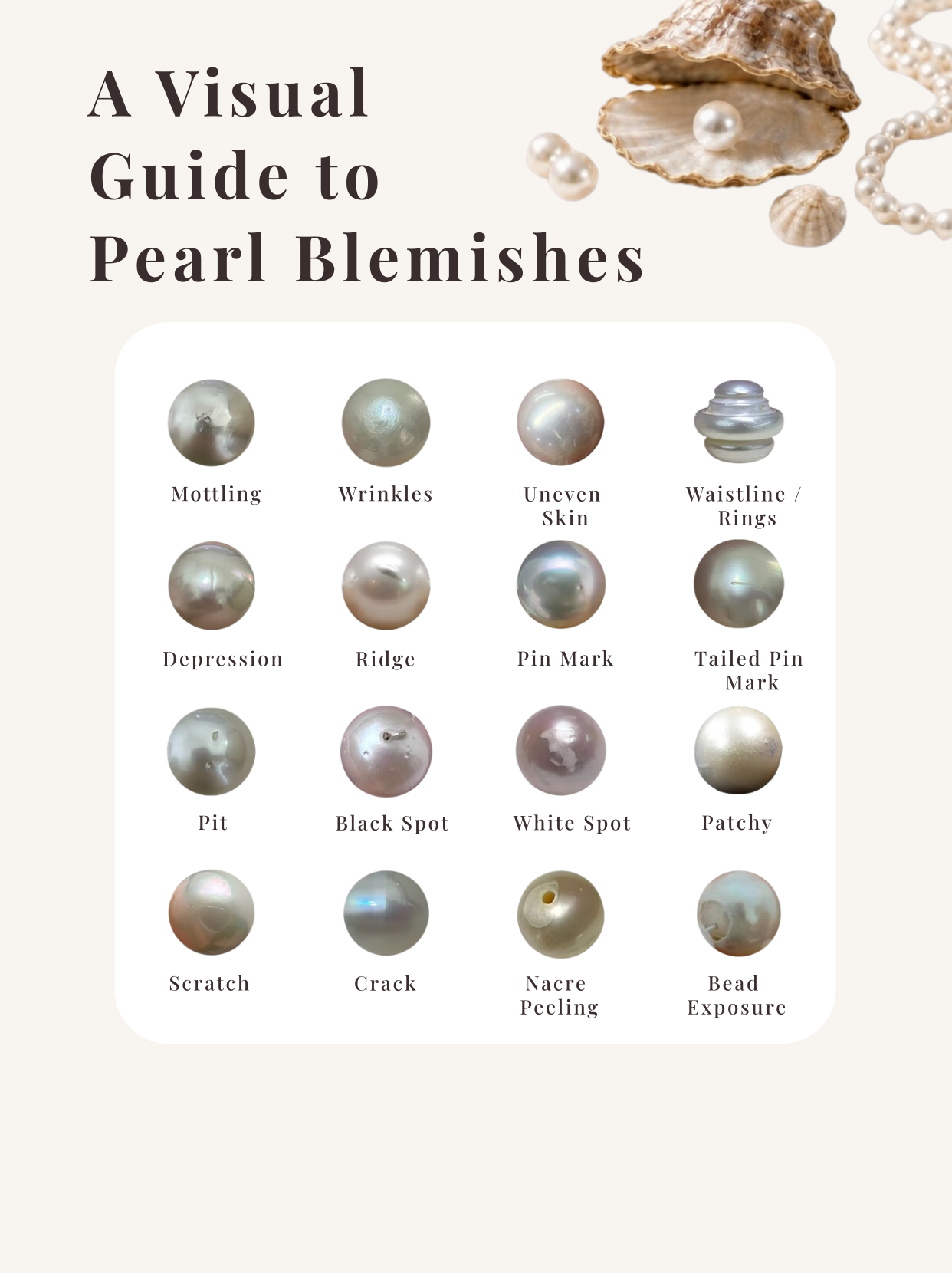
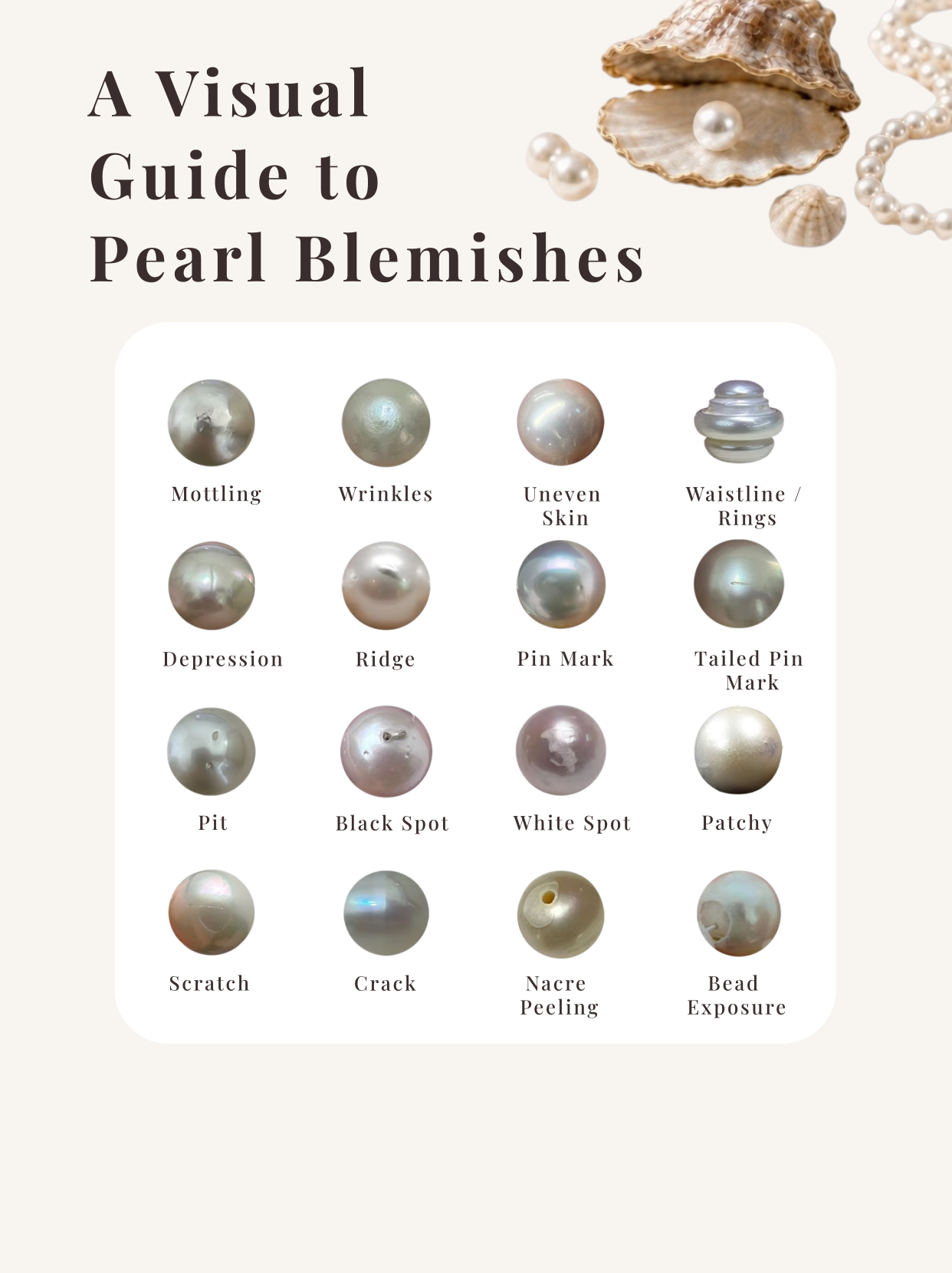
Growth patterns include mottling, wrinkles, uneven skin, poor skin, waistlines, and rings. These marks are connected to the way nacre formed during growth. Fine, even texture can sometimes add character. But if the surface looks rough, dull, or visually messy, it can reduce the pearl’s beauty and price.

Pits, spots, and patchy areas: price depends heavily on location
Pits, black spots, white spots, pin marks, depressions, ridges, and patchy color areas are common on real pearls. A tiny pit near the future drill hole may not matter much. A dark spot in the center of the front-facing area matters a lot.
This is why I always rotate the pearl before making a judgment. A pearl may look flawed from one angle and almost perfect from another. For a pendant or ring, the best-facing side is what the wearer and everyone else will see.


Serious damage: often a deal breaker
Scratches, cracks, nacre peeling, and bead exposure are more serious. A light scratch may be cosmetic, especially if it is shallow and placed on the back. But cracks, peeling nacre, and bead exposure can affect durability.
Pearls are softer than many gemstones and can be scratched or abraded if stored against metal or harder stones. This is why surface damage should be evaluated differently from natural growth marks.

A 13–14mm Freshwater Pearl Example: Why One Pearl Can Be $150 or Almost Unsellable
Let’s use a realistic freshwater pearl example. Imagine a 13–14mm high-quality freshwater pearl with strong luster, beautiful shape, and a nearly flawless surface. If it is suitable for a single pendant or a pair of high-grade pearl earrings, it may reach a premium price — for example, around $150 for a fine loose pearl in the right market.
Now imagine the same size and luster, but with one tiny pit on the side. If that pit can be drilled through or covered by a setting, the pearl may still keep most of its value. To the wearer, the finished jewelry may look almost flawless.

But if the pearl has two or more visible spots, or a blemished area that cannot be hidden by drilling or metalwork, the value may drop significantly. It may be worth only around half of the clean pearl’s price. If the surface has poor skin, large patchy areas, obvious peeling, cracks, or bead exposure, the pearl may fall to a small fraction of its original value — sometimes around 10%, and sometimes it is simply rejected.
This is why surface quality is not a small detail. In pearl pricing, it can decide whether a pearl becomes fine jewelry, commercial jewelry, a practice sample, or waste.
How Buyers Should Inspect Pearl Jewelry Before Buying
You do not need to be a gemologist to make a smarter purchase. Use this simple buyer checklist when looking at a real pearl necklace, pendant, or earrings.
- Look at the front-facing side first. This is the side people will see when you wear it.
- Rotate the pearl slowly. Check whether blemishes are hidden at the back or obvious from all angles.
- Separate beauty marks from damage. Tiny pits and growth marks may be acceptable; cracks and peeling are more serious.
- Check the drill hole or setting area. A well-placed drill hole can hide a small blemish beautifully.
- Ask for close-up photos or video. Good sellers should be willing to show the pearl under neutral light.
- Compare price to visibility. If the blemish is visible in normal wear, the price should reflect that.
The best question is not “Is this pearl perfect?” The best question is: “Will this pearl look perfect when I wear it?”
How Jewelers Hide Blemishes Through Design
This is where jewelry making becomes powerful. A pearl with a small blemish is not automatically a bad pearl. If the mark is in the right position, a jeweler may hide it with drilling, a cup setting, a prong, a bail, or a decorative metal detail.
| Blemish situation | Can it be hidden? | Likely value effect | Best jewelry use |
|---|---|---|---|
| One tiny pit near the side | Often yes, by drilling or setting | Small discount or almost no visible effect | Pendant, stud earrings, necklace |
| Two or more visible spots | Sometimes, depending on position | Moderate discount | Back-facing setting, casual jewelry |
| Patchy area or poor skin | Difficult if it affects overall appearance | Large discount | Only if design can make it look intentional |
| Crack, nacre peeling, bead exposure | Usually not recommended | Severe value loss | Avoid for fine daily-wear jewelry |
This is also why two pieces with the same pearl size may have very different prices. One may be made with fully clean pearls. Another may use pearls with hidden back-side blemishes. Both can look beautiful from the front, but their material cost is different.
Alya’s Buyer Rule: Front-Facing Beauty Matters Most
Personally, I am very open to small blemishes. In real jewelry, what matters most is how the pearl looks when worn. If the blemish is on the back, covered by the setting, or invisible at normal social distance, then for the wearer, that pearl can still feel perfect.
I often call this “social-distance flawless.” At normal distance, most people will never notice a tiny shallow pit or a small back-side mark. They will notice luster. They will notice color. They will notice whether the jewelry feels elegant.
For me, luster comes first, then color and shape, then surface blemishes. A tiny hidden blemish can be a smart trade-off if it allows the buyer to get a bigger, brighter, or more beautiful pearl at a better price. But serious damage is different. If the blemish weakens durability, I would rather reject the pearl than risk disappointing the customer later.

Watch: How GIA Evaluates Pearl Surface Quality
This GIA video is a helpful companion because it explains surface as one of the professional pearl value factors.
FAQ: Pearl Blemishes and Value
Do pearl blemishes always lower the price?
Not always by much. If a small blemish can be hidden by drilling or setting, the finished jewelry may still look clean. But visible blemishes, poor skin, cracks, nacre peeling, and bead exposure can lower the price significantly.
How much are pearls worth if they have blemishes?
It depends on the type, size, luster, color, and especially the blemish position. A minor hidden mark may only create a small discount. A visible blemished area may reduce value by half or more. Serious structural damage can make a pearl unsuitable for fine jewelry.
Are blemished pearls good for budget-friendly jewelry?
Yes, if the blemishes are small, stable, and hidden in the finished design. A well-designed piece with a back-side blemish can be an excellent value choice.
What blemishes should buyers avoid?
Avoid obvious cracks, nacre peeling, bead exposure, and large poor-skin areas unless the price is very low and the use is clearly explained. These are more serious than small pits or spots.
How can I tell if a pearl blemish matters?
Look at the pearl from the front, rotate it, and ask whether the mark is visible when worn. If the blemish is hidden and the pearl has strong luster, it may still be a smart purchase.


Leave a comment
This site is protected by hCaptcha and the hCaptcha Privacy Policy and Terms of Service apply.