
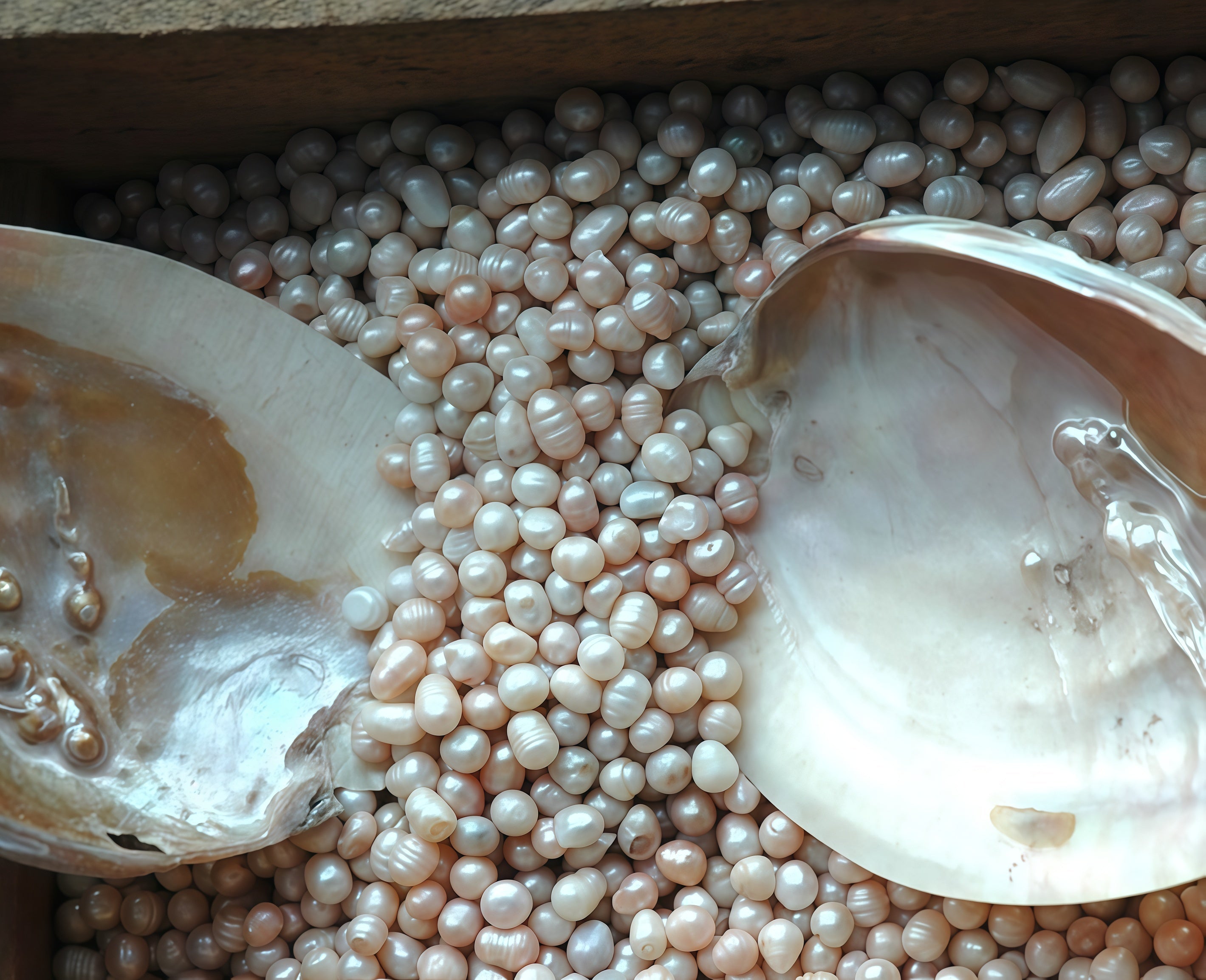
By Alya Liu — Pearl Farming & Jewelry-Making Family · Hands-on Pearl Processing · Designer & Pearl Specialist
Key takeaway for Saltwater pearl powder
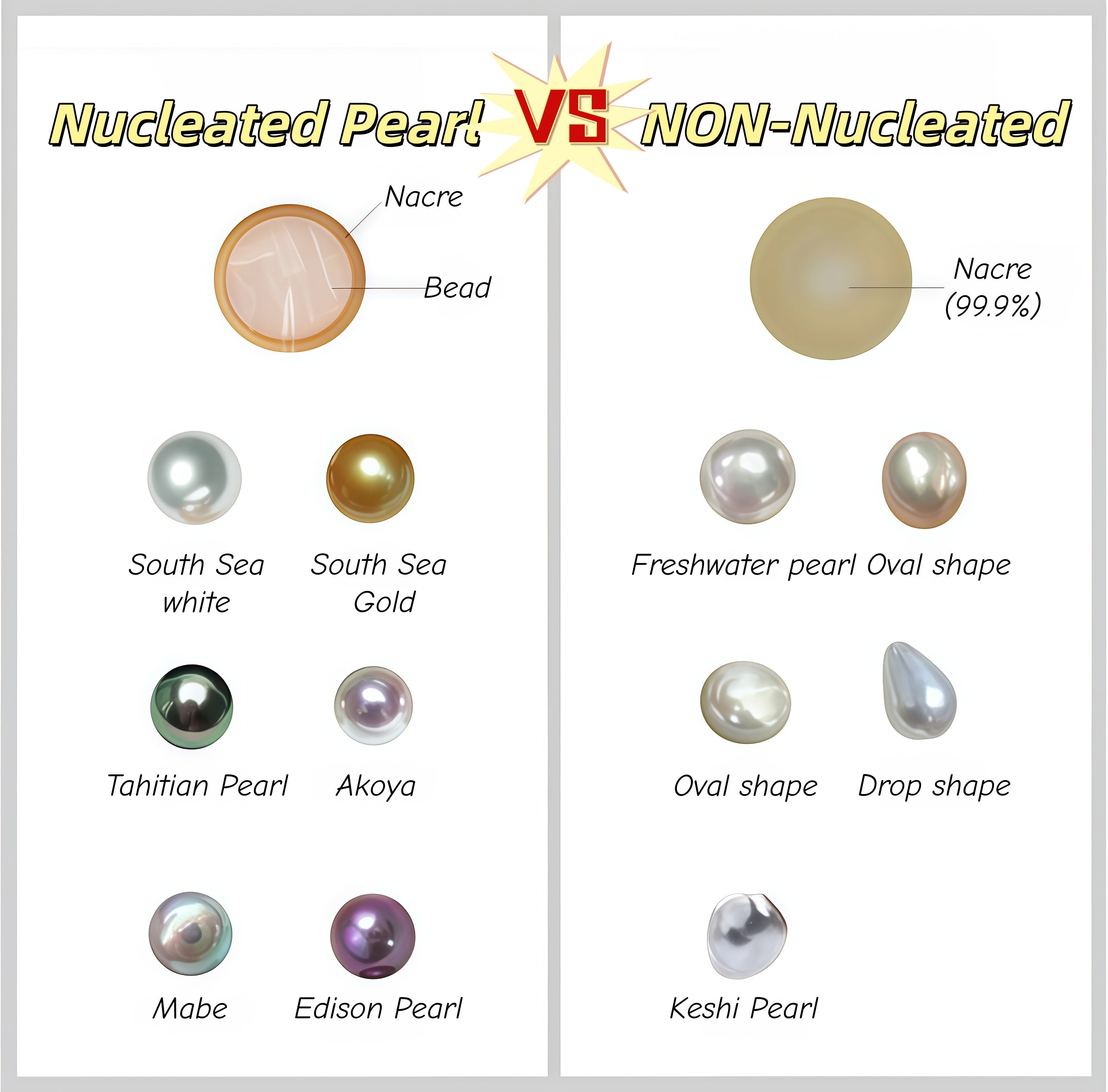
- Most saltwater cultured pearls are bead-nucleated. That means there’s a “core” (a bead) inside, with nacre layered on top.
- Grinding whole bead-cultured pearls creates a mixed powder (nacre + core material + organic layers), which isn’t ideal if you want a clean, consistent “nacre-only” ingredient.
- Saltwater nacre-only powder is possible—but expensive, because it requires de-nucleation (removing the bead) or using non-bead “keshi” pearls.
Important: This article is educational and not medical advice. If you plan to ingest pearl powder, consult a qualified healthcare professional.

What’s inside a cultured pearl? (This is the key.)
In the pearl world, the real difference isn’t “saltwater vs freshwater” — it’s bead-nucleated vs non-bead (tissue) nucleated.
Bead-nucleated (common in saltwater)
In many saltwater pearl types (like Akoya, South Sea, and Tahitian), a technician implants a shell bead plus a small piece of mantle tissue. Nacre then builds up on the bead to form the pearl.
Non-bead / tissue-nucleated (common in freshwater)
In many freshwater pearl farms, mantle tissue is implanted without a bead, producing pearls that are much closer to “solid nacre” throughout.

So why don’t most pearl powders use saltwater pearls?
1) Grinding a bead-cultured saltwater pearl gives you a “blend,” not pure nacre
If you grind a typical bead-cultured saltwater pearl whole, you’re not grinding “nacre only.” You’re grinding nacre + the core bead + organic layers. Some premium brands even emphasize this point and market “de-nucleated” Akoya nacre powder as a cleaner alternative.
For U.S. customers, the practical takeaway is simple: if you care about purity and consistency, you want transparency about what’s being milled (whole pearls vs nacre-only), and you want real test reports.
2) The “saltwater nacre-only” workaround exists… but it’s expensive
There are two ways to make a saltwater-based nacre powder that avoids the bead problem:
- De-nucleation: mechanically separating the nacre layer from the bead nucleus, then milling nacre only.
- Keshi pearls: non-bead cultured saltwater pearls that are mostly solid nacre (a byproduct in many farms).
Both options cost more because they require extra labor, lower yield, and higher-value raw material.
3) Economics: why the industry defaults to freshwater
Freshwater pearls are simply the most realistic raw material for pearl powder at scale. Here’s a straightforward comparison:
| Factor | Freshwater pearl powder (typical) | Saltwater nacre-only powder (typical) |
|---|---|---|
| Internal structure | Often non-bead / mostly nacre | Often bead-cultured unless keshi or de-nucleated |
| Process needed for “nacre-only” | Straight milling is feasible | De-nucleation or keshi sourcing required |
| Typical price signal | Commonly seen in the low hundreds per kg (quality varies) | Can reach ~$2,500/kg for Akoya nacre powder ingredients |
In other words: freshwater pearls offer the cleanest “nacre-per-dollar” ratio, which is why most pearl powders are made from freshwater pearls.

A quick story to make it real (what I tell customers)
Sometimes a customer asks, “Is Akoya pearl powder better because Akoya pearls are more expensive?” My answer is: it depends on what you mean by ‘better.’
If you’re buying a necklace, Akoya’s luster can be breathtaking. But if you’re buying pearl powder, the first question is: Are we milling whole pearls, or nacre only? With many saltwater pearls, the “inside architecture” forces you to choose between (a) a mixed powder, or (b) a premium de-nucleated/keshi route.
Freshwater pearl powder is usually the honest, scalable answer — consistent nacre content, reasonable cost, and easier traceability when produced responsibly.
Watch: How cultured pearls are grown (and why “nucleus” matters)
Tip: When you hear “saltwater pearl powder,” ask whether it’s whole pearl or nacre-only.
History matters: pearl powder didn’t start in the ocean
Pearl powder has deep roots in Asian traditions, and historically the most accessible pearls were often river and lake pearls from freshwater mussels. That “inland supply reality” shaped the tradition: freshwater sources were abundant and practical long before global saltwater pearl farming scaled up.

How to choose pearl powder safely in the U.S.
- Look for third-party testing (heavy metals + microbiology) and batch-specific documentation.
- Ask what’s milled: whole pearl vs nacre-only vs hydrolyzed/soluble forms.
- Watch for “too cheap to be true” — adulteration with cheaper shell powder has been reported in the market.
- If ingesting: choose products clearly labeled food-grade and discuss with your healthcare provider if you have conditions or take medications.
FAQ
Is saltwater pearl powder always “bad”?
Not necessarily. The issue is usually bead nucleation. Saltwater nacre-only powders (de-nucleated or keshi-based) can be excellent — they’re just far more expensive.
Is freshwater pearl powder “more pure”?
It can be, especially when it’s made from non-bead cultured freshwater pearls and produced with strict testing. Purity ultimately depends on sourcing, processing, and lab verification.
What keywords should I look for?
“Freshwater pearl powder,” “nacre,” “COA,” “third-party tested,” “heavy metal tested,” and “food grade.”



Leave a comment
This site is protected by hCaptcha and the hCaptcha Privacy Policy and Terms of Service apply.