
By Alya — jeweler & pearl grower.
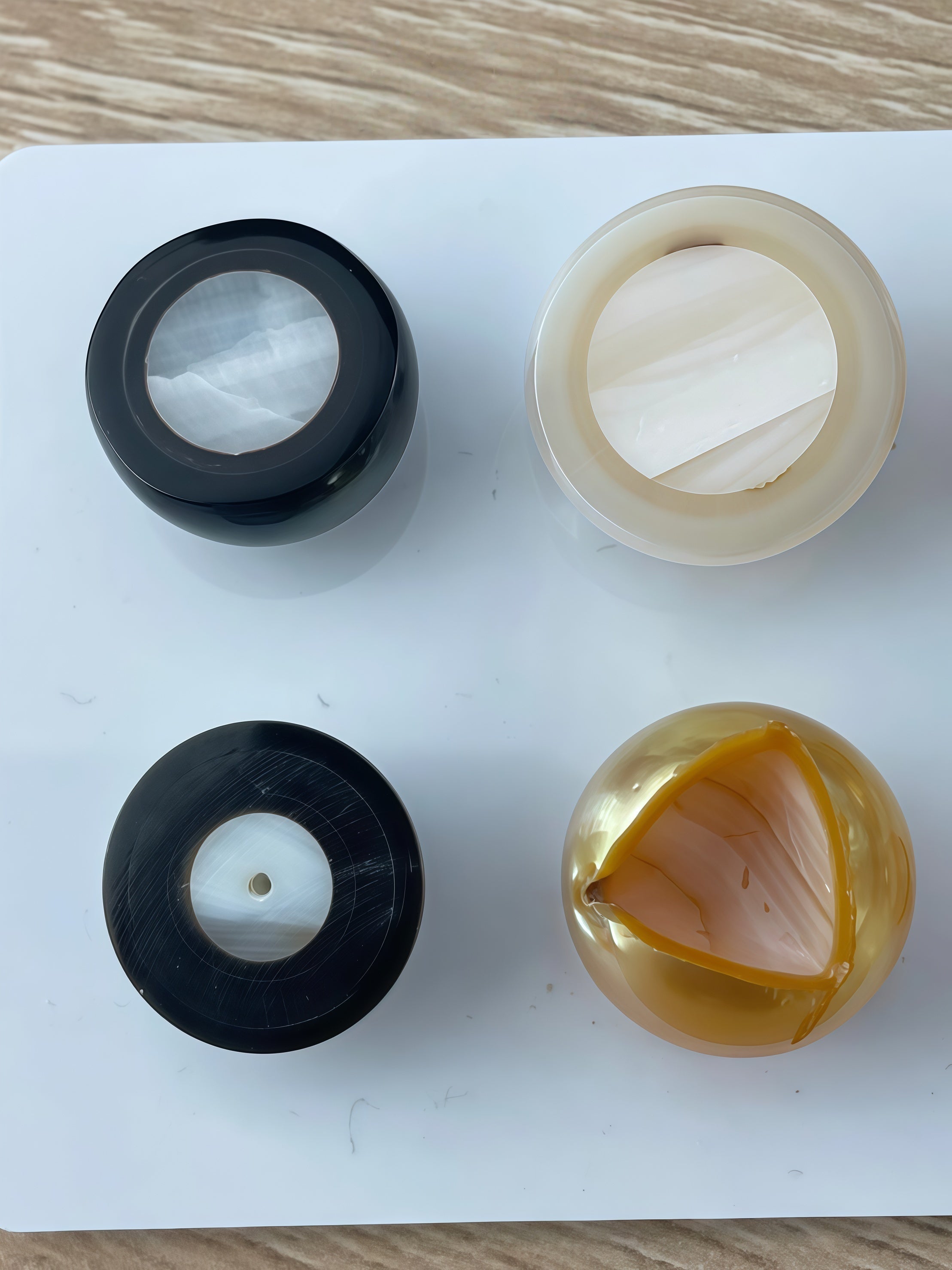
Pearls can look similar on the outside, but the inside is what explains many price and durability differences. This quick guide uses real cut samples to show you exactly what to look for—and how to use that knowledge when shopping.

The 30-second concept
Many cultured pearls are built like this: a core (bead nucleus) on the inside, and nacre layered around it. Nacre is the glowing “wear layer”—it’s what you see, and it’s what takes abrasion over time.
1) Thick nacre vs thin nacre (why it matters)

- Thicker nacre usually means more “buffer” for long-term wear (especially bracelets and rings).
- Thinner nacre can still be beautiful, but tends to be less forgiving if worn hard or cleaned aggressively.
Practical tip: If you’re buying a piece you’ll wear often, durability matters more than if you’ll wear it a few times a year.
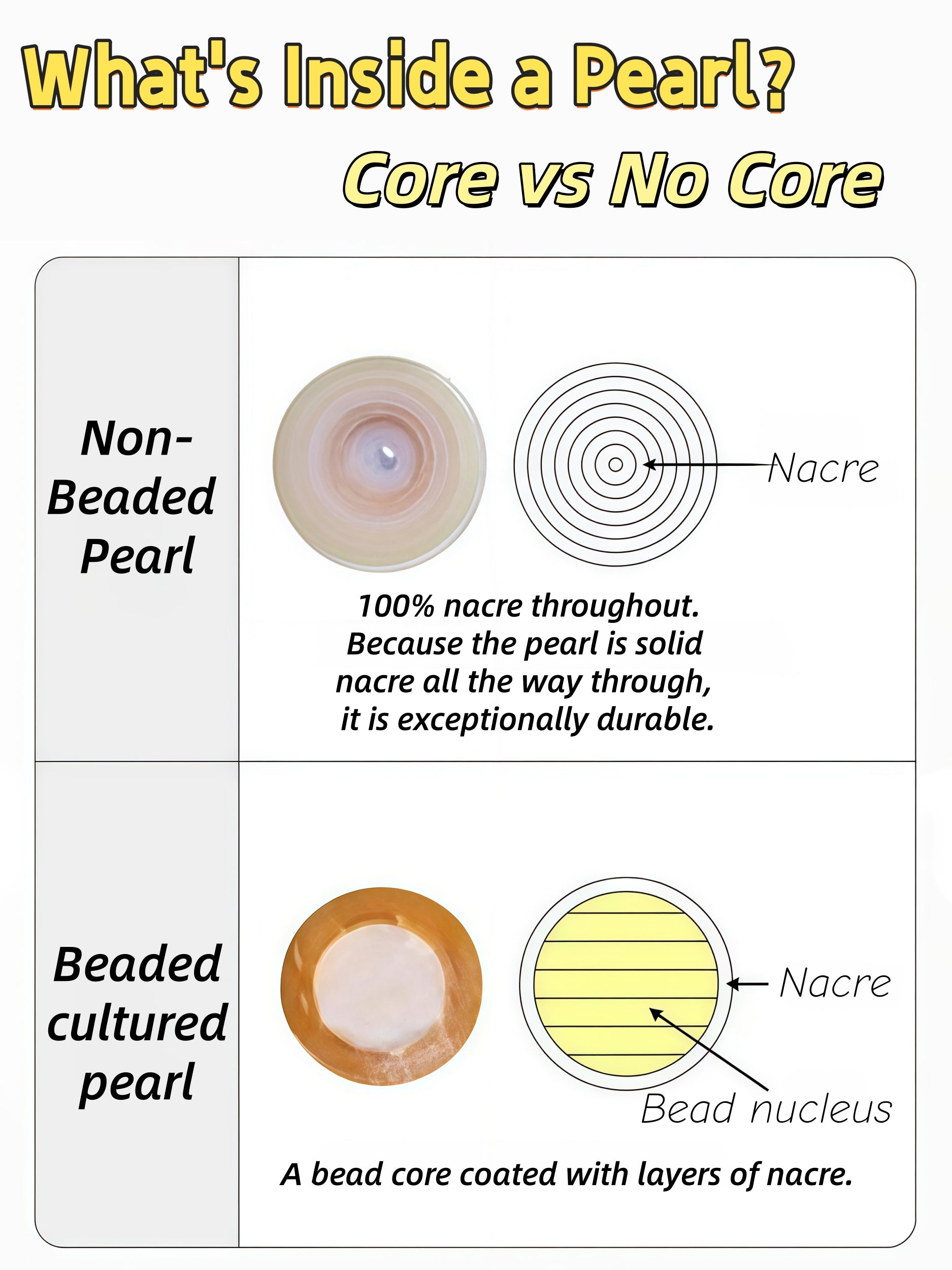
2) Core vs no core (two different structures)

Two pearls can both be real pearls and still be built differently. A bead-nucleated pearl grows nacre around a bead nucleus. A non-beaded (often tissue-nucleated) pearl is largely nacre throughout. Structure helps explain why some pearls tend to be more uniform, and why others can be more “nacre-forward.”
3) One board, many pearl terms (the cheat sheet)

Here’s what these common labels mean in plain English:
- Cultured pearl: a real pearl formed by a mollusk, with human help to start the process.
- Natural pearl: formed without human intervention (rare and usually priced as collector items).
- Dyed pearl: a real pearl with color modified—fine as long as it’s clearly disclosed.
- Akoya / Tahitian / South Sea: classic seawater pearl families (each with signature looks).
- Freshwater / Edison: freshwater categories; Edison-style is typically bead-nucleated, while many freshwater pearls are tissue-nucleated.
- Keshi: typically nacre-rich and organic in shape—loved for character.
4) How to use this when you shop (no lab required)
- Decide your wear frequency: daily wear → prioritize durability and stable surface.
- Ask for close-ups + a short video: you want to see luster movement, not one perfect angle.
- Ask directly about treatments: especially for dyed pearls.
- When in doubt, choose transparency: a good seller can explain their standards clearly.
Watch (short video)
This short video pairs well with the cut-sample photos and helps viewers understand nacre and structure quickly:


Leave a comment
This site is protected by hCaptcha and the hCaptcha Privacy Policy and Terms of Service apply.