
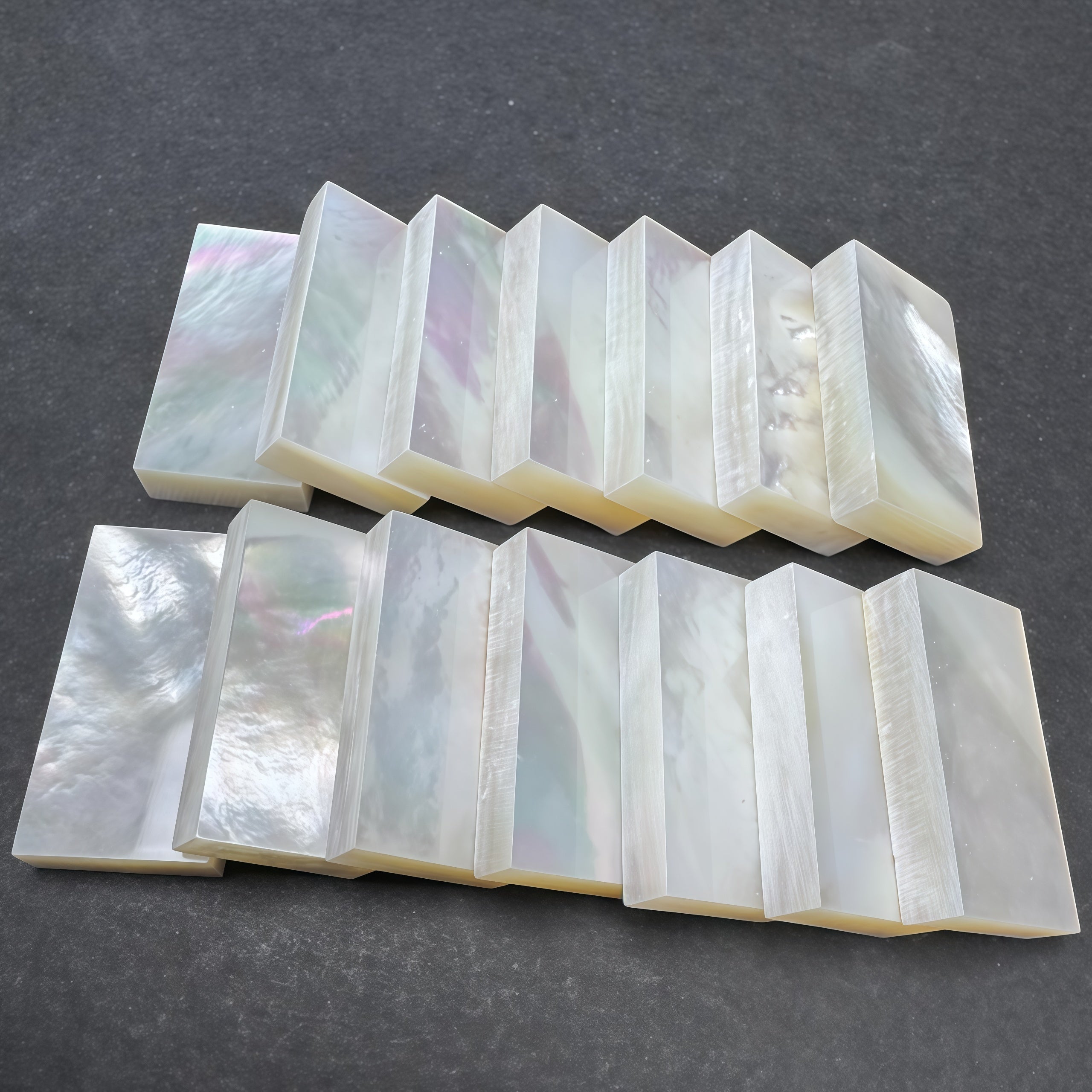
What is Mother of Pearl? Complete Guide vs Regular Pearls
We are passionate pearl professionals who have had over 20 years of exposure to different real pearls, including hands-on interventions. We always meet this question often: "What exactly is mother of pearl and how does it differ from the ordinary pearl?" A good number of people think that mother of pearl and cultured pearls are the same. They are completely different substances but even so they both are equally beautiful from where they come from.

To make it clearer, mother of pearl is also know as nacre. It is the inner shiny lining material of the hard-shell mollusk. A pearl is a different stone found in a mollusk. It is formed when mollusks recover from injury by covering the irritants with many layers of that same nacre.
This guide is the most valuable tool you have to compare mother of pearl with cultured and Mabe pearls. We will talk about the place where it is found. We will identify its good quality features. We'll explain our knowledge of the pearl industry and its latter topics.
Key Takeaways
- Mother of Pearl is the Shell Lining: It is the nacre that is shiny and forms the inner layer of a mollusk's shell.
- A Pearl is a Separate Gem: It is created when a mollusk wraps an irritant in layers of nacre. Hence, this object is specific, generally round.
- Source Matters: The quality and look of mother of pearl varies based on the mollusk it is taken from, including both high-grade saltwater oysters and commonly found freshwater mussels.
- Mabe Pearls are Hybrids: They are mixed gems made with a nacre blister on the shell, then backed by mother of pearl.
- The Rarity Determines the Price: The reason for this is that the whole shell lining can be used. This leads to the high availability of it therefore the cost is less.
The Main Difference: Mother of Pearl vs. Cultured Pearl
Getting it right about the difference between mother of pearl and a cultured pearl is the first thing you should consider. While one is a dwelling, the other one is the treasure that is discovered inside.
What is Mother of Pearl? It's the 'Home,' Not the 'Gem'
Mother of pearl is the very outline of the interior of the shell. The mollusk exudes this smooth, protective layer. Thus, it is a good cover for itself.
Because it is part of the shell, it can be cut into large, flat, or curved pieces. That is precisely what makes it adequate for being an inlay in jewelry. It can also be used for watch faces and other decorative items.
What is a Cultured Pearl? It's the 'Treasure' Within

It is worth noting that a cultured pearl stands quite differently and is a special one. It starts when a pearl farmer inserts a tiny bead or a piece of tissue into the mollusk.
The mollusk considers this to be an irritant. It covers the bead with thousands of layers of nacre. After several years, the finished product can be a round, oval, or a uniquely shaped baroque pearl. It is a treasure that grows in a shell and is not a part of it.
At a Glance: Mother of Pearl vs. Cultured Pearl
The following table elaborates on the differences.
| Feature | Mother of Pearl | Cultured Pearl |
|---|---|---|
| Identity | The shiny inner layer of the shell. | A separate gem formed inside the mollusk. |
| Shape | Cut into various flat or curved shapes (like cabochons, inlays). | Usually round, oval, drop, or baroque. |
| Formation | A natural part of the shell's structure. | Formed around an irritant/nucleus. |
| Availability | More common and available in larger pieces. | Rarer, especially in high quality and large sizes. |
| Common Use | Jewelry inlays, watch faces, decorative items, buttons. | Main focus of jewelry (necklaces, earrings, rings). |
A Detailed Difference: Mother of Pearl vs. Mabe Pearl
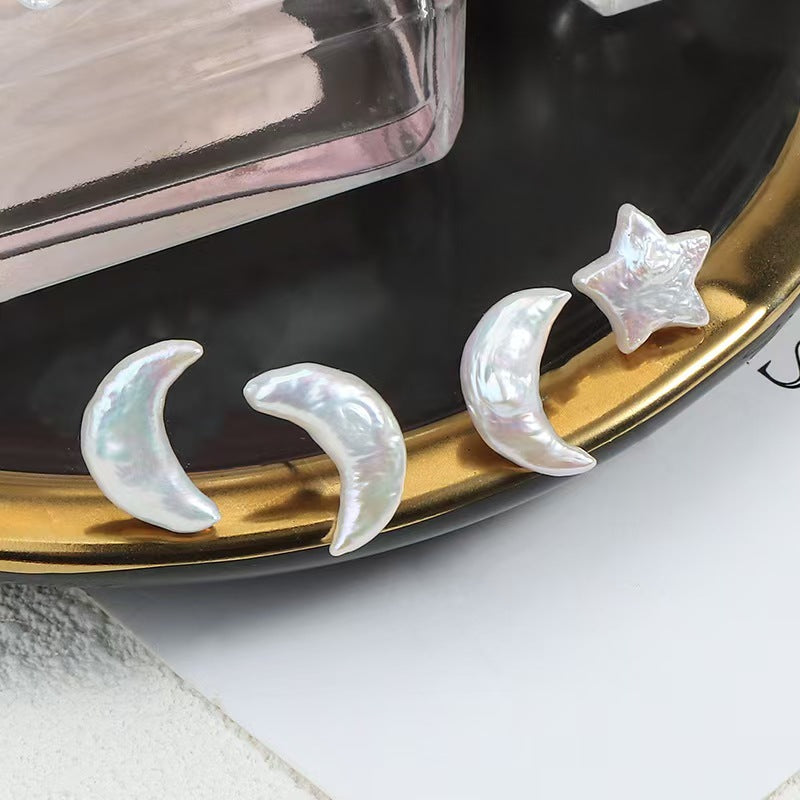
A common misunderstanding people face is the dissimilarity between mother of pearl and Mabe pearls. A Mabe pearl, when viewed, may look like an ordinary pearl cut in half and merged with jewelry. However, its manufacturing is quite different. It is a hybrid, which means that it suspends a nacre dome to which it is attached with mother of pearl.
How a Mabe Pearl is Made
A Mabe pearl is a unique creation process. Even in the pearl farms that we have visited, it takes precision crafting.
- Step 1: A half-sphere nucleus is glued to the inside of the mollusk's shell. This is often made of plastic or shell.
- Step 2: The mollusk then coats this nucleus with layers of nacre. Once this covers the wall of the shell, it forms a "blister."
- Step 3: When the nacre becomes sufficiently dense, the blister is cut out in a careful manner from the shell. It takes with it a piece of mother of pearl on which it grew.
- Step 4: The nucleus is taken out, thus a hollow dome of nacre is left. This dome is then filled with resin for robustness. The back is sealed with a separate piece of mother of pearl.
The Key Point

The Mabe pearl is a mixed gem. It constitutes a hollow nacre dome, which happens to be attached to a backing of mother of pearl. It is not a solid pearl. On the other hand, mother of pearl is just the raw shell material. Our experience of over 20 years in the pearl processing field has proven that the artistry of making a good Mabe pearl is in precise cutting and assembly. That is the way in which the final piece can be both visually appealing and robust. This is a different approach than just harvesting a whole cultured pearl.
Not All Mother of Pearl is Created Equal: A Guide to Material Sources & Quality
One important part of our "From Pearl Farm to Finished Jewelry" philosophy is understanding the source. The type of mollusk that supplies mother of pearl is very influential in both quality, color, and price. There are three kinds of mollusks which are known for their production, but the differences between them are key.
Premium Sources: The Choice for Fine Jewelry
For the discerning, jewelers are in pursuit of mother of pearl of exceptional luster and color.
- Abalone (Especially New Zealand Paua): This source provides very vibrant and swirling colored mother of pearl. It is famous for its distinct energy containing vibrant blues, greens, and purples. It is highly sought yet frequently comes from smaller, irregularly shaped shells.
- White South Sea Pearl Oyster (Pinctada maxima): This oyster is the top-notch. The thick, silvery-white mother of pearl is used in luxury watch dials and fine jewelry. It features a smooth surface associated with a high luster and satin-like finish.
Mass-Market Sources: The Story Behind the Affordable Options
If you find very cheap mother of pearl jewelry on sites like Amazon, you might wonder how that is possible. The material is the reason.
Most mass-market mother of pearl comes from freshwater mussels. As experts in both freshwater and saltwater pearls, we know these mussels are the strength of the industry. They can grow to huge sizes, often reaching up to 50 cm (almost 20 inches). This provides a great number of raw materials from one shell, making the process of production very cheap.


Although its luster is known for being softer and less dramatic than high-end saltwater sources, its workability makes it the most widely used type of mother of pearl in 2026. This use transcends simply making jewelry. The same material is used in the construction of beautiful mother of pearl mosaic tiles for interior decoration, coasters, as well as other decorative objects.
How to Choose and Appreciate Quality Mother of Pearl Jewelry
Equipped with the knowledge of what is mother of pearl, now you can very confidently make an excellent choice. When making an assessment of a piece, focus on the visual aspects that are signs of the fine material and craftsmanship.
What to Look For: The 3 L's
- Luster: This is how light is reflected from the surface. High-quality nacre should have a deep, glowing luster. It should not appear totally flat or resemble a coating of paint.
- Luminosity (Play-of-Color): When you tilt the piece, try looking for flashes of shiny color. More vibrant and varied colors, known as orient, usually mean better quality.
- Layering (Surface): The surface of the piece should be clean and smooth. Look for any flaws such as chips, dull spots, or blemishes that would detract from its beauty.
Trust the Craftsmanship
The cut, polish, and the way this mother of pearl is set into the jewelry are as important as the material itself. A talented artisan will orient the piece to show off its best color and luster. Here, at Alya Pearls, our high standards for the setting of mother of pearl are applied in the same careful way as for our finest pearls. This guarantees that the final design is complementary to the nacre's natural beauty.
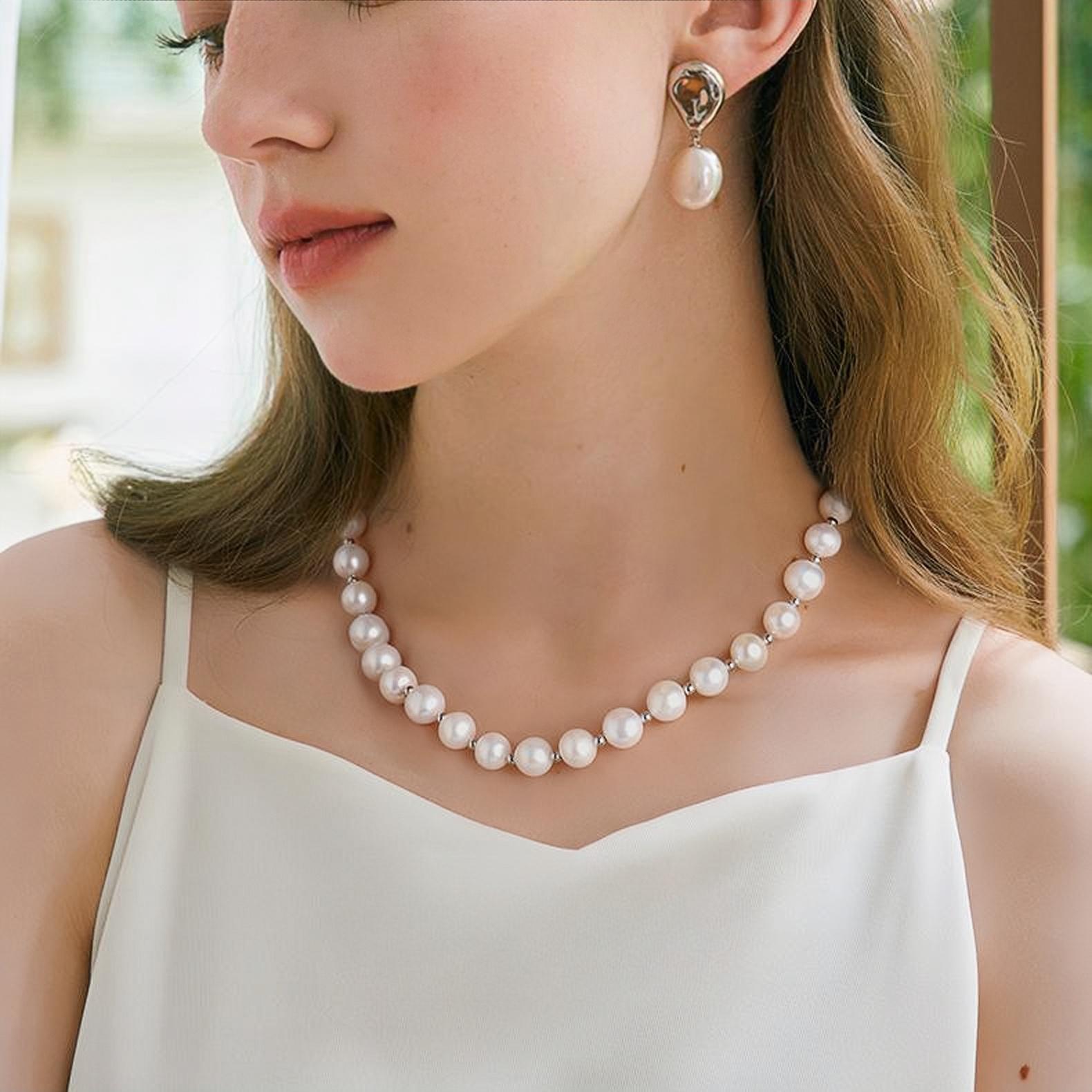
For those who appreciate the timeless elegance of nacre and pearls, our collection of Pearl Necklaces | Freshwater, Baroque, Choker & Pendant | Alya Pearls often incorporates these beautiful materials together. All pieces are designed by our founder, Alya Liu, to highlight the distinguished shine and quality that is our trademark. Check our designs to find what speaks to your taste. As a thank-you gift to our community in 2026, you can enjoy 20% Off with the code LOVE20. Additionally, we believe in giving back, so every order you make will contribute to the donation of a pair of pearl studs to girls in need.
Caring for Your Mother of Pearl Jewelry
Mother of pearl is an organic material and needs gentle care to stay beautiful. It is quite soft, so careful handling is key. For more tips, check out this guide on Caring for Mother of Pearl.
- Avoid Chemicals: It is best to apply perfume, hairspray, and body lotion before you put on your jewelry. Strong chemicals can dull the nacre's surface.
- Soft Cleaning: After wearing, it is enough to just wipe your jewelry gently with a soft, damp cloth to remove oils and dirt. Do not soak it in water.
- Proper Storage: Keeping your mother of pearl jewelry separately from tougher gemstones like diamonds will help you to prevent scratches. A soft pouch or a lined jewelry box is ideal.
FAQ: Your Mother of Pearl Questions Answered
1. Is mother of pearl considered a real gemstone?
Yes, mother of pearl is an organic gem material. Like pearls, amber, and coral, it is created by a living organism rather than through geological processes. It is not a mineral like a diamond, but it is a genuine natural material valued in jewelry.
2. Why is mother of pearl so much cheaper than pearls?
The price difference comes down to abundance and formation. The entire inner shell of a mollusk is made of mother of pearl. This provides a large amount of usable material. In contrast, a single mollusk may only produce one or a few pearls over several years. This makes pearls much rarer and thus more valuable.
3. Can mother of pearl get wet?
While it comes from the water, it's best to avoid getting it wet for long periods. A quick wipe with a damp cloth is safe. But submerging it can weaken the nacre layers over time. It can also damage any adhesives used to set the piece in jewelry.
4. Does all mother of pearl have color?
All mother of pearl has a base body color. Most often white, cream, or silver. It also has some level of shine, or play-of-color. The intensity of these secondary colors varies greatly depending on the mollusk. This ranges from the subtle glow of freshwater mussel shells to the vivid rainbow flashes of abalone.
5. How can I tell if mother of pearl is real?
Real mother of pearl feels cool and dense when you touch it. Look for natural, shifting shine as you move it in the light. This is something plastic cannot truly copy. Imitations made of plastic or resin will feel lightweight and warm to the touch. Their "shine" will appear flat and uniform from every angle.


Leave a comment
This site is protected by hCaptcha and the hCaptcha Privacy Policy and Terms of Service apply.