
Do Clams Make Pearls? Expert Guide to Clam vs Oyster Pearls
Our family has been in pearl farming for over 60 years. At Alya Pearls, people often ask us, "Do clams make pearls?" The short answer is yes. Some clams can make pearls. But it's very rare. The "pearls" they make are particularly different from the shiny gems we see in jewelry.

The beautiful, glowing pearls in necklaces and earrings come from oysters. They also come from certain freshwater mussels. They don't come from the clams that you eat for dinner. The big difference is a special material called nacre. This is the secret to the glowing effect of a pearl.
Key Points
- Clams vs. Oysters: A couple of clams can create "pearls." But these are most of the time dull and don't shine. Oysters and some mussels in addition, use nacre for shiny, gem-quality pearls.
- Nacre is Key: Nacre is also referred to as mother-of-pearl. It is the compound that endows the pearls with their opalescent qualities. Most clams lack this feature.
- Rare & Special Pearls: There are even other species forming pearls. Abalone, Giant Clams, and Queen Conch produce genuine and rare pearls. They all have distinctive qualities.
- Cultured Pearls Rule: 99.99% of pearls in 2026 are cultured. This is the result of the collaboration of farmers and nature. It includes both saltwater and freshwater pearls.
- Freshwater Innovation: Modern freshwater pearls come mainly from Triangle Sail Mussels. They benefit from new farming methods that ensure top-notch quality and a diverse product range.
The Key Difference: Oysters vs. Clams
There is one primary reason why oysters are the world's experts in pearls. This reason is the key factor to a substance being a rock or a crystal.
Shiny Pearls from Oysters
The oysters of pearls and some freshwater mussels are the very best factory operators. When an unwanted object comes in their shell, they react by invention. They kill the intruder by covering it up nacre thin sheets.
Nacre possesses a crystalline structure. The layers refract and deflect the view. Therefore we can enjoy the various colors and soft lustre found in pearls. It is this sort of shine that epitomizes a true gem.
Dull "Pearls" from Clams
The majority of claims found inside clams, lack nacre. They are merely similar to a calcified calcium stone, with a kidney stone look. They are made of minerals that don't reflect light the same way.

The outcome looks like porcelain or a polished stone. It doesn't shine out that special rainbow glow. They are of singular interest to collectors because of the rarity. But because of the philosophy they follow, they are not in the real pearl trade, like The Hidden Treasures: Pearls in Clams and Their Unique Journey points out.
| Feature | Oyster Pearls (Shiny) | Clam "Pearls" (Dull) |
|---|---|---|
| What It's Made Of | Mainly Nacre | Calcite or other minerals |
| Shine | Rainbow colors, high-gloss | Porcelain-like, matte, or dull |
| How Common | Basis for global pearl industry | Very rare |
| Jewelry Use | Very common | Rare, mostly for collectors |
Beyond Oysters: The World of Rare Pearls
Oysters are, without a doubt, the most remarkable producers of pearls. However, they are not the only ones. The term "pearl" can be used to define any mineral-like substance that occurs in the body of a marine organism. Therefore, some of these are very rare and in amazing shapes.
Which Clams Can Have Pearls?
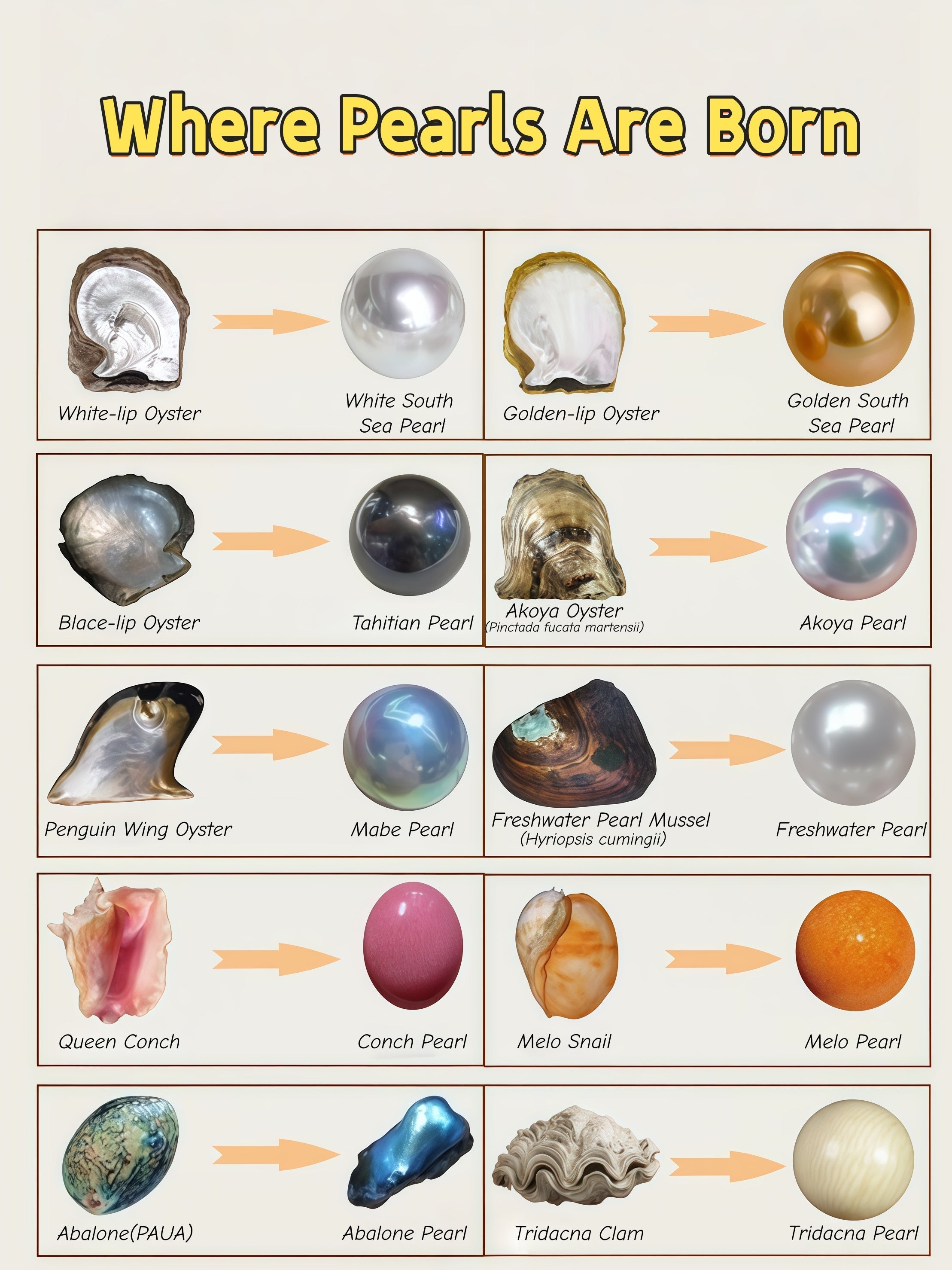
When the discussion is about clams and their pearls fancied, a person typically refers to the clams that are popular for cooking. The attention should be on the giant clam who is usually on the top list of the pearl maker clams. These clams are not only the biggest but even more, they are the ones who make the biggest pearls in the entire ocean.
Nevertheless, these pearls don't have nacre. They have a luster like porcelain. Even though they are not beautiful traditionally, their size and rarity make them a big hit. According to studies, it has been confirmed that giant clams can create pearls of great size.
The Rainbow Wonder of Abalone
However, there is a bewitched species that abalone generates some of the flashiest pearls on this planet. It's a common misconception to consider them bivalves. They look like a snail and are craftly different than clams and oysters.
Abalone pearls are characterized by their vivid colors and whirl effects. They colorful are blue, teal, purple and green. Their shape is mostly horn-like while they grow on a Free-floating section of the shell. This kind of pearl is called a mabe or blister pearl. With their lively and opalescent beauty, they are truly one of a kind.

The Flame of the Caribbean Conch
Another exceptional beauty that sea snails make is Queen Conch. This kind of sea snail is well known for being able to create a pink-orange pearl of nacre.
What's extraordinary about Conch pearls is that they exhibit a "flame structure." This is a sort of flowy, silky pattern that resembles dancing across the exterior. These pearls are not subject to the process of farming. This is what gives them value in collectorship.
The Art of Saltwater Pearl Farming
The fabulous saltwater pearls in the elite jewelry are mostly cultured ones. This is a nice blend of nature's works and human technology. As a GIA & GUILD Certified Pearl Specialist, our founder, Alya Liu, is a descendant of a family that for more than 60 years has honed this art to perfection. Our motto of "From Pearl Farm to Finished Jewelry" is cultivated from this legacy of hands-on experience.
White-Lip Oysters: South Sea Pearls
The White and Golden South Sea pearls come from a particular oyster. They are the largest of all pearl-making oysters and fished in the cleaned, and warm waters of Australia, Indonesia, and the Philippines.
They are round, sizable (generally from 10mm to 20mm), and possess a very thick layer of nacre. Because of that, they get this characteristic, soft, and satin-like shine.
Black-Lip Oysters: Tahitian Pearls
Another special oyster gives us the exotic Tahitian pearl. These oysters are primarily bred in the lagoons of French Polynesia and are famous for their dark-colored pearls.
They come in shades ranging from silver, gray, and deep peacock green, to purple, and jet black. The process consists of a master plumber implanting a small bead and a piece of tissue into the oyster. The oyster begins then to cover the bead with nacre.

The Freshwater Pearl Revolution
Though saltwater pearls are the symbol of riches, freshwater pearls have turned the industry upside down. Thanks to the valuable discoveries in farming rise of high-quality freshwater pearls has never been as good.
The Triangle Sail Mussel
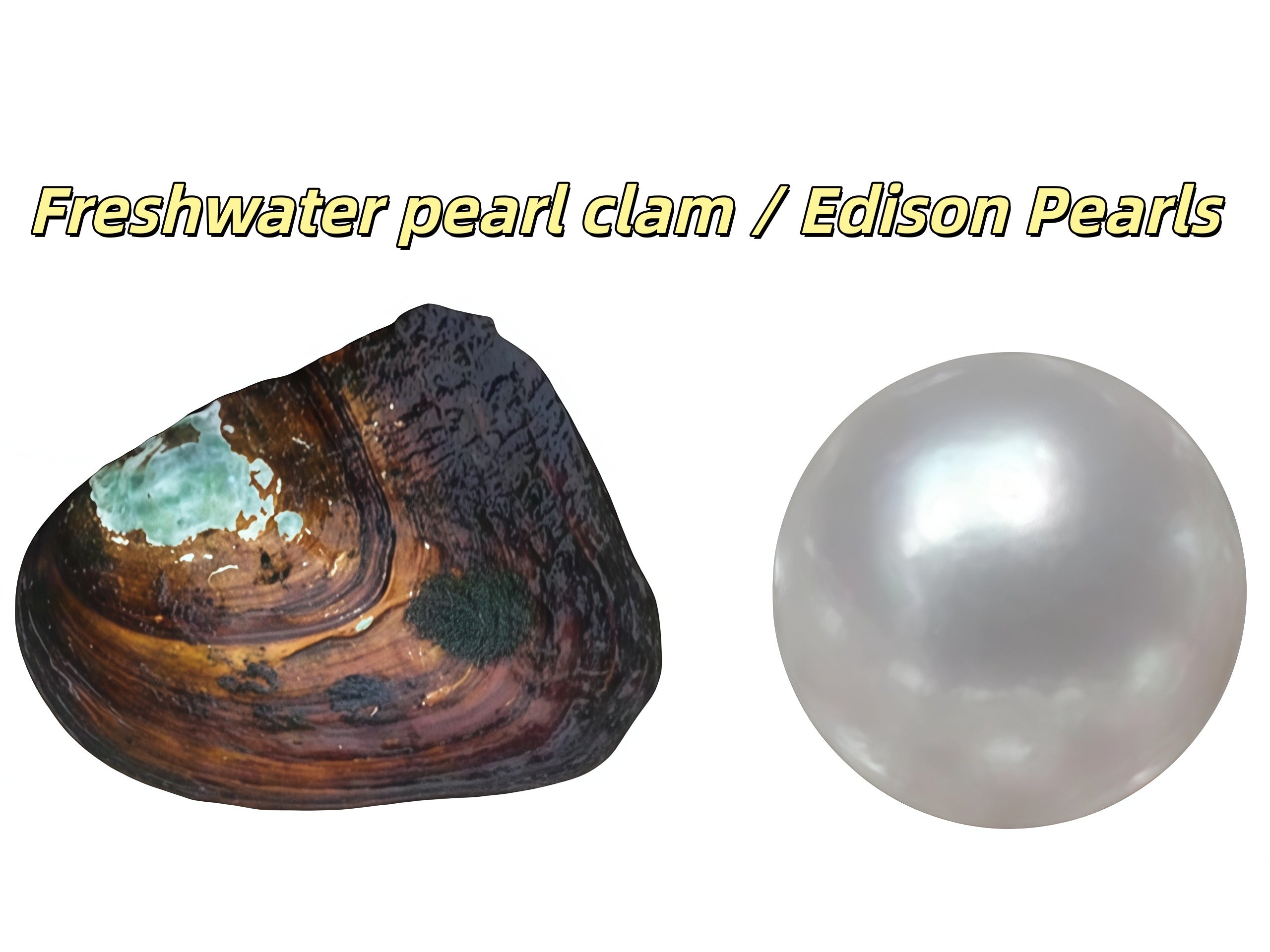
The main type that the freshwater pearl industry operates on is Triangle Sail Mussel. This mussel is a native to the rivers and lakes in China and has a strong and productive base.
While an oyster makes one pearl at a time, a single Triangle Sail Mussel can produce hundreds of pearls in the same period.
Modern Freshwater Farming
The first freshwater pearls were usually small and had a ricegrain-like shape. The big change was adopting a new technique which didn’t use a bead center. Now, they just use a piece of tissue graft to start the pearl.
The result is a nacre solid pearl, which is very strong and glowing. This, along with selective breeding, has resulted in the creation of large and nearly-round freshwater pearls by 2026. Historically, River Mussels (Clams) Produce Pearls have been around. However, today's discoveries have upped the quality bar. Our model, which is "From Pearl Farm to Finished Jewelry", allows us to source from these innovative farms directly. We choose the finest pearls by hand for the designs we create.
Finding Your Perfect Pearl
The knowledge of pearls' journeys will enable you to choose the jewelry that communicates best with the real you. From a clam white lump to a shiny cultured gem, every pearl bears a tale. Whether you lean towards the classical round shape of an Akoya pearl, the rich shade of a Tahitian, or the distinct character of a freshwater baroque, every pearl is unique.
At Alya Pearls, we use our deep knowledge of pearl quality in every piece. Check on our Pearl Necklaces | Freshwater, Baroque, Choker & Pendant | Alya Pearls to find an ideal expression of your unique style. Our collection was selected with the help of our expert's eye for shine, shape, and surface quality. Get 20% off for a limited time with code LOVE20. Additionally, you will get free pearl studs if your purchase is over $99. Every purchase enables us to donate a pair of pearl studs to girls in need.
FAQ: Your Pearl Questions Answered
Can you eat the clams that make pearls?
Generally, no. The types of clams known to produce large "pearls," like the Giant Clam, are protected species and not harvested for food. The common edible clams you find in restaurants, like littlenecks or cherrystones, very rarely produce anything, and if they do, it's usually a tiny, valueless calcium bit.
How rare is it to find a pearl in a clam?
It is exceptionally rare. For common edible clams, the odds are estimated to be around 1 in 10,000. Even then, the object found is almost always a small, discolored piece with no gem value. Finding a valuable non-nacreous pearl from a clam is a true lottery-like event.
Are oyster pearls or freshwater pearls better?
Neither is "better" because they serve different purposes. Saltwater oyster pearls, like Akoya and South Sea, are prized for their near-perfect roundness and sharp, mirror-like luster, which makes them more expensive. High-quality freshwater pearls offer incredible value, come in a vast range of shapes and natural colors, and are very durable because they are 100% solid nacre.
What is the difference between a natural and a cultured pearl?
A natural pearl forms by complete accident, without any human help. A cultured pearl is created when a pearl farmer carefully places something inside the mollusk to start the pearl-making process. Today, over 99% of all pearls on the market are cultured. This is the art our family has specialized in for generations. It ensures a steady supply of beautiful gems.
Why are some pearls not round?
A pearl's shape depends on where it grows inside the mollusk. If it forms floating freely in the soft tissue, it has a better chance of being round. If it grows against the inside of the shell, it will become an irregular or "baroque" shape. We celebrate these unique shapes in our Baroque collections. Each one is a true one-of-a-kind piece of art from nature.


Leave a comment
This site is protected by hCaptcha and the hCaptcha Privacy Policy and Terms of Service apply.