
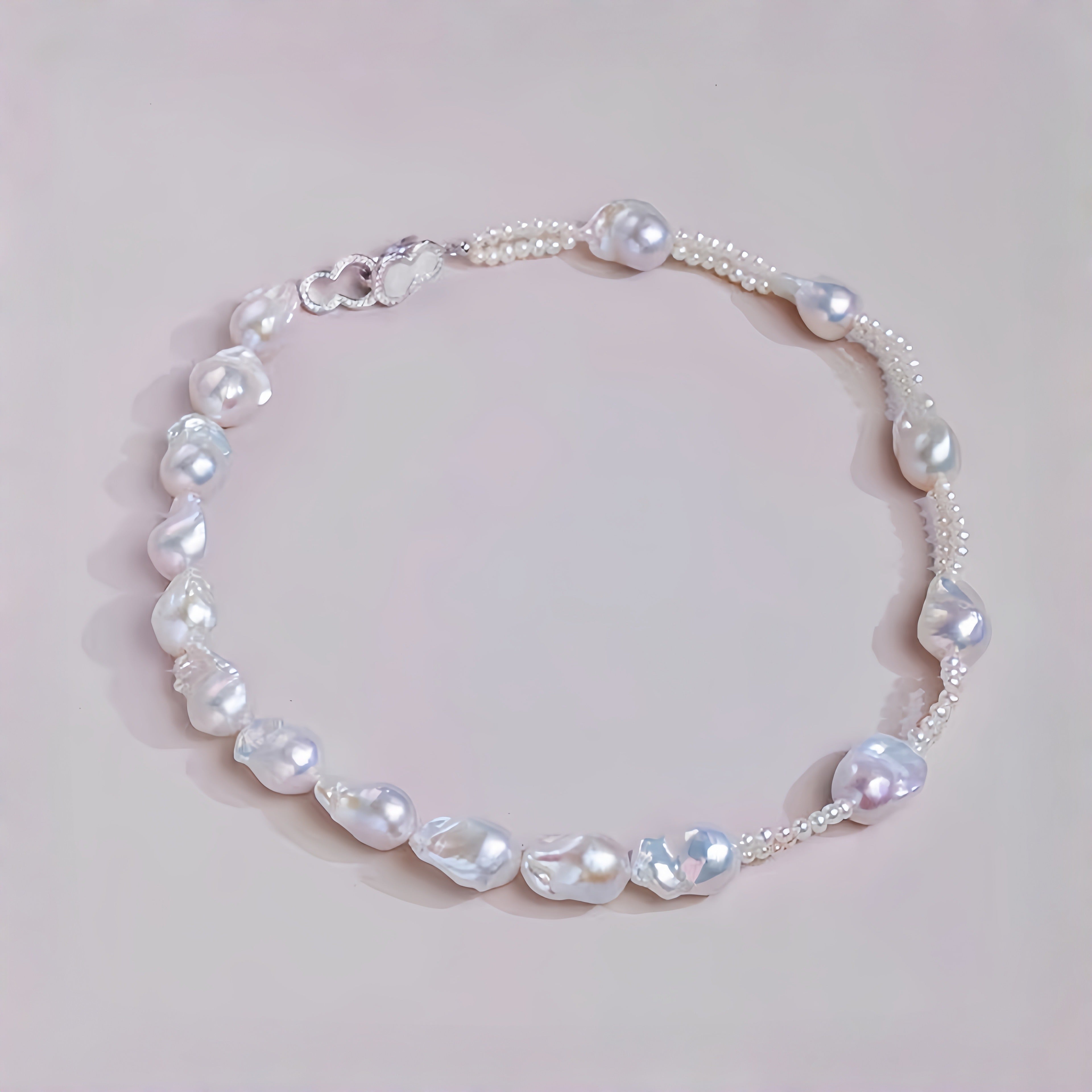
Baroque Pearl Guide 2026: Unique Beauty of Imperfect Pearls
What Is a Baroque Pearl? The Shopper's Guide to the Unique Beauty of Imperfections
Are you searching for pearl jewelry in 2026? You must be feeling puzzled reading about "baroque pearl." Its application in the sentence is twofold. On one hand, it is a technical term. On the other hand, it has a more modern, lively sense.

- Significance 1: A General Introduction: In the pearl industry, "baroque" is the official term for any pearl that is not completely round.
- Interpretation 2: The Contemporary Jeweler's Perspective: In the jewelry scene of today, "baroque" is often a more specific term referring to a certain type of very large pearl which has a rounded body and one end shaped like a "comet tail," or a "flame."
This brochure is going to clarify the two meanings of baroque pearl. We will analyze the term's origin first. We will then illustrate the different shapes. Finally, we will demonstrate how these exceptional stones can both be a stylish and a wise choice.
Important Points
- Two Definitions: "Baroque" can be any non-round pearl. Or it can refer to the popular "fireball" shape.
- Exceptional Characteristics: Every baroque pearl is one of a kind. That proves to the world that you are jewelery that is completely unique and personal.
- Bargain for Quality: Baroque pearls are more than just big and shiny. They are less costly than round pearls.
- Mostly Freshwater: Most of the baroques are freshwater cultured pearls. This occurs due to the farming methods used.
- Contemporary Style: Instead of the simple, traditional look, the baroque pearls will be seen in bold statement jewelry and vintage-style designs.
The Saga of the Baroque Pearl
If you want to examine the baroque pearl in a better light, it is essential to know its storied past. This pearl has been on an adventure across centuries, having been seen in high royal courts and at modern pearl farms. The appreciation of its beauty as we see it today hinges on the understanding of its intriguing history.
From "Barroco" to the Baroque Epoch
The very word can tell us where it all began. It actually comes from the Portuguese word "barroco," which translates to "irregular pearl." Portuguese traders were the main actors in the early pearl trade.
Later on, this term got associated with the dramatic art that was installed and displayed during the Baroque period. The art started during the 17th to 18th centuries. The style was in favor of intricate, majestic, and emotional designs. This was akin to the pearls.
Nature’s Art in History
During the era before pearl culturing, all the pearls were organic. Finding a natural pearl, which was perfectly round, was next to impossible and very costly.
Travel accounts of the past contain tales of naturally occurring glowing pearls. Travelers mentioned places like the Persian Gulf. Rather than bemoaning their irregularity of shape, jewelers during the Renaissance and Baroque ages instead highlighted them through their creativity. They would use the baroque pearl as a body of an animal or the middle part of a humanoid.
The Evolution of Times
The pearl world was never the same again after the introduction of culturing. The baroque pearl story has been similarly changed.
In Japan, the culturing of saltwater pearls often yielded a byproduct. This was keshi pearls - small, all-nacre pearls that have no bead inside. They form in beautifully irregular shapes. Because they are not round, they are a type of baroque pearl.
Later on, China became the biggest player of freshwater pearl farming. A huge range of different forms popped up in the market. These included coin, star, and stick-shaped pearls. All these non-round shapes belong to the baroque category, in a general sense.
Decoding the Secret Language: A Shopper's Guide
"Baroque" serves as an encompassing term for any kind of pearl which isn't round. Simple however, vendors often use specific names to identify different shapes, and this often leads to confusion. Let's first explain the most used words you will see in the year 2026. Keep in mind that names may vary by vendor.
| Term | Simple Definition |
|---|---|
| Baroque (Umbrella Term) | The master category for any pearl that is not perfectly round. |
| "Fireball" or "Flame" Pearl | A pearl with a rounded base and a projecting, flame-like tail. This is what most people now think of as a "baroque pearl." |
| Coin Pearl | A flat, round pearl shaped like a coin. Its large, smooth surface is great for showing off luster. |
| Keshi Pearl | A small, 100% nacre pearl with no nucleus. They are known for their very high luster and organic shapes. |
| Stick or Biwa Pearl | A pearl that is long, thin, and often flattened. |
| Other Shaped Pearls | Cultured freshwater pearls can also be grown in specific shapes like hearts, stars, or crosses. These are also part of the baroque family. |
The "Modern" Baroque Pearl: What You Mean Today
Even with all these shapes, when someone talks about a "baroque pearl", they probably picture a specific style.
In today's market of the United States, the "fireball" or "comet-tail" shape baroque pearl is the most common. The general public recognizes it without a second thought. As the pearl expert, I see it mostly referred to in jewelry outlines. It is what clients specify by name.
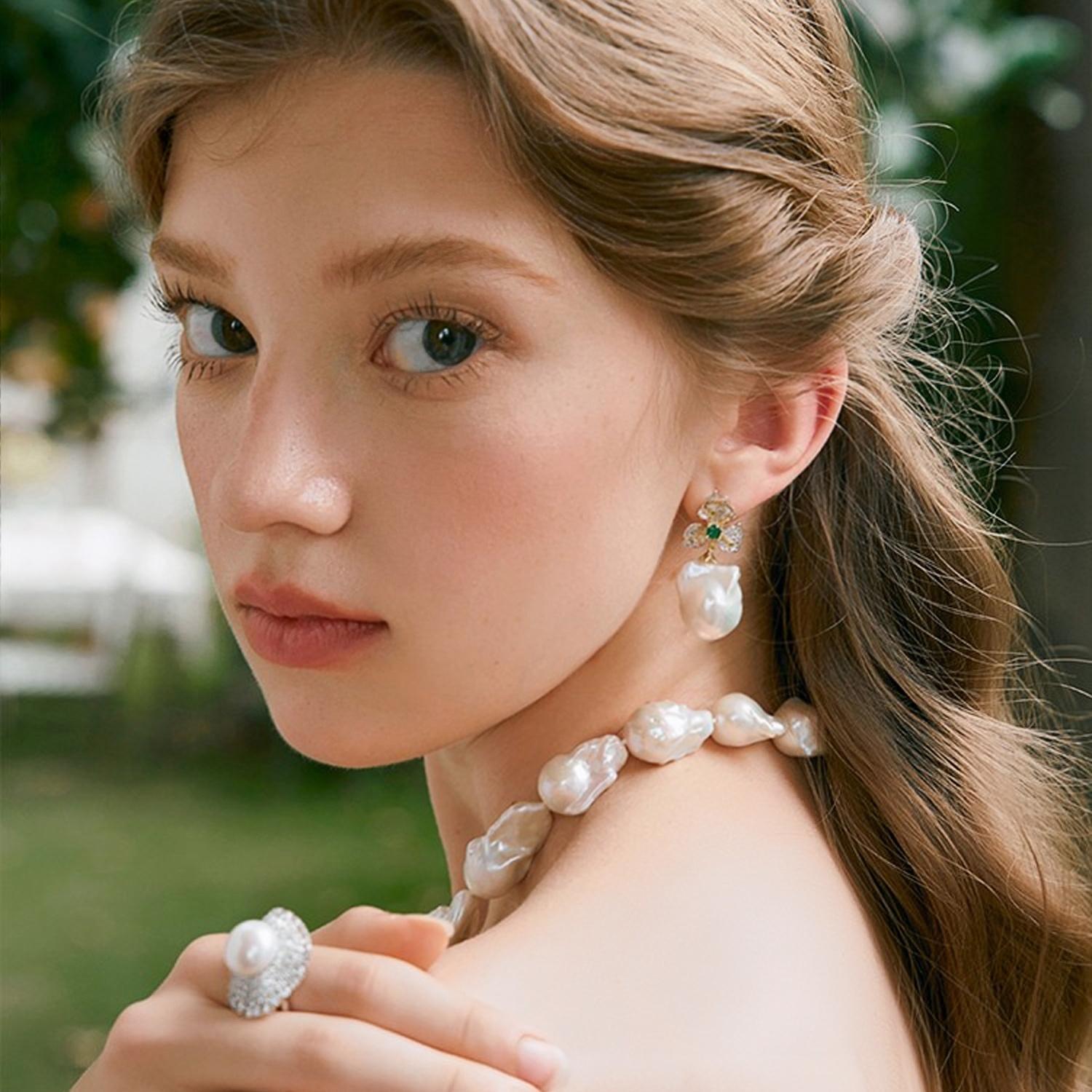
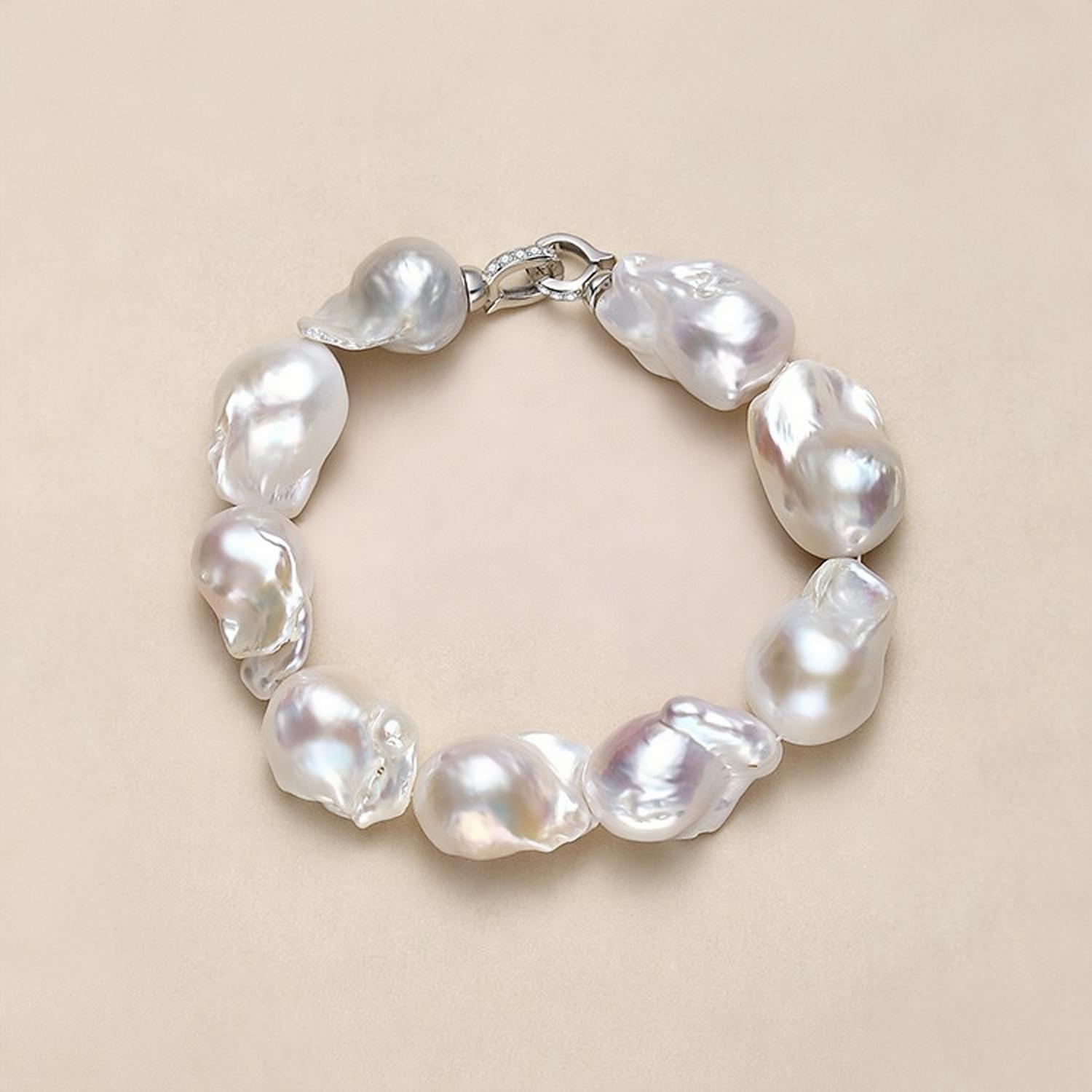
This legendary pattern incorporates a sizable, semi-round body that is covered in a tail suggesting wind motion. This high contrast of the curve and the flowing form earns it a place of choice among the statement jewelry designs. It is especially favored in pendants and drop earrings. Thus, it has become the contemporary face of a baroque pearl.
How Are Baroque Pearls Made?
Learning how these singular pearls are constructed helps unveil an important reason. It illustrates why some kinds are more affordable and normal than the others.
The Freshwater Advantage
Most of the baroque pearls that exist today are principally cultured freshwater pearls. The reason is clear. It is in the cultivating process.
Freshwater mussels are generally started with a little piece of mantle tissue. They do not use a round bead like the saltwater oysters. This way, the pearl grows naturally in a way that is not round. Also, one mussel can drop many pearls at one time. This means a baroque shape gets to be beautiful more often.

What About Saltwater Baroque Pearls?
Definitely, baroque pearls can be formed in saltwater types too. You can find incredible baroque Akoya pearl, Tahitian pearls, and South Sea types. As the experts say, Baroque pearls can be found in both freshwater and saltwater varieties.
However, they are not found in stores frequently. For instance, some Australian South Sea pearl farms produce very lovely baroque pearls. Nevertheless, the industry background tells us that perfectly round South Sea pearls have always been the ones with the highest price. As a result of this history, many producers refrained from making outside rounds. Hence, such manufacturers may not come across saltwater baroques of the top quality as frequently. Yet, they come out equally beautiful.
The Intelligent Buyer's Trick: Baroque Pearls
Choosing a baroque pearl is not a compromise. It is a wise and trendy decision. These gems are not just unique, but they also have special advantages compared to their perfectly round counterparts.
Unmatchable Quality for the Money
In the world of pearls, the question of roundness is the biggest issue for setting prices. Since a baroque pearl, in its own definition, is not round, it is absolutely cheaper. It costs less than a round pearl of the same size, luster, and quality.
This is not an implication that it is a less quality gem. It just means you can buy a pearl with great luster and a clear surface for a small amount of money. A first-class baroque pearl can be just 50-75% less expensive than a round pearl of the same type and size in millimeters.
Size is the Key: Go Big
Making a massive pearl, which is also perfectly round, is challenging and more rarer. For this reason, pearls of such sizes are usually very costly.
Here is a clever way to have a significant pearl that is truly impressive: instead of striving for the perfect round shape, you should go baroque. You can actually possess a large baroque pearl that is mesmerizing and has a perfect surface. In this way, you replace the desire for symmetry for weight and character. For any fan of pearls, this deal is incredible.

Unique by Nature
You are never going to find another identical baroque pearl. Each one is like a small art piece made by nature itself. Consequently, any jewelry that incorporates a baroque pearl is completely original and distinctive. It can be a reflection of your personal style.
How to Style a Baroque Pearl Necklace
Baroque pearls are a dream come true for the designer jewelry world. Their organic forms detour from tradition and thus facilitate the hearing of creativity. This allows such lamps to be artistic and to express the owner of the lamp. As one source maintains, The distinctively organic shape of these pearls sparks creative inspiration.
Here are a few ways the baroque pearl can shine in the modern design of jewelry:
- Main Pendants: When one huge baroque pearl is on a chain, it creates a strong focal point and is both simple and elegant. It is minimalistic yet offers plenty.
- Drop Earrings: The natural asymmetry of two similar, but not identical, baroque pearls makes for stunning earrings. They frame the face beautifully.
- Vintage Necklaces: A line of baroque pearls is a direct reference to the luxurious past. A beautiful baroque pearl necklace will look classic, and yet, it will be modern art in its own right. It can be a true signature piece.
- Artistic Items: For the ones who love avant-garde designs, the sculptural forms of baroque pearls are a perfect match. They are an ideal platform for the creation of lasting art.

Discover Your Unique Piece of Imperfect Beauty
The year 2026 will see a baroque pearl being not only a choice for fashion but a credo and affirmation of individuality and true beauty as well. These pieces are for the brave-hearted jewelry wearers who appreciate the artwork of nature. They demonstrate that the idea of roundness being perfect is nonsense. Perfection arises from the uniqueness of things.
Are you ready to discover your own unique treasure? You can take the lead by exploring our carefully selected collection of superb baroque pearl necklaces.
Frequently Asked Questions About Baroque Pearls
Are the baroque pearls real pearls?
Yes, indeed. The term "Baroque" refers to the shape type of a natural, genuine pearl. It can be present in any kind of pearl, which includes cultured freshwater, Akoya, South Sea, or Tahitian pearls.
Are baroque pearls precious?
Certainly, they are precious stones. Baroque pearls are generally less expensive than perfectly round pearls of the same type and size, but their true value depends on factors like the luster they'll have, the size, surface quality, color, and the origin. To give you an example, a large, top-quality South Sea or Tahitian baroque pearl can easily be very valuable.
Why are baroque pearls so trendy?
The popularity of baroque pearls, in 2026, is built upon an increasing desire for authentic and original design. They stand in contrast to classical jewelry, thereby allowing the wearer to express their individuality better. They are regarded as modern, artistic, and deeply personal.
How is a baroque pearl different from a keshi pearl?
A keshi pearl is a form of a baroque pearl. "Baroque" is the key word for all non-round pearls, however. "Keshi" denotes a pearl that is 100% nacre and that was formed without a bead nucleus. Therefore, all keshi pearls are baroque. That said, not every baroque pearl is keshi.
How am I supposed to take care of my baroque pearl necklace?
Just like you would handle it any other fine pearl jewelry, a baroque pearl necklace can be treated the same way. Pearls are tender, so they should be kept alone in a pouch or a separate box with no hard gemstones in it to avoid any scratches on the surface. Always put your pearls on last, after applying makeup or perfume. After wearing, gently wipe them with a soft, dry cloth.


Leave a comment
This site is protected by hCaptcha and the hCaptcha Privacy Policy and Terms of Service apply.