Written by Alya Liu — pearl farmer & jeweler.
The best way to clean a pearl necklace is to treat it as three different materials: the pearls, the thread or knots, and the metal clasp. Pearls need gentle wiping, the string needs to stay dry and supported, and tarnished silver or gold-plated hardware needs targeted metal cleaning — never a full necklace soak.
Most pearl necklaces do not need dramatic cleaning. What they really need is a quick reset: remove fingerprints from the pearls, lift oxidation from the clasp, wipe away any cleaning residue, and dry the necklace flat before storing. This is the method I use when I want a pearl necklace to look fresh, bright, and camera-ready without risking the nacre.

Quick Answer: How Do You Clean a Pearl Necklace?
To clean a pearl necklace at home, first wipe each pearl with a clean microfiber or eyeglass cloth. Then use a warm damp cloth to remove surface residue. If fingerprints or skin oil remain, a quick, controlled pass with an alcohol pad may be used on modern durable pearls, followed immediately by a clean-water wipe and a full dry. For tarnished metal parts, clean only the clasp or hardware with silver cleaner and a soft electric toothbrush — do not let silver cleaner touch the pearls or string.
This method is best for modern pearl necklaces in good condition. If your necklace is antique, dyed, cracked, peeling, strung on fragile silk, or has very thin-nacre Akoya pearls, skip the alcohol and metal-cleaning steps and ask a jeweler before attempting anything more than a soft cloth wipe.
The most important idea is control. Pearl care is not about soaking, scrubbing, or using stronger chemicals. It is about cleaning the right part of the necklace with the right tool.

Shop in Alya Pearls if you need a new pearl necklace!
My 10-Minute Pearl Necklace Cleaning Method
Step 1: Inspect the necklace before cleaning
Lay the necklace flat on a clean towel. Check the thread, knots, clasp, pearl drill holes, and any metal caps. If the string is loose, stained, stretched, or fraying, cleaning will not solve the real problem — the necklace may need restringing.
I always inspect before cleaning because a pearl necklace is only as strong as its weakest point. A clean pearl on a weak thread is still a necklace waiting to break.
Step 2: Dry-polish the pearls first
Use a clean microfiber cloth, eyeglass cloth, or pearl-safe jewelry cloth. Hold the strand gently and wipe each pearl in small circles. You can use a little pressure, but never scratch or drag a rough cloth across the surface.
This step removes fingerprints, skin oil, light dust, and makeup film. Fingerprints matter more than most buyers realize. A pearl’s beauty depends on uninterrupted reflection. If there is a fingerprint on the surface, the luster breaks, and the pearl looks less alive.

Step 3: Use a warm damp cloth
Dampen a soft cloth with warm clean water, then wring it out well. It should be damp, not dripping. Wipe the pearls gently, especially near the drill holes where sweat and cosmetics can collect.
Do not dunk the whole necklace in water. A pearl strand has thread and knots, and wet thread can stretch, weaken, or trap residue if it does not dry properly.
Step 4: Use an alcohol pad only as a controlled reset
In my studio, when I need pearls to photograph beautifully, I sometimes use a quick alcohol-pad pass to remove stubborn fingerprints and oily film. The key is speed and control: one light wipe over the pearl surface, no soaking, no rubbing at the drill holes, and no repeated daily use.
Immediately after the alcohol pass, wipe the pearls again with a clean damp cloth to remove any residue, then dry with a microfiber cloth. Alcohol evaporates quickly, but pearls are organic gems, so this is not a “more is better” step. It is a quick reset, not a bath.
I would not use alcohol pads on antique pearls, dyed pearls, heavily treated pearls, cracked pearls, peeling pearls, or delicate Akoya strands with very thin nacre. If you are unsure what kind of pearl necklace you have, skip this step.
Step 5: Final clean-water wipe and dry flat
After cleaning, wipe the necklace once more with a cloth dampened only with clean water. Then dry the pearls and lay the necklace flat on a towel until the thread is completely dry.
Never store a damp pearl necklace in a box. Moisture trapped around knots and clasps can cause odor, thread weakness, or metal tarnish.
How to Clean a Tarnished Pearl Necklace Clasp
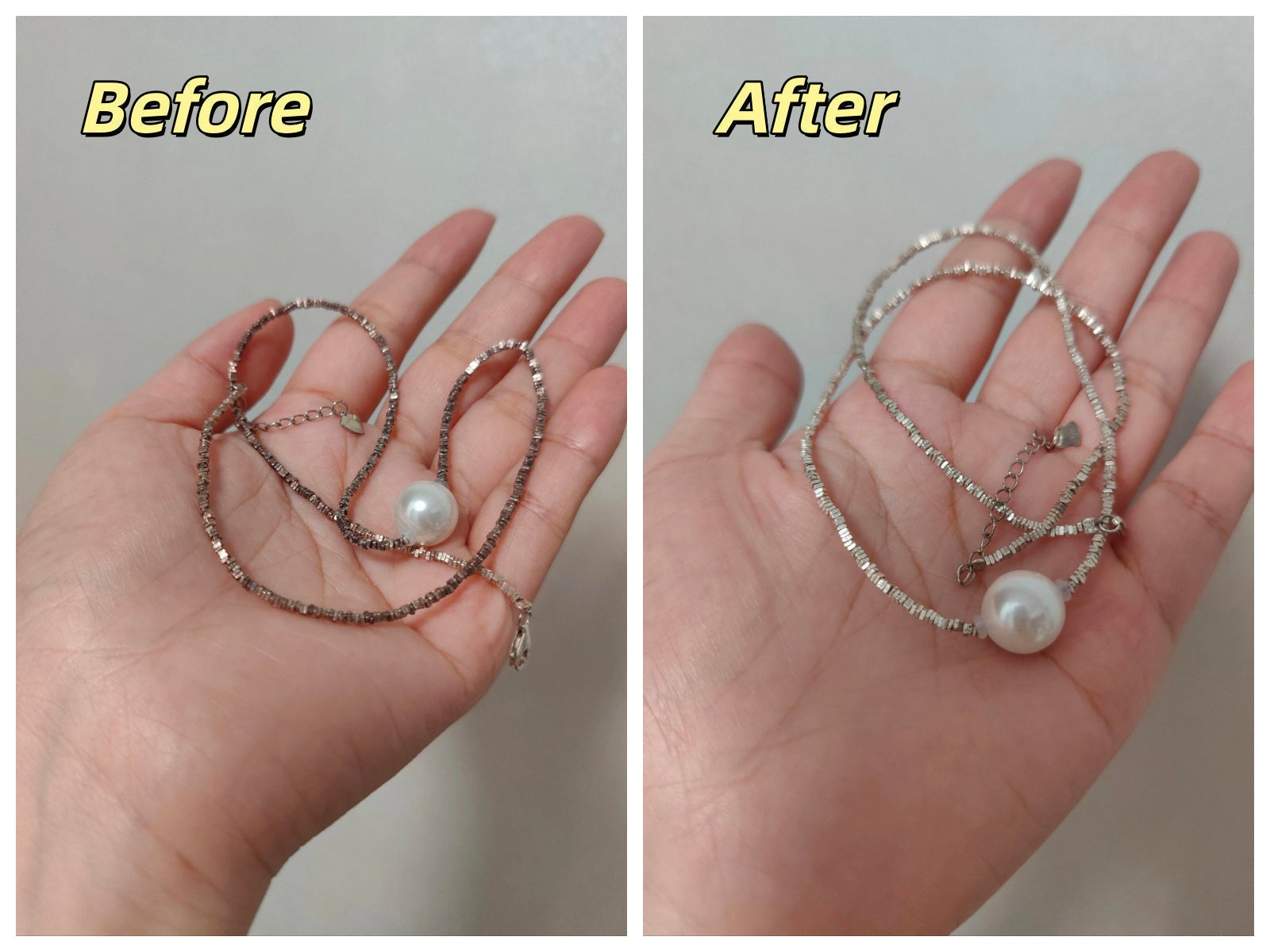
When people ask how to clean a tarnished pearl necklace, the problem is usually not the pearl. Pearls do not tarnish. The clasp, jump rings, bead tips, or gold-plated silver parts are the pieces turning gray or black.
I like a targeted hardware-cleaning method:
- Wrap nearby pearls with plastic wrap, cotton, or a small towel.
- Apply a tiny amount of silver cleaner or silver polishing solution to the metal only.
- Use a soft electric toothbrush on low vibration for 30 seconds to one minute.
- Do not let the brush splash silver cleaner onto the pearls.
- Wipe the metal with a clean damp cotton swab or cloth.
- Rinse the metal area carefully with clean water if the necklace construction allows it.
- Dry everything immediately and lay the necklace flat.
The electric toothbrush is useful because it cleans tiny corners around clasps and jump rings faster than a cloth. But it must be used like a precision tool, not like you are brushing shoes. Soft bristles, low vibration, short contact, and metal only.

Avoid soaking the whole necklace in silver dip. Avoid vinegar, baking soda, toothpaste, lemon juice, and “DIY tarnish removal hacks.” They may help metal, but they are not pearl-safe. Pearls are nacre, not stainless steel.
How to Make a Pearl Necklace Shine Again
A pearl necklace usually loses shine for one of three reasons: fingerprints, residue, or real nacre damage.
| Problem | What It Looks Like | Best Fix |
|---|---|---|
| Fingerprints / skin oil | Pearl looks cloudy or has broken reflection | Microfiber cloth, damp cloth, controlled alcohol reset if suitable |
| Makeup / sweat residue | Dull surface, especially near drill holes | Warm damp cloth, clean-water wipe, dry flat |
| Tarnished hardware | Gray or black clasp, dull jump rings | Targeted silver cleaner + soft electric toothbrush on metal only |
| Nacre abrasion or chemical damage | Permanent dull patches, peeling, chalky surface | Jeweler evaluation; do not DIY polish thin-nacre pearls |
If your necklace only has surface film, you can often make the pearls shine again at home. If the nacre itself is damaged, cleaning will not restore the original luster. A jeweler may be able to improve some thick-nacre pearls with professional polishing, but thin-nacre pearls can be ruined by aggressive polishing.

What Not to Do When Cleaning a Pearl Necklace
The worst pearl-cleaning mistakes usually come from treating the necklace like metal jewelry. Avoid these methods:
- Do not use ultrasonic cleaners.
- Do not use steam cleaners.
- Do not soak the whole necklace in silver dip.
- Do not scrub pearls with a toothbrush.
- Do not use vinegar, baking soda, toothpaste, bleach, ammonia, or lemon juice.
- Do not hang the necklace to dry; lay it flat.
- Do not store pearls while the thread is damp.
- Do not use alcohol pads repeatedly as daily care.
For daily wear, the simplest care routine is still the best: pearls on last, pearls off first, wipe after wearing, store separately, and clean metal parts only when needed.
When Should a Pearl Necklace Be Restrung?
Cleaning makes a necklace look better. Restringing makes it safer. If the knots are dirty, loose, stretched, frayed, or uneven, the necklace may need restringing.
I recommend checking frequently worn pearl necklaces at least once a year. If you wear the necklace weekly, restringing matters more than most people realize. Thread absorbs sweat, skincare, perfume, and dust. Over time it weakens even if the pearls still look beautiful.

Watch: How to Clean Pearls Safely
This video gives a simple visual explanation of basic pearl cleaning. Use it as a gentle reference, then follow the stricter method above for pearl necklaces with metal hardware.
FAQ
How do you clean a pearl necklace at home?
Wipe each pearl with a microfiber cloth, then use a warm damp cloth if needed. For stubborn oil, a quick controlled alcohol-pad pass may be used only on suitable modern pearls, followed by a clean-water wipe and full drying. Clean tarnished metal separately.
Can I use an electric toothbrush on a pearl necklace?
Use it only on tarnished metal hardware, never on the pearls. Use soft bristles, low vibration, and protect the pearls before applying silver cleaner.
How do you clean a tarnished pearl necklace?
The pearls are not tarnished; the metal parts are. Apply silver cleaner to the clasp or metal only, gently brush with a soft electric toothbrush, then rinse the metal area carefully and dry immediately.
Can I wash a pearl necklace with water?
You can wipe pearls with a damp cloth, but do not soak the whole necklace. If the necklace is strung, the thread must be completely dry before wearing or storing.
Can I use alcohol wipes on a pearl necklace?
I use alcohol pads only as a quick studio reset on suitable modern pearls when removing stubborn fingerprints. I do not recommend alcohol as routine daily care, and I would avoid it on antique, dyed, damaged, or thin-nacre pearls.
How often should I clean my pearl necklace?
Wipe it after every wear. Do a more careful reset only when the pearls look dull, the clasp tarnishes, or residue is visible near the drill holes and knots.