
How Much Are Pearls Worth? Expert's 2026 Price Guide
"How much are pearls worth?" is one of the frequently asked queries. The honest answer to this question is that a pearl's worth is determined by various factors.
Such turbulence of feelings is expected. To provide you with the best explanation in 2026, we will consider a 10mm, 5A-grade pearl this time, the easiest and only benchmark. This facilitates our comparison of the pearl types without bias.

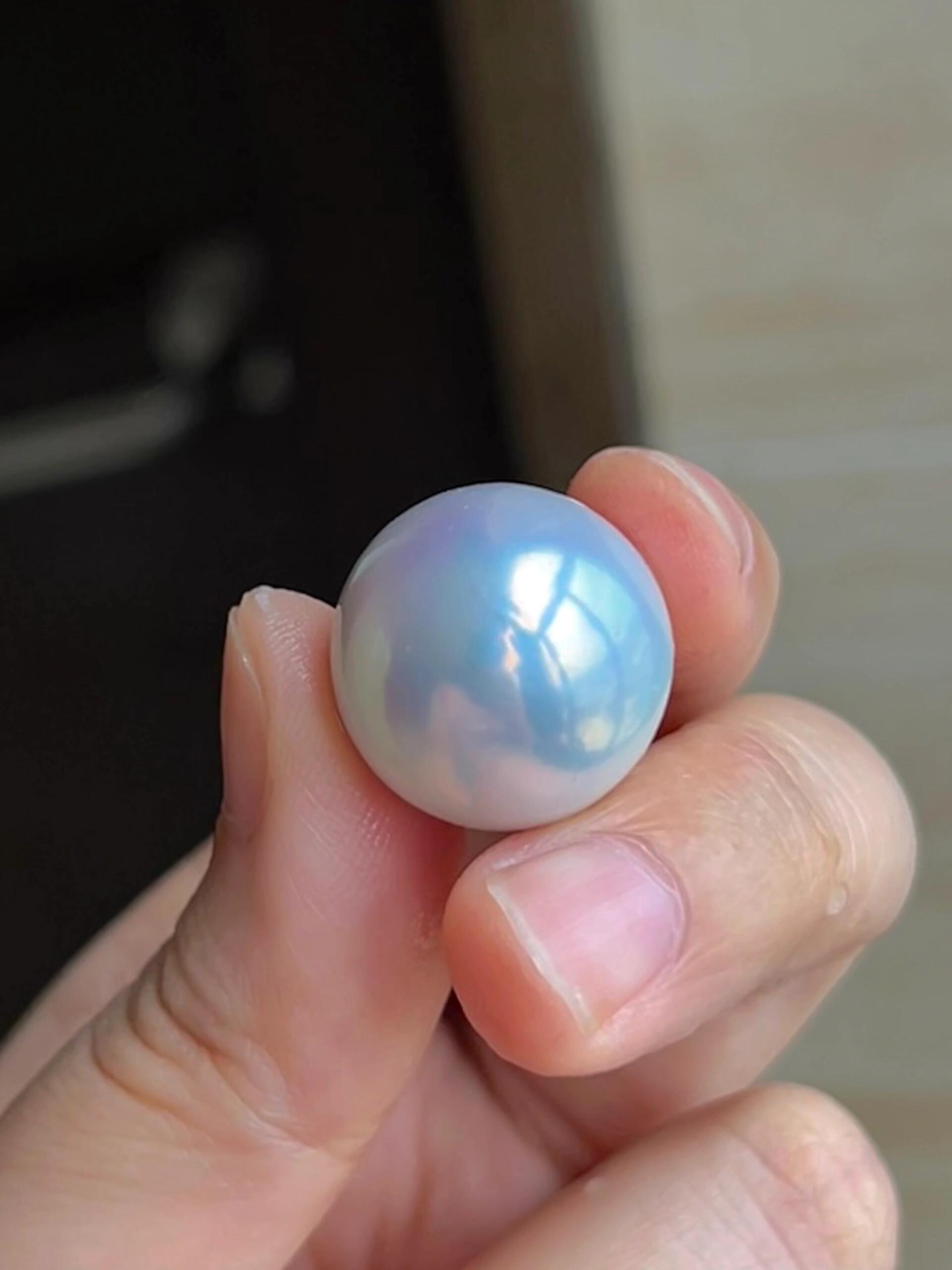
Different pearls and their nacre.
With a solid background of two decades in the pearl production process, we know every detail of the pearl value chain. We manage the entire process, from farming until the product is jewelry. This pearl pricing guide was made to simplify your understanding of the process.
Key Points
- Value Benchmark: This manual uses a 10mm, 5A-grade pearl to capitalize on the price comparison. This way, you make sure you are comparing the same quality of different varieties.
- Price Ranking: The most valuable pearls are White South Sea ($500-$1,300). The first ones after are Tahitian and Golden South Sea ($300-$800). Akoya and quality freshwater pearls are the cheapest ($100-$500).
- Natural Vs. Cultured: Natural pearls (like Conch pearls at $3,000-$10,000 per carat) are extremely rare collector's items. This guide mainly emphasizes cultured pearls. They are mostly worn in the jewelry of high quality.
- Choosing Quality over Size: A smaller pearl with excellent shine can be worth more than a larger, flawed pearl.
- Professional Assistance importance: Grading systems like "5A" are not the same everywhere. A certified pearl specialist should be the one to check for quality.
Why Is It So Difficult to Determine the Value of Pearl?
Different from gold, where there is a set price for every gram, every pearl is different from each other. Each one is an organic gem made by a living being and therefore no two of them are alike. The answer to the question of how much are pearls worth, therefore, has to be based on a range of variables.
These factors indeed can be seen as the ingredient list of a recipe. Each one contributes separately to the end result.
7 Elements Pertaining to the Value of a Pearl

The first authorities of the field such as the GIA (Gemological Institute of America) consider the quality of pearls as being subject to some specific aspects. Such are the official GIA's 7 Pearl Value Factors™ according to GIA which are used by experts.
- Type: Is it a natural or a cultured one? Is it a saltwater or a freshwater one?
- Size: Stated in millimeters (mm).
- Luster: Reflector light quality and intensity from the surface. This is the paramount issue.
- Surface Quality: Present or absent of noodle-like patterns.
- Shape: Is it perfectly round, off-round, drop-shaped, or baroque?
- Color: The main body color, overtone (a hint of another color), and orient (the rainbow effect on the surface).
- Nacre Quality: The thickness of the pearl's outer layers.
Due to such a variety of factors, we decide to use a universal case for illustration. We use a 10mm, 5A-grade pearl in this example so that you can have a straightforward price reference.
Pearl's Two Spheres: The Uniqueness of Natural Pearls
Now that we know the most popular types of pearls to buy, let's dive into the matter of natural pearls. They are formed without human intervention in the wild and are regarded as the most prized types of pearls. Conch pearls, for instance, are marvelous pink gems sourced from the Queen Conch snail. The catch is that these pearls can't be cultivated, making them extremely limited in quantity. Depending on the market demand, a pink Conch pearl weighing one carat can have a price range of $3,000 to $10,000.
On the contrary, Melo Melo and Abalone pearls are equally scarce. Their value often depends on their special designs and colors. Consequently, there is no fixed price in the market. These kinds of pearls are not found in jewelry stores.
As for this 2026 price guide, we shall specifically deal with prices of cultured pearls. The latter are developed in pearl farms with human intervention, thus, ensuring the quality of the product and making them accessible to fine jewelry.

How Much Are Pearls Worth? A Price Comparison of 10mm, 5A-Grade Pearls
We are now entering a very important and a very interesting teaching point. If we want to know whether or not the pearls are worth a lot, it is necessary to evaluate them referring to the main types of pearls in our benchmark which we will give below. The prices given below are for a single 10 mm loose round pearl with 5A grades. Such a grade of the pearl denotes that it is of very high quality with excellent luster and only an almost perfect surface.
| Pearl Type | Origin / Key Fact | Estimated Price (10mm, 5A Grade) | Our Expert Notes |
|---|---|---|---|
| White South Sea Pearl | Mainly from Australia | $500 - $1,300 | This is the rarest variety of cultured pearls; it usually has a large diameter and is covered with soft, satin-like luster. The pearl has a leading position in terms of value. |
| Tahitian / Golden South Sea | French Polynesia / Philippines & Indonesia | $300 - $800 | Natural dark colors (Tahitian) and deep golden hues (Golden) present these pearls as exotic and desirable. These are slightly more affordable than top White South Sea pearls. |
| Akoya Pearl | Mainly from Japan | $100 - $500 | The standard round shape and white color are the very traits of this pearl. Note: 10mm is extremely large and rare for Akoya. Their typical size is 3-8mm. This price reflects that rarity. |
| Freshwater Pearl | Mainly from China | $100 - $300 | With the help of modern farming, these are the best deal. There is fierce price competition as good quality pearls have become very affordable. |
As the main exporter of pearls to our whopping 10,000 loyal customers, it has been a privilege for us to witness the changes in the market. The fact that the number of quality Australian South Sea pearls available in the market is in a frenzy is the culprit behind their constantly high price. At the same time, the passage makes it too easy to find beautiful, large pearls, that were once out of reach for many.
Beyond the Chart: An Insider's Look at Pearl Value
The chart above is a great starting point. But the story of a pearl's worth doesn't end there. As jewelers with a "From Pearl Farm to Finished Jewelry" approach, we know that true value lies in the details.
The "5A" Grade Isn't Always What It Seems

Unlike diamonds, which have a universal grading system from GIA, there is no single, enforced standard for pearls. The "A-AAAA" or "A-5A" scale is a system that sellers use to describe their own inventory.
A "5A" grade from one seller might only be a "3A" from another. This is where expertise is critical. Our founder, Alya Liu, is a GIA & GUILD Certified Pearl Specialist. She personally inspects every pearl to ensure it meets our strict, true-to-quality standards. We do not just rely on a supplier's label. We verify the quality ourselves.
Matching and Craftsmanship's Impact on the Final Cost
The cost of the jewelry is based on the price of a single, loose pearl alone as per our chart. But the price for a pair of earrings or a complete necklace would be much higher. The reason for this is the massive amount of labor required to find a dozen or more of the pearls that are exactly the same in size, color, luster, and shape. The undertaking of such a task can last for days or even weeks.
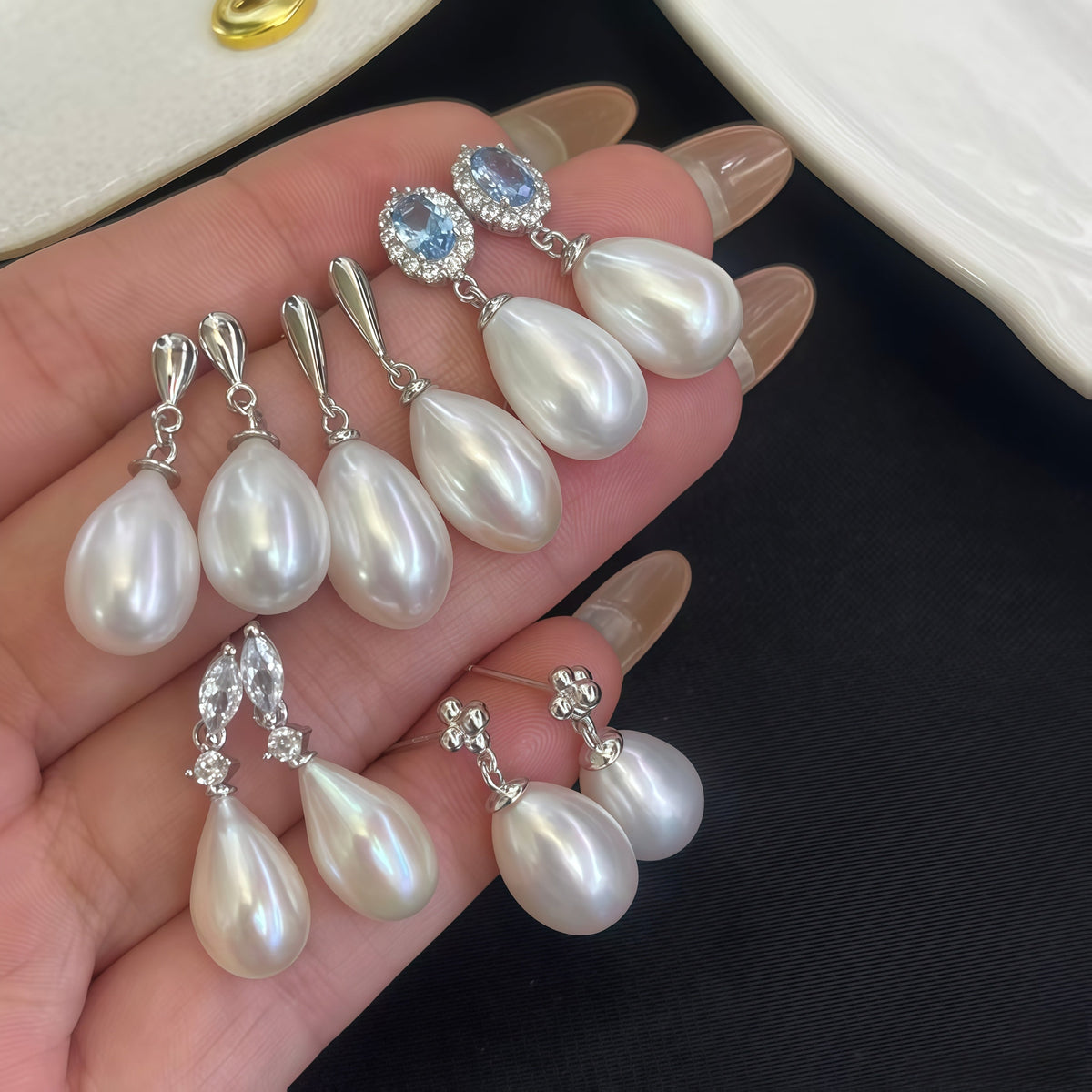
In the end, the value of the jewelry piece is given by the setting (for example: 18k gold), the designer's skill, and any additional diamonds used. This artwork is the way a simple gemstone is transformed into a loved piece of art.
Conclusion: Your Guide to Choosing the Perfect Pearl
As the principal point, the value of pearls in 2026 starts with their type. The top of the value chain is the South Sea pearls. The Tahitian and Golden South Sea pearls are next in line. The Akoya pearls are known for their classic beauty. The price of high-quality freshwater pearls is very reasonable.
Discovering the true value of a pearl is key to knowing its quality, beauty, and the craftsmanship of the final piece. Whether it is a classic strand of Akoyas and a stunning South Sea pendant or something, teaming up with a learner is an essential tip. A professional jeweler can describe the minor particulars of your selected pearl. This will ensure that you own a stunning gem which is as beautiful and long-lasting as it should be.
Frequently Asked Questions (FAQ)
1. Why do some pearls have a higher price than others?
The classification of the pearl species mainly determines the price tag. The rarest of the rare, the natural pearls are evidently the most expensive. Within the cultured types, saltwater types of pearls, such as South Sea are always more prized than Freshwater. Due to their cultivation process being more arduous and yielding less, it is understandable. Also, shine, size, and blemish-free surface add significant values.
2. Is the one larger pearl always more valuable?
Not really. The size is of utmost importance; nonetheless, the quality usually prevails. An almost bigger pearl that is dull and has many marks could not be worth more than a smaller one that is lustrous, has a smooth surface, and is round without imperfections.
3. What is an ideal pearl for a novice buyer?
First-time buyers can find that freshwater pearls are one of the best types of pearls to purchase. They are a great find as they are now grown through modern farming which has made them available at a very low price. They are offered in a variety of delightful designs and can fit any budget. Classic Akoya pearls are also a perfect and eternal choice for a first fine piece of pearl jewelry.
4. What do I do to check the quality of the pearl I am purchasing?
Always go for the trusted jeweler who has thorough knowledge of pearls. Request them to explain the quality of the pearl to you. At Alya Pearls, we always believe in the principle of transparency. We utilize the "From Pearl Farm to Finished Jewelry" model and have certified pearl specialists to ensure that we confirm the quality of all pearls purchased from us.
5. Do the prices of pearls change with time?
Yes, it is true. The prices go up and down because of the environmental variations, faring costs, and market demand. For example, in the last decade, the prices of freshwater pearls have become more favorable precisely because of mass-mass farming. However, the estate of precious high-quality South Sea pearls has been stable and persistent in the last decade due to their low availability, which is the main reason.


Leave a comment
This site is protected by hCaptcha and the hCaptcha Privacy Policy and Terms of Service apply.