
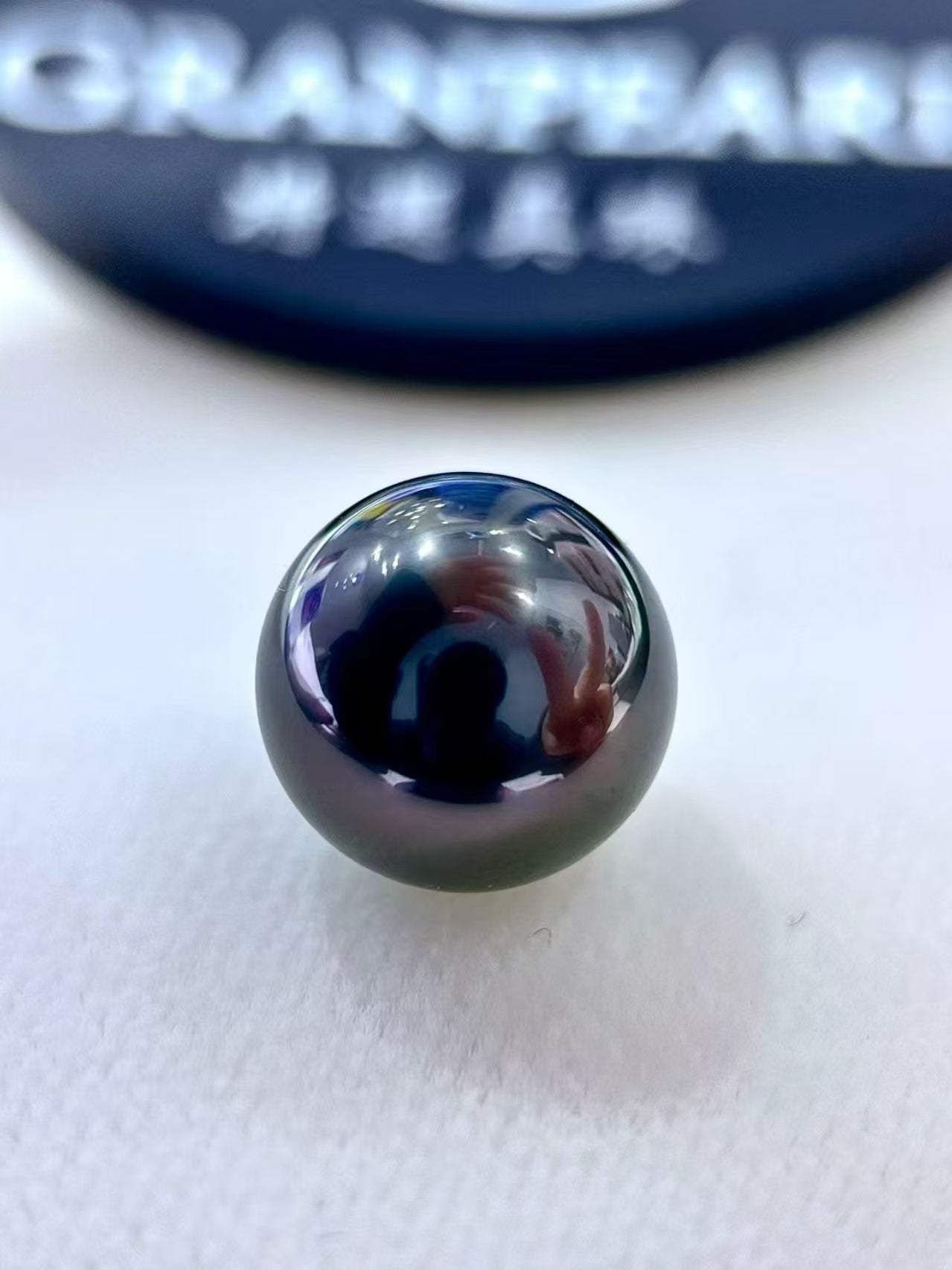
Quick answer: Yes, jewelry-grade black pearls are generally expensive, especially when they are natural-color Tahitian black pearls with deep body color, sharp luster, clean surfaces, and larger sizes.
A single high-quality Tahitian black pearl around 9mm to 13mm can often range from about $100 to $1,000, while finished jewelry may cost much more because of design, metal, craftsmanship, matching, and brand value. In the pearl world, a fine black pearl is often called the “Black Queen of Pearls” because it carries rarity, mystery, and power in one luminous gem.
 Alya and Tahitian pearl farm.

Are Black Pearls Expensive? The Short Answer
Black pearls can be expensive, but not every pearl sold as a “black pearl” deserves a high price. The pearls that command real value are usually natural-color Tahitian black pearls: saltwater cultured pearls grown in the black-lipped oyster, prized for their dark color, larger size range, and dramatic luster.
In general, a jewelry-grade black pearl is not simply a dark bead. It should have depth, glow, and life. A dull black pearl can look flat, smoky, or even dirty. A fine black pearl, on the other hand, looks like polished night water: dark, reflective, and powerful.
For most buyers, black pearl price depends on seven major value factors: size, shape, color, luster, surface quality, nacre quality, and matching. For finished jewelry, you also need to consider the metal, setting, craftsmanship, designer work, and brand premium.

Quick Price Range for Black Pearls
The table below uses an approximately 11mm Tahitian black pearl as a reference point. These are general retail ranges, not fixed rules. A rare pearl with exceptional luster and pure dark color may go higher, while a lower-grade pearl with weak luster or heavy surface marks may cost less.
| Black Pearl Jewelry Type | Typical Price Range | Buyer Note |
|---|---|---|
| Single Tahitian black pearl | $100–$1,000 | Best for buyers who want to choose a pearl first and customize the setting later. Luster, surface quality, and body color matter more than size alone. |
| Black pearl pendant | $200–$3,000 | A strong entry point for first-time buyers. The final price depends on pearl quality, gold or silver setting, chain quality, designer work, and brand premium. |
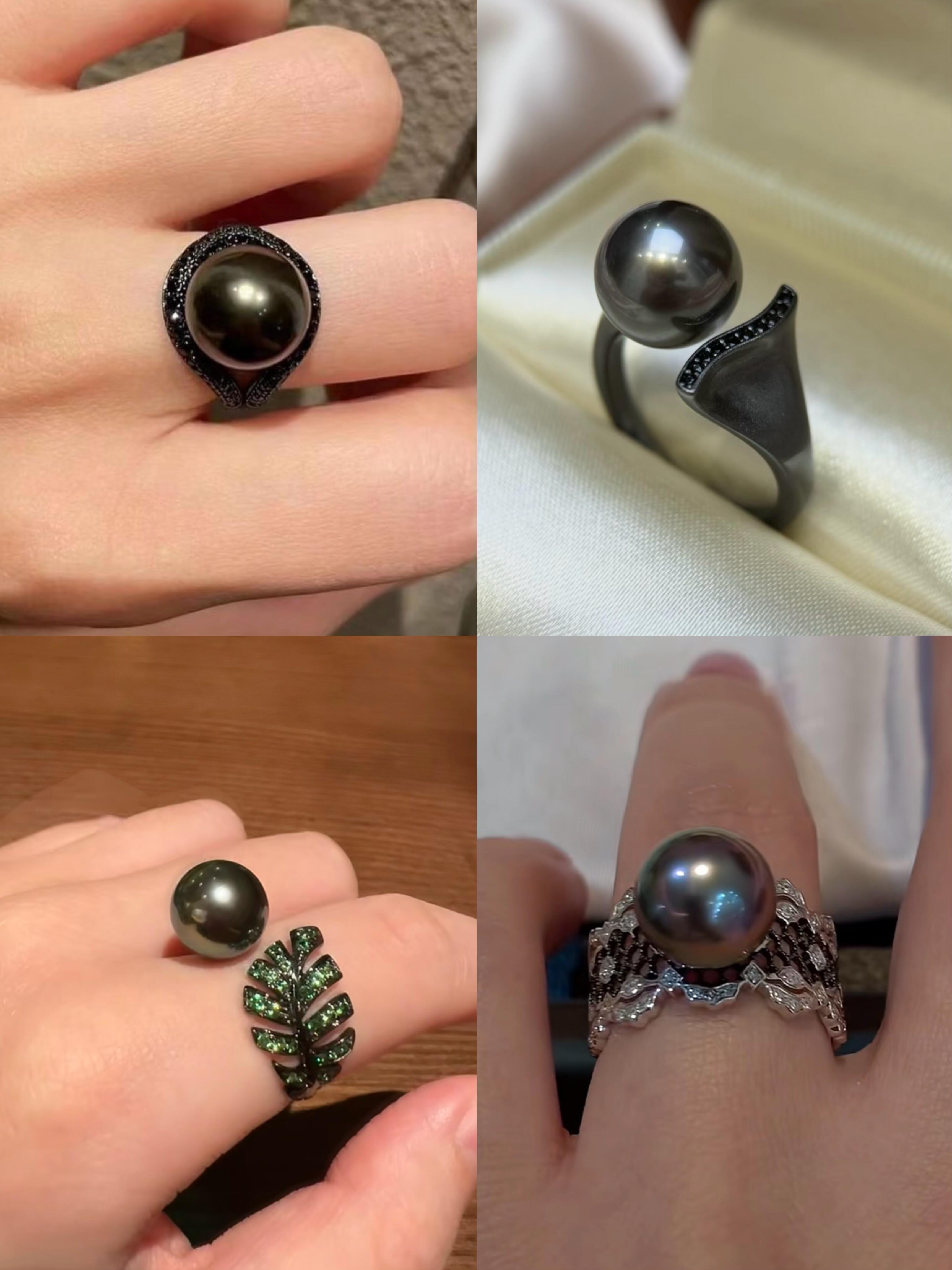
| Black pearl ring | $550–$3,000 | Often priced higher because rings require a more protective and intentional setting. Vintage-inspired designs, gold weight, side stones, and craftsmanship can raise the price. |
| Full Tahitian black pearl necklace | $800–$25,000 | The most expensive category because a full strand requires many pearls with similar size, luster, shape, color, overtone, and surface quality. Matching can take time and dramatically increases value. |
Why Some Black Pearls Cost More Than Others
Not all black pearls are expensive. What makes a black pearl valuable is the rare combination of deep color, strong luster, clean surface, large size, attractive shape, and durable nacre. A dark pearl with poor luster will not look luxurious. A large pearl with heavy blemishes may not be worth the higher price. A strand of pearls that do not match well can look less refined even if each individual pearl is beautiful.
As a designer, I always start with luster. If the pearl does not reflect light clearly, the design cannot save it. The second thing I check is the surface. Small natural marks are normal, especially in Tahitian pearls, but deep pits, cracks, chalky patches, or heavy spotting can weaken the beauty of the piece.

What Is a Tahitian Black Pearl?
A Tahitian black pearl is a saltwater cultured pearl grown in the black-lipped oyster, Pinctada margaritifera. Although the name says “Tahitian,” these pearls are mainly associated with the islands and lagoons of French Polynesia. They are famous for their naturally dark body colors, which separate them from many dyed black freshwater pearls or treated black Akoya pearls.
This is the most important difference between “black pearl” and “Tahitian black pearl.” A black pearl can be a broad selling term. It may refer to a dyed freshwater pearl, a treated Akoya pearl, or a natural-color Tahitian pearl. A Tahitian black pearl is more specific: it refers to a pearl type known for naturally dark colors and distinctive overtones.
In the jewelry trade, Tahitian pearls are often called black pearls, but gemologically they are not always pure black. They may appear charcoal, dark gray, peacock green, aubergine, silver, blue-gray, pistachio, or platinum gray. For my own buying and design language, I use a stricter distinction: only a deeply saturated, pure black-looking Tahitian pearl feels like a true black pearl to me. Other colors can be gorgeous Tahitian pearls, but they create a different mood.

How Much Are Black Pearls Worth?
Black pearl value is never decided by one factor. A buyer may ask, “how much are black pearls worth?” but the honest answer is: it depends on the pearl. Two 11mm Tahitian black pearls can have very different prices if one has a sharp mirror luster and clean surface while the other looks cloudy and marked.
Below are the main value factors I use when judging whether a black pearl is worth its price.
Black Pearl Value by Size
Size and value are always connected in pearls. When all other quality factors are equal, a larger pearl is usually rarer and more valuable. For Tahitian black pearls, an 8–9mm pearl may be closer to the entry range, sometimes around $100 depending on quality. A pearl above 14mm, in similar quality, may exceed $1,200 because large Tahitian pearls require better oysters, more favorable growing conditions, and more time.
| Pearl Size | Buyer Perception | Value Meaning |
|---|---|---|
| 8–9mm | Everyday luxury | Good entry size for pendants, simple studs, or first Tahitian pearl jewelry. |
| 10–11mm | Elegant and noticeable | A strong balance of wearability, presence, and value. This is one of the most practical sizes for pendants. |
| 12–13mm | Statement size | More luxurious and visibly rare, especially when paired with high luster and a clean surface. |
| 14mm+ | Collector-level look | Much harder to source in fine quality. Price can rise quickly when color, luster, and surface quality are also strong. |

There is also a farming reason behind this. Smaller 8–9mm Tahitian pearls may be commercially harvested after a shorter cultivation period, often around 18 to 24 months in many market descriptions. Historically, a nacre thickness around 0.8mm was an important benchmark for export-quality Tahitian pearls. In the lower end of the market, pearls with thinner or weaker nacre are not what I would consider true jewelry-grade investment pieces.
By contrast, a 14mm+ Tahitian pearl usually represents a much more difficult pearl journey. It may require a larger and healthier oyster, a larger nucleus, longer cultivation, or even multiple harvest and re-nucleation cycles. In sourcing terms, the farm risk can represent several years of work. That is why large black pearls are not priced only by millimeters; they are priced by rarity, time, and survival.

Mother of Tahitian pearls
Black Pearl Value by Luster
Luster is the first thing I look at when selecting black pearls. A black pearl with poor luster can look like polluted fog: dark, dull, and lifeless. That kind of pearl may technically be black, but it does not create jewelry value.
A high-luster black pearl should reflect light sharply. When you move it under natural light, the surface should look crisp, almost like a dark mirror. This is especially important for black pearls because the darker body color can either intensify the reflection or make the pearl look flat. A great black pearl does both things at once: it absorbs depth and returns light.
For Alya Pearl, I would rather choose a slightly smaller pearl with beautiful luster than a larger pearl that looks cloudy. Size may attract attention first, but luster is what makes the piece feel expensive on the skin.
Black Pearl Value by Color and Overtone
Many buyers chase the idea of a pure black pearl. I understand why. A true black pearl can look like polished coal, absorbing darkness while reflecting a bright, glassy surface. That contrast is rare and dramatic. It is the reason black pearls feel powerful instead of simply elegant.
However, the broader Tahitian pearl family includes many colors. Peacock, aubergine, platinum gray, green-gray, blue-gray, and silver Tahitian pearls can all be valuable when their luster and surface quality are strong. In the trade, these are still Tahitian pearls and are often sold under the black pearl category.
My personal design distinction is more precise: if the pearl is truly deep black with high reflection, I call it a black pearl. If it is platinum gray, peacock, aubergine, or green-gray, I call it a Tahitian pearl by its color. This helps customers understand the mood of the jewelry. Pure black feels powerful and mysterious. Peacock feels sensual and dramatic. Platinum gray feels modern and cool. Aubergine feels feminine and rare.
Black Pearl Value by Shape and Surface
Shape affects price. Round and near-round Tahitian pearls usually cost more when all other factors are equal because round pearls are harder to grow. Drop, button, circled, and baroque Tahitian pearls may cost less, but that does not mean they are less beautiful. In modern jewelry design, an expressive baroque black pearl can feel more artistic and personal than a perfectly round pearl.
Surface quality is just as important. Pearls are organic gems, so small natural marks are normal. But a high-value black pearl should not have obvious cracks, deep pits, heavy chalky areas, or distracting blemishes on the front-facing side. For pendants and rings, I pay special attention to the visible face of the pearl. For necklaces, I care about both individual surface quality and how well the pearls match together.

Are Black Pearls Rare?
Yes, high-quality black pearls are rare. But the rarity is more specific than many buyers realize. It is not enough for a pearl to be dark. What is truly rare is a natural-color Tahitian black pearl that combines deep pure color, sharp luster, large size, clean surface, attractive shape, and strong nacre.
This is why some black pearls are expensive while others are not. A dyed black freshwater pearl may be affordable and decorative. A gray Tahitian pearl may be beautiful but not necessarily the pure black look a buyer wants. A large, clean, high-luster, naturally dark Tahitian black pearl is in a different category.
Are Pure Black Pearls the Most Valuable?
Not always, but they can be. A flat black pearl with weak luster is not valuable just because it is black. A peacock Tahitian pearl with exceptional luster and saturated overtone may be more desirable than a dark pearl that looks lifeless. But when a pearl has both true black depth and mirror-like luster, it becomes one of the most powerful looks in pearl jewelry.
As a designer, I do not want a black pearl to look painted. I want it to look naturally dark, dimensional, and alive. The best black pearls have presence before the customer asks the price.
What Do Black Pearls Symbolize?
Black pearls symbolize mystery, power, inner strength, independence, and transformation. White pearls are often linked with purity and wisdom. Black pearls carry wisdom too, but they add a deeper emotional tone: secrecy, authority, protection, and personal power.
This symbolism is one reason black pearls make meaningful gifts. A black pearl pendant does not say, “You are sweet.” It says, “You are strong.” It is a beautiful choice for someone entering a new career stage, rebuilding after a difficult season, celebrating independence, or choosing a more powerful version of herself.
For women who do not want overly delicate jewelry, black pearls offer a rare balance. They are still pearls, so they remain elegant and organic. But they are not soft in the traditional sense. They are quiet, commanding, and slightly mysterious.


Are Black Pearls Worth Buying?
Black pearls are worth buying when you want natural color, long-term wearability, and a piece of jewelry that feels more distinctive than classic white pearls. They are especially worth the price if the pearl has strong luster, a clean visible surface, rich color, and a design that protects the pearl properly.
When Black Pearls Are Worth the Price
A black pearl is worth buying if you want a piece that feels luxurious without being loud. A single Tahitian black pearl pendant can be worn with a white shirt, black dress, silk blouse, or cashmere sweater. Black pearl earrings can add depth to everyday styling. A black pearl ring can feel powerful and personal, especially in a vintage-inspired setting.
For collectors or serious pearl lovers, a full Tahitian black pearl necklace is the most impressive choice. It requires many pearls that work together in size, color, luster, surface, and shape. That is why a strand costs far more than a single pendant.
When to Be Careful Before Buying
Be careful when a piece is labeled only as “black pearl” without explaining whether it is natural-color Tahitian or dyed. Also be careful when the price seems too low for the claimed quality. A very inexpensive “Tahitian black pearl” may be smaller, lower-luster, heavily blemished, treated, or incorrectly described.
Before buying, ask these questions:
- Is this a natural-color Tahitian pearl or a dyed black pearl?
- What is the pearl size in millimeters?
- How sharp is the luster?
- Are there visible surface marks, pits, cracks, or dull areas?
- Is the setting protective enough, especially for a ring?
- For earrings or necklaces, how well do the pearls match?
How to Choose Black Pearls by Budget
Under $300: Simple Entry Pieces
In this range, look for a small black pearl pendant or simple stud earrings. Do not expect a large flawless Tahitian pearl. Instead, focus on luster and wearable design. A smaller pearl with good glow is better than a larger pearl that looks dull.
$300–$1,000: Everyday Fine Jewelry
This is a strong range for a first quality black pearl piece. You may find better luster, a larger pearl, or a more refined setting. A single Tahitian black pearl pendant around 10–11mm can be a beautiful daily signature piece.
$1,000–$3,000: Statement Pieces and Gifts
This range is ideal for meaningful gifts, anniversary pieces, black pearl rings, and matched earrings. You can begin to prioritize stronger color, cleaner surfaces, larger sizes, and more detailed gold settings.
$3,000+: Tahitian Pearl Strands and Collector Jewelry
Above $3,000, buyers can look at more serious Tahitian pearl necklaces, larger pearls, exceptional luster, and more carefully matched strands. A full black pearl necklace is expensive because it requires not one beautiful pearl, but many pearls that belong together.
FAQ About Black Pearl Prices and Value
Are black pearls expensive?
Yes, high-quality black pearls can be expensive, especially natural-color Tahitian black pearls. Their value comes from deep color, strong luster, clean surface quality, size, nacre, shape, and matching.
How much is a black pearl worth?
A single high-quality Tahitian black pearl around 9mm to 13mm may range from about $100 to $1,000. Exceptional pearls, especially larger sizes with top luster and clean surfaces, can cost more.
How much is a black pearl pendant worth?
A black pearl pendant commonly ranges from about $200 to $3,000 depending on pearl quality, size, setting metal, craftsmanship, chain, designer work, and brand value.
Are black pearls rare?
Yes, fine black pearls are rare when they are naturally dark Tahitian pearls with strong luster, clean surfaces, larger size, and attractive shape. Pure black-looking Tahitian pearls with high reflection are especially difficult to source.
What is a Tahitian black pearl?
A Tahitian black pearl is a saltwater cultured pearl grown in the black-lipped oyster, mainly associated with French Polynesia. Tahitian pearls are naturally dark and may appear black, gray, charcoal, peacock, aubergine, blue-gray, or silver.
What do black pearls symbolize?
Black pearls symbolize mystery, power, inner strength, independence, protection, and transformation. They are meaningful gifts for people entering a new chapter or embracing a stronger sense of self.



Leave a comment
This site is protected by hCaptcha and the hCaptcha Privacy Policy and Terms of Service apply.